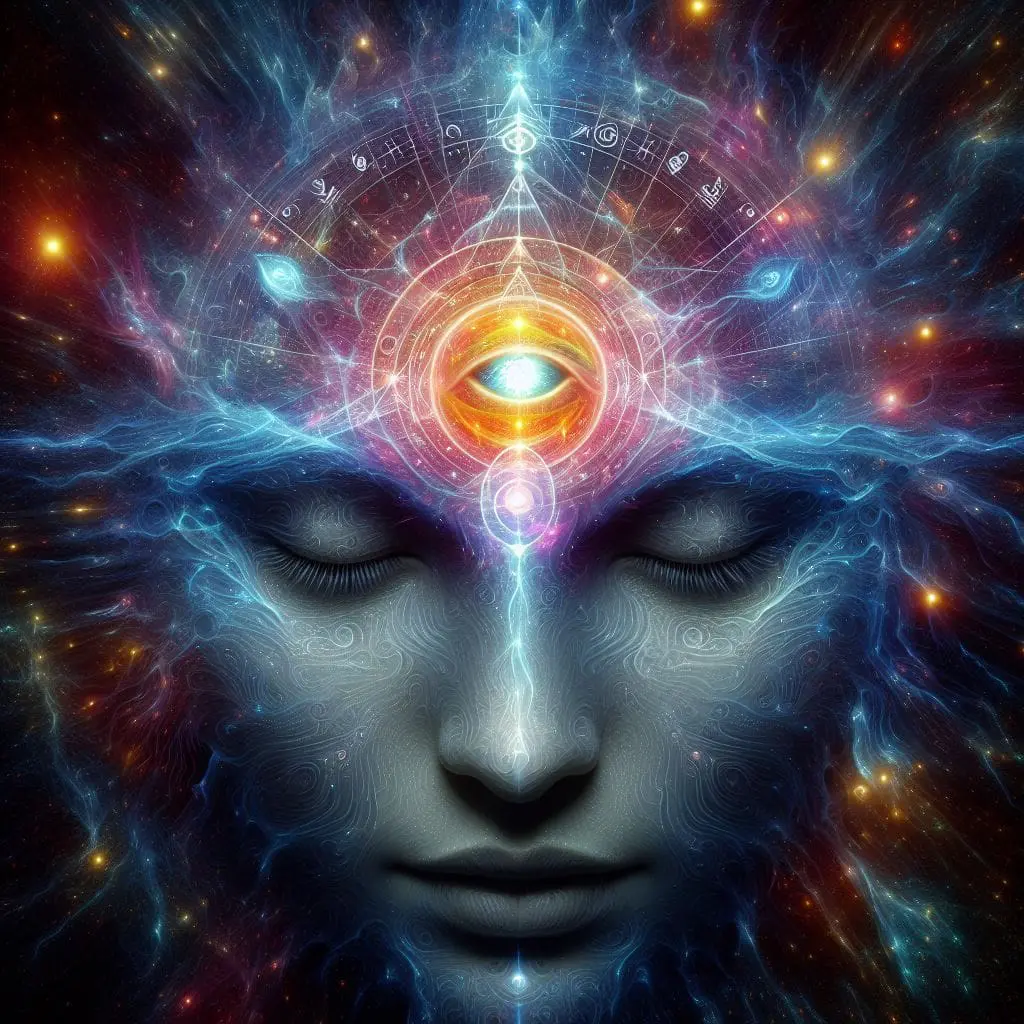
The pineal gland, also known as the third eye, has long been associated with spirituality and transcendental experiences. Located in the centre of the brain, the pineal gland is a small, pea-sized gland that produces and regulates hormones such as melatonin, which plays a crucial role in regulating sleep-wake cycles.
In many spiritual traditions, the pineal gland is believed to be a gateway to higher consciousness and spiritual awakening. The gland is often referred to as the third eye because it is said to be the seat of intuition and psychic abilities. It is believed that through meditation, visualisation, and other spiritual practices, one can activate and open the pineal gland, leading to heightened spiritual experiences and a deeper connection to the universe.
In ancient Eastern spiritual traditions such as Hinduism and Buddhism, the pineal gland is seen as the centre of the chakra system, responsible for the integration of body, mind, and spirit. Yogis and meditation practitioners often focus on activating the pineal gland in order to achieve higher states of consciousness and enlightenment.
In the Western esoteric tradition, the pineal gland is associated with the concept of the third eye and is believed to be the source of psychic abilities and spiritual insight. In the writings of mystics and philosophers such as Rene Descartes and Rudolf Steiner, the pineal gland is seen as a link between the physical and spiritual realms.
Recent scientific research has also shed light on the role of the pineal gland in spiritual experiences. Studies have shown that the pineal gland produces and releases DMT (dimethyltryptamine), a powerful hallucinogenic compound that is believed to be responsible for mystical experiences and visions. This has led some researchers to speculate that the pineal gland may play a key role in facilitating spiritual and transcendent experiences.
While the pineal gland’s role in spirituality is still largely shrouded in mystery, many people continue to explore and uncover its potential as a gateway to higher consciousness and spiritual growth. Whether through meditation, yoga, or other spiritual practices, the pineal gland remains a fascinating and mystical aspect of human consciousness that continues to captivate and inspire seekers on the spiritual path.