Tag: Neurology

  • The Mirror Neuron System: A Window into Empathy and Connection

    The Mirror Neuron System: A Window into Empathy and Connection

    Advertisements

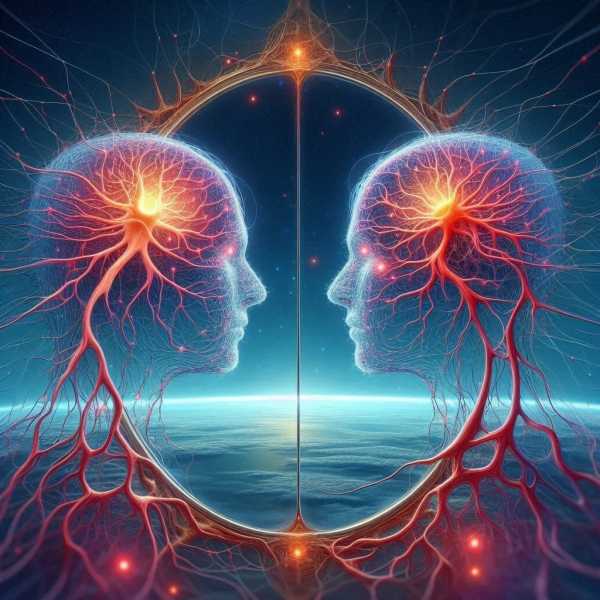
    One key component that scientists have identified is the mirror neuron system. This system, which was discovered in the early 1990s, consists of a network of neurons located in the brain that fire both when we perform an action and when we observe someone else performing the same action. In other words, these neurons “mirror” the actions and emotions of others, allowing us to understand and resonate with their experiences.

    For example, imagine watching a close friend laugh and smile during a funny movie. The mirror neuron system in your brain would activate, causing you to not only see their expression but also feel a sense of joy and amusement yourself. This shared emotional experience forms the basis of empathy and connection, as it allows us to truly understand and connect with the people around us.

    Recent research has shown that the mirror neuron system plays a crucial role in a wide range of social behaviours, from understanding others’ intentions and emotions to developing a sense of empathy and compassion. Studies have also linked dysfunction in this system to conditions such as autism, where individuals may struggle with social interactions and understanding others’ emotions.

    But the mirror neuron system is not just about empathy—it also plays a role in learning, imitation, and even language development. By observing and imitating others, we can learn new skills and behaviours, as well as understand the intentions and motivations behind their actions.

    So how can we harness the power of the mirror neuron system to enhance our empathy and connection with others? One key strategy is to practise active listening and observation, truly paying attention to others’ words, body language, and emotions. By tuning into these cues, we can better understand and resonate with their experiences, fostering deeper connections and relationships.

    Another way to boost empathy is through activities that promote social interaction and collaboration, such as volunteering, joining a club or group, or simply spending time with friends and loved ones. These experiences can help us strengthen our mirror neuron system and cultivate a sense of empathy and connection with those around us.

    In conclusion, the mirror neuron system provides a fascinating window into the mechanisms of empathy and connection in the human brain. By understanding and harnessing this system, we can deepen our relationships, enhance our communication skills, and build a more empathetic and compassionate world. So next time you find yourself feeling a strong connection with someone, remember that it may just be your mirror neurons at work.
  • Modulating Neural Activity: Unlocking the Secrets of the Brain

    Modulating Neural Activity: Unlocking the Secrets of the Brain

    Advertisements

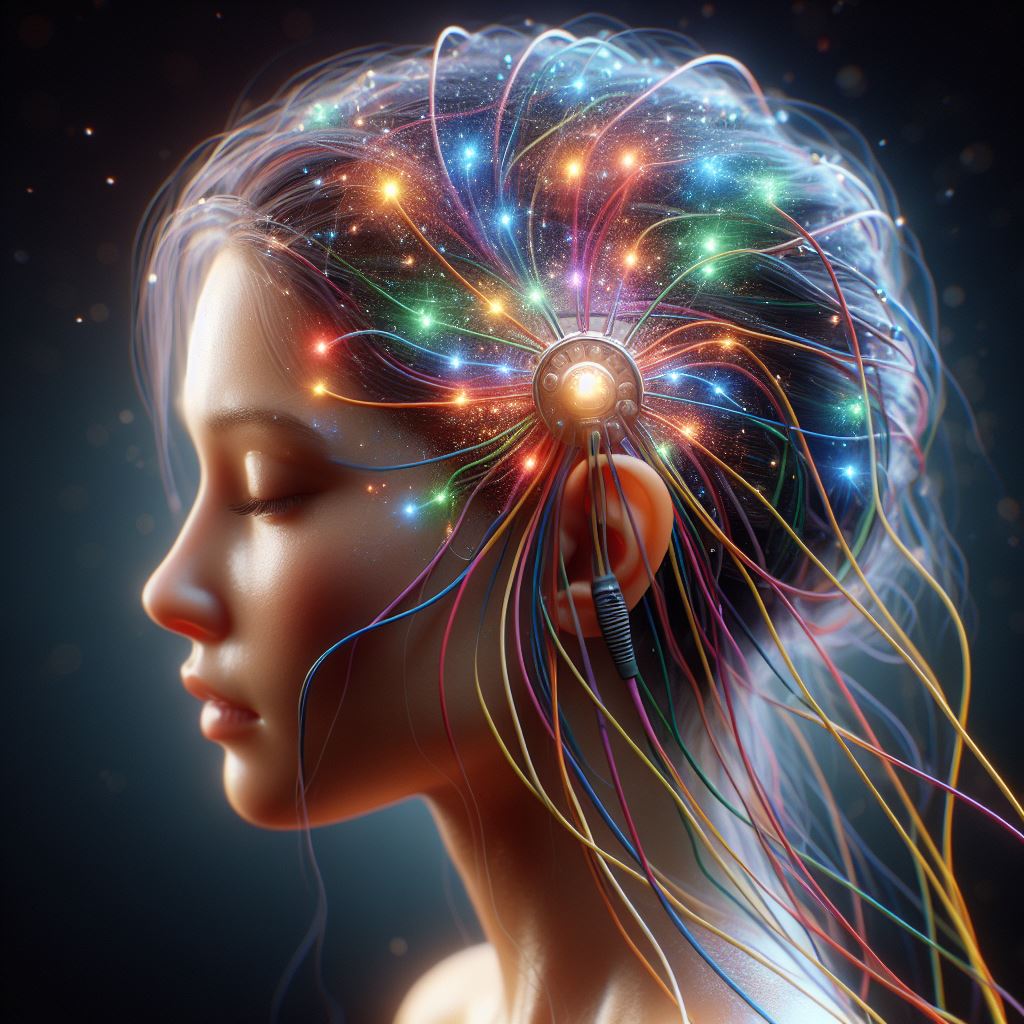
    Neural modulation refers to the ability to influence or change the firing patterns and activity levels of neurons within the brain. This can be achieved through a variety of methods, including electrical stimulation, optogenetics, and pharmaceutical interventions. By modulating neural activity, researchers aim to gain a deeper understanding of how the brain works and potentially develop new treatments for neurological disorders.

    One of the most widely recognised techniques for modulating neural activity is electrical stimulation. By applying electrical currents to specific regions of the brain, scientists can directly control or modulate the activity of neurons in those areas. This method has been successfully used in a variety of applications, such as deep brain stimulation for Parkinson’s disease and transcranial magnetic stimulation for depression.

    Another powerful tool in modulating neural activity is optogenetics, a technique that combines genetic engineering and light-based stimulation of neurons. By introducing light-sensitive proteins into specific brain cells, researchers can activate or inhibit the neurons using focused light beams. Optogenetics has been instrumental in studying the relationship between neuronal activity and behaviour in animal models and has the potential to revolutionise our understanding of the brain’s inner workings.

    Pharmaceutical interventions represent yet another strategy for modulating neural activity. Traditional drugs targeting neurotransmitters have long been used to treat various neurological conditions, such as schizophrenia, depression, and anxiety disorders. However, new advancements in drug delivery systems and the development of more specific and targeted medications are opening up exciting possibilities for modulating neural activity with greater precision and fewer side effects.

    The ability to modulate neural activity holds tremendous potential for understanding and even manipulating brain function. By selectively activating or inhibiting specific neurons, scientists can examine the causal relationship between neural activity and various cognitive processes or behaviours. This knowledge could be transformative in fields such as cognitive neuroscience, as it offers a way to investigate the underlying mechanisms of perception, memory formation, decision-making, and more.

    Furthermore, modulating neural activity has the potential to pave the way for groundbreaking treatments for neurological disorders. By restoring or normalising neural activity in affected brain regions, it might be possible to alleviate symptoms and improve the quality of life for individuals with conditions like Parkinson’s disease, epilepsy, or even spinal cord injuries.

    Nevertheless, it is crucial to approach the modulation of neural activity with caution and ethics in mind. The brain is a delicate and intricate system, and any manipulation should be done with careful consideration for potential risks and unintended consequences. It is essential that research in this area continues to prioritise ethics, informed consent, and safety measures.

    In conclusion, modulating neural activity represents a fascinating and promising avenue of research for understanding the brain and developing treatments for neurological disorders. Whether through electrical stimulation, optogenetics, or pharmaceutical interventions, scientists are gradually unlocking the secrets of the brain and inching closer to harnessing its full potential. As our knowledge and understanding expand, we can hope for a future where the mysteries of the mind are demystified, leading to improved well-being and advancements in neuroscience.

    Advertisements
  • Neural Networks: Unleashing the Power of Machine Learning

    Neural Networks: Unleashing the Power of Machine Learning

    Advertisements

    Neural networks, also known as artificial neural networks (ANN), are computational models inspired by the structure and functionalities of the human brain. Mimicking the network of interconnected neurons, neural networks consist of several layers of interconnected nodes, commonly called artificial neurons or simply ‘artificial neurons.’ These artificial neurons are responsible for processing and transmitting information throughout the network.

    The real magic happens when these artificial neurons work collectively to solve problems. Each neuron within a neural network receives input signals from other neurons and applies a function to them, combining and transforming the data into a meaningful output. This output then gets passed on to subsequent layers until the final output is achieved. This parallel processing capability allows neural networks to carry out highly complex tasks with remarkable speed and accuracy.

    The potential applications of networks are diverse and ever-expanding. From image and speech recognition to natural language processing, neural networks have transformed the way we interact with technology. Autonomous vehicles virtual personal assistants, and even smart home devices owe their capabilities to the advancements in neural network technology. Medical diagnostics, financial risk analysis, and fraud detection are other domains where neural networks have proved invaluable.

    One of the remarkable characteristics of neural networks is their ability to learn and improve over time. Through a process called training, the network adjusts its parameters based on a given dataset. This process is often iterative, with the network refining its predictions and minimising errors at each step. The training is typically supervised, where the desired output is provided, or unsupervised, allowing the network to discover patterns and relationships on its own.

    Deep learning, a subset of machine learning, has gained immense popularity thanks to neural networks. With their deep layers of interconnected nodes, deep neural networks have shown tremendous promise in handling increasingly complex tasks. They enable the development of models that can automatically extract features from raw data, eliminating the need for manual feature engineering. This characteristic, combined with their ability to process vast amounts of data, has made deep neural networks the go-to choice for tackling grand challenges in AI.

    However, neural networks are not without their limitations. The training phase can be computationally expensive, requiring large datasets and substantial computing power. Additionally, deep neural networks are often considered ‘black boxes,’ as their decision-making processes are not easily interpretable. This lack of transparency raises ethical concerns, as biases and unfairness can inadvertently be encoded within the decision-making algorithms.

    Despite these challenges, the power of neural networks cannot be overstated. The remarkable achievements, such as defeating human champions in complex games like Go and Jeopardy, have demonstrated their potential. With ongoing research, advancements, and efforts towards addressing their limitations, neural networks will continue to transform industries and contribute to shaping the future of AI.

    In conclusion, neural networks are a groundbreaking technology that has revolutionised the field of machine learning. Inspired by the human brain, these computational models have proven their ability to perform highly complex tasks, making significant impacts in various domains from healthcare to autonomous vehicles. As we venture further into the era of AI, the capabilities of neural networks will undoubtedly play a pivotal role in shaping the world we live in.

    Advertisements