Tag: Foucault

  • Foucault’s Theories on Surveillance and Disciplinary Mechanisms

    Foucault’s Theories on Surveillance and Disciplinary Mechanisms

    Advertisements

    One of Foucault’s most influential works on this topic is his book “Discipline and Punish: The Birth of the Prison.” In this seminal work, Foucault traces the evolution of disciplinary mechanisms from medieval forms of punishment to the modern prison system. He argues that modern surveillance and control are not simply about punishing individuals for their transgressions, but rather about shaping and moulding them into compliant, productive members of society.

    Foucault introduces the concept of the “panopticon,” a hypothetical prison design in which a single guard can observe all inmates without them knowing whether they are being watched or not. This constant surveillance creates a sense of internalised discipline, as individuals regulate their own behaviour out of fear of being punished. The panopticon serves as a metaphor for how surveillance operates more broadly in society, shaping our actions and conformity to social norms.

    Foucault also explores the concept of “biopower,” or the ways in which institutions and governments exert control over populations through surveillance and regulation of bodies and behaviours. This form of power operates at the level of the population as a whole, rather than just on individual subjects. Biopower is evident in practices such as public health campaigns, surveillance technologies, and social welfare programs that aim to manage and control populations for the greater good.

    In addition to the panopticon and biopower, Foucault introduces the idea of “disciplinary society,” in which individuals are subject to constant surveillance and regulation in schools, prisons, hospitals, and other institutions. The goal of disciplinary society is to produce obedient, docile subjects who conform to societal expectations and norms.

    Foucault’s theories on surveillance and disciplinary mechanisms offer a critical lens through which to examine the dynamics of power and control in contemporary society. By analysing the ways in which institutions and individuals surveil and discipline one another, we can better understand the mechanisms of social control that shape our lives and behaviours. Foucault’s work continues to be relevant today, as we grapple with questions of privacy, surveillance, and power in an increasingly interconnected world.
  • Foucault’s Concept of Discourse and the Relationship Between Language and Power

    Foucault’s Concept of Discourse and the Relationship Between Language and Power

    Advertisements

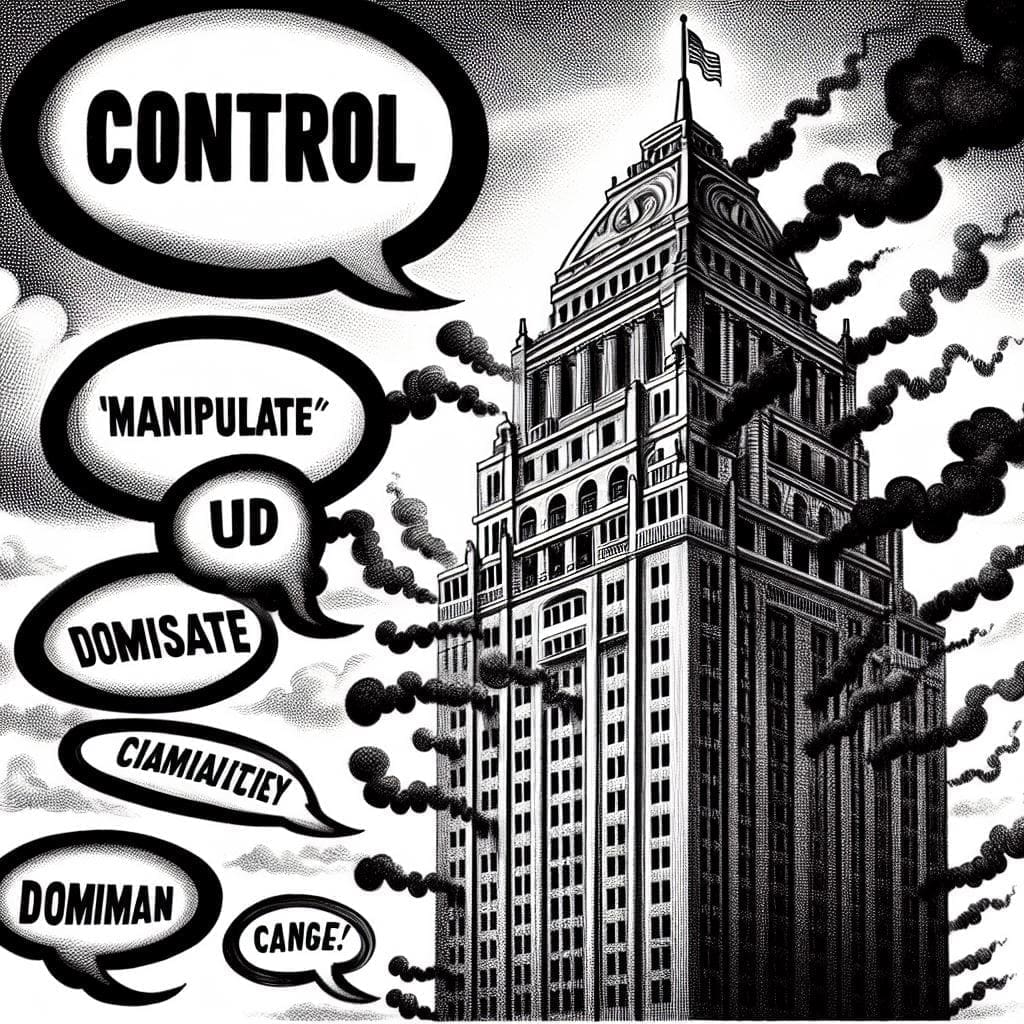
    One key aspect of Foucault’s concept of discourse is the idea that language is not neutral or objective, but is instead imbued with power dynamics that reflect and reinforce existing power structures. This means that the way we speak, the words we use, and the meanings we assign to them are not arbitrary, but are influenced by social norms, institutions, and power dynamics. As a result, language can be used to assert, reinforce, or challenge power relations within society.

    Foucault also believed that discourse is not just a tool for communication, but is actually constitutive of reality itself. In other words, the way we talk about the world shapes how we understand and experience it. This means that language is not just a reflection of reality, but actively constructs and defines our understanding of the world. This has profound implications for how power operates in society, as those who control the dominant discourse have the power to shape how reality is perceived and understood by others.

    Furthermore, Foucault argued that discourse is not just a reflection of power relations, but is actually a material force that structures and shapes our lives in tangible ways. This can be seen in how language is used to categorise and classify individuals, groups, and identities, and how these classifications can serve to marginalise, exclude, or oppress certain groups. For example, the way we talk about race, gender, or sexuality can have real-world consequences for how those identities are perceived and treated within society.

    Overall, Foucault’s concept of discourse highlights the intricate and complex relationship between language and power. Language is not just a means of communication, but a powerful tool that shapes our understanding of the world and our place within it. By understanding how discourse operates and influences our lives, we can begin to challenge and resist the power dynamics that seek to control and oppress us.

  • Michel Foucault: Key Theories Explained

    Michel Foucault: Key Theories Explained

    Advertisements

    1. Power and Discourse

    At the core of Foucault’s work is his exploration of power dynamics within society. He argued that power isn’t simply a possession or a force exerted by one individual or group over another, but rather something that permeates all aspects of our lives. Foucault introduced the concept of “disciplinary power” which suggests that power operates not only through observable acts of domination but also through more subtle mechanisms like surveillance, coercion, and control. He believed that power is not necessarily repressive but can also be productive and generative, shaping and moulding individuals and society as a whole.

    Furthermore, Foucault’s concept of “discourse” emphasises the role of language and communication in the exercise of power. According to him, discourse not only reflects existing power structures but also helps to maintain and perpetuate them. He argued that language shapes our understanding of the world, constructs our identities, and establishes norms and rules that govern our behaviour.

    2. Archaeology of Knowledge

    The archaeology of knowledge is another crucial aspect of Foucault’s work. He sought to analyse power structures by examining historical discourses and the ways in which knowledge is produced, classified, and regulated. Foucault believed that knowledge is not neutral or objective but is always embedded within specific social, cultural, and historical contexts. By uncovering the historical conditions under which knowledge emerges, Foucault aimed to reveal the power dynamics at play and challenge dominant narratives.

    In this regard, Foucault argued against the traditional idea of a singular truth and instead emphasised the existence of multiple truths or “epistemes” which shape what is deemed acceptable or legitimate knowledge within different historical periods. He demonstrated how certain knowledge claims come to be privileged while others are marginalised and excluded from the discourse.

    3. Biopolitics and Governmentality

    Foucault’s later works explored the intersections of power, knowledge, and governance. He introduced the concept of “biopolitics,” which refers to the ways in which power operates through the management and regulation of the life and bodies of individuals and populations. Foucault argued that modern forms of power are characterised by a focus on managing life itself rather than simply controlling physical or territorial boundaries.

    Building on this idea, Foucault developed the concept of “governmentality” to analyse how power operates in liberal democracies. He emphasised the role of various institutions and technologies of governance in shaping the behaviour and subjectivity of individuals. According to Foucault, modern societies rely on subtle techniques, such as surveillance, normalisation, and self-discipline, to regulate individuals and maintain social order.

    Conclusion

    In conclusion, Michel Foucault’s theories continue to be highly relevant and influential in various academic disciplines. By challenging conventional theories of power, knowledge, and social institutions, Foucault provided a fresh perspective on the complexities of human existence and the mechanisms through which societies are organized and controlled. His groundbreaking ideas continue to inspire critical thinking and calls for a more nuanced understanding of power dynamics in contemporary society.

    Advertisements