Category: Theology

  • Epileptic Psychosis or Demonic Possession?

    Epileptic Psychosis or Demonic Possession?

    Advertisements

    Psychotic epileptic disorder, or epileptic psychosis, refers to psychotic episodes occurring in individuals with epilepsy, where symptoms like hallucinations and delusions arise in temporal relation to seizures (Mental Health, 2025 ). It affects 3-7% of epilepsy patients, significantly higher than the 1% schizophrenia prevalence in the general population, with elevated risk in temporal lobe epilepsy (TLE) and uncontrolled seizures (Mental Health, 2025 ; Epilepsy Action, 2025a).

    Classification includes pre-ictal psychosis (PrP), occurring hours to days before seizures with anxiety and derealisation; ictal psychosis (IP), during seizures featuring fear and automatisms; interictal psychosis (IIP), between seizures resembling schizophrenia but with better prognosis; postictal psychosis (PIP), following seizures after a lucid interval with emotionally charged delusions; and forced normalisation (FN), paradoxically triggered by seizure control (Wang et al., 2024; Epilepsy Action, 2025a).

    Clinical features encompass delusions, hallucinations, paranoia, social withdrawal, disorganised thinking, and mood swings (Mental Health, 2025 ; Epilepsy Foundation, n.d.). For instance, in PIP—the most common type—symptoms like violent behaviour or self-harm emerge 12-72 hours post-seizure, lasting up to two months (Epilepsy Action, 2025a). Causes involve neurobiological mechanisms: structural changes like hippocampal volume loss, neurotransmitter imbalances (e.g., reduced glutamate and GABA), neuroinflammation via cytokines (IL-1β, IL-6, TNF-α), and genetic factors such as mutations in GRM1 or CNTNAP2 (Wang et al., 2024). Anti-seizure medications (ASMs) like topiramate or levetiracetam can precipitate psychosis, especially in those with family history (Epilepsy Action, 2025a). Diagnosis requires specialist assessment, including EEG to link symptoms to seizure activity, distinguishing it from primary psychoses (Mental Health, 2025 ).

    Treatment emphasises coordinated neurology-psychiatry care, balancing seizure control with antipsychotics. For IP and PrP, seizure management suffices; PIP often resolves spontaneously but may need benzodiazepines; IIP and FN require antipsychotics like olanzapine or risperidone, with ASM adjustments (Mental Health, 2025 ; Wang et al., 2024). Early intervention teams and psychosocial support—case management, vocational rehab—aid functioning, as untreated episodes worsen cognition and independence (Mental Health, 2025 ).

    Historically, epileptic psychosis has been misinterpreted as demonic possession, leading to exorcisms instead of medical intervention. In ancient times, epilepsy—termed the “sacred disease”—was attributed to supernatural forces, with seizures and psychotic symptoms seen as divine or demonic invasions (Trimble and Reynolds, 1976). This persisted into modernity, correlating with cases where TLE-induced hallucinations were deemed possession. The most infamous is Anneliese Michel (1952-1976), a German woman diagnosed with TLE and psychosis at 16, experiencing convulsions, hallucinations of “devil faces,” auditory commands of damnation, self-harm, and aversion to religious objects (Wikipedia, 2025). Despite treatments like Dilantin, Aolept, and Tegretol for five years, symptoms worsened, leading her devout Catholic family to interpret them as possession by demons like Lucifer and Hitler (Wikipedia, 2025; Goodman, 2005).

    A black-and-white collage featuring a woman experiencing distress alongside two others assisting her, with a portrait of the woman in the center.
    Real photos from Anneliese Michel.

    Michel underwent 67 exorcism sessions from 1975-1976 by priests Ernst Alt and Arnold Renz, authorised by Bishop Josef Stangl, involving rituals where she growled, screamed curses, and refused food, dying of malnutrition at 30kg (Wikipedia, 2025; Duffey, 2011). Autopsy confirmed dehydration, pneumonia, and broken knees from genuflections, not supernatural causes (Wikipedia, 2025). Her 1978 trial convicted her parents and priests of negligent homicide, with probation, as experts attributed symptoms to untreated epilepsy and psychosis exacerbated by religious upbringing (Wikipedia, 2025; Getler, 1978). This case, inspiring films like The Exorcism of Emily Rose, exemplifies how TLE’s temporal lobe involvement—causing religious delusions and hallucinations—mimics possession, delaying care (Forcen, 2016).

    A woman lies on the floor in a distressed pose, looking directly at the viewer, with one arm positioned awkwardly behind her and an expression of fear or anguish.
    Scene from The Exorcism of Emily Rose.

    Modern examples show the impact of the disorder. In postictal psychosis, a patient experiences confusion, delusions, and hallucinations after partial seizures, resembling schizophrenia and causing social isolation if it happens often (Mental Health, 2025). Ictal psychosis occurs briefly during seizures, showing symptoms like auditory hallucinations and agitation in TLE cases, resolving after the seizure but can recur without treatment (Mental Health, 2025). Interictal psychosis, common in chronic uncontrolled TLE, leads to persistent threatening voices and cognitive decline, especially in patients with hippocampal sclerosis who show EEG abnormalities and need long-term antipsychotics (Wang et al., 2024). A Korean family with a specific genetic deletion showed epilepsy and schizophrenia-like psychosis, pointing to genetic factors (Wang et al., 2024). After temporal lobectomy, about 7% of patients over 30 experience temporary delusions that can be treated with medication adjustments (Mental Health, 2025).

    Other historical examples include 17th-century European “possession” epidemics, where convulsive symptoms now recognised as epilepsy or conversion disorder led to exorcisms (Schwarz, 2014). In Christian contexts, epilepsy’s association with demons stemmed from biblical accounts, like Yeshua casting out spirits causing seizures (Mark 9:14-29, n.d.; KJV), influencing interpretations (Young, 2016). A 2013 thesis links such misdiagnoses to cultural fears, with “demonic” behaviours aligning with PIP’s aggression or IP’s automatisms (Snyman, 2025). In non-Western cultures, similar correlations persist, with epilepsy stigma leading to spiritual interventions over medical (Trimble and Reynolds, 1976).

    Forensic profiling reveals these misinterpretations stem from limited medical knowledge, cultural-religious frameworks, and stigma, profiling “possession” as undiagnosed epileptic psychosis (Epilepsy Action, 2025b). Modern neuroimaging confirms brain-based origins, advocating evidence-based treatment over exorcism (Wang et al., 2024).

    In conclusion, psychotic epileptic disorder underscores epilepsy-psychosis interplay, with real examples like post-surgical flares and historical cases like Michel’s highlighting risks of misdiagnosis. This should be profiled as a call for destigmatisation and integrated care, preventing tragedies through science over superstition.

    References

    Duffey, J.M. (2011) Lessons Learned: The Anneliese Michel Exorcism. Wipf and Stock Publishers. Available at: https://wipfandstock.com/9781608996643/lessons-learned/ (Accessed: 14 October 2025).

    Epilepsy Action (2025a) Psychosis and epilepsy. Available at: https://www.epilepsy.org.uk/living/psychosis-and-epilepsy (Accessed: 14 October 2025).

    Epilepsy Action (2025b) The history of epilepsy. Available at: https://www.epilepsy.org.uk/info/what-is-epilepsy/history (Accessed: 14 October 2025).

    Epilepsy Foundation (n.d.) Psychosis. Available at: https://www.epilepsy.com/complications-risks/moods-behavior/psychosis (Accessed: 14 October 2025).

    Forcen, F.E. (2016) Monsters, Demons and Psychopaths. Taylor & Francis. Available at: https://www.taylorfrancis.com/books/mono/10.4324/9781315382760/monsters-demons-psychopaths-fernando-espi-forcen (Accessed: 14 October 2025).

    Getler, M. (1978) ‘Cries of a Woman Possessed’, The Washington Post. Available at: https://www.washingtonpost.com/archive/politics/1978/04/21/cries-of-a-woman-possessed/ (Accessed: 14 October 2025).

    Goodman, F.D. (2005) The Exorcism of Anneliese Michel. Wipf and Stock Publishers. Available at: https://wipfandstock.com/9781597524322/the-exorcism-of-anneliese-michel/ (Accessed: 14 October 2025).

    Mark (n.d.), Chapter 9, Verses 14-29, King James Version, Bible Gateway. Available at: https://www.biblegateway.com/passage/?search=Mark%209%3A14-29&version=KJV (Accessed 22 October, 2025)

    Mental Health (2025) Epileptic Psychosis. Available at: https://www.mentalhealth.com/library/epilepsy-with-psychosis (Accessed: 14 October 2025).

    Schwarz, H. (2014) Beware of the Other Side(s). transcript Verlag. Available at: https://www.transcript-verlag.de/978-3-8376-2488-5/beware-of-the-other-side-s/ (Accessed: 14 October 2025).

    Snyman, M. (2025) ‘Hall of Horror: The Tragic Exorcism of Anneliese Michel’, Monique Snyman. Available at: https://moniquesnyman.com/hall-of-horror-the-exorcism-of-anneliese-michel/ (Accessed: 14 October 2025).

    Trimble, M.R. and Reynolds, E.H. (1976) ‘Epilepsy, behaviour and cognitive function’, John Wiley & Sons. Available at: https://pubmed.ncbi.nlm.nih.gov/8051941/ (Accessed: 14 October 2025).

    Wang, Y. et al. (2024) ‘Psychosis of Epilepsy: An Update on Clinical Classification and Mechanism’, PMC. Available at: https://pmc.ncbi.nlm.nih.gov/articles/PMC11762389/ (Accessed: 14 October 2025).

    Wikipedia (2025) Anneliese Michel. Available at: https://en.wikipedia.org/wiki/Anneliese_Michel (Accessed: 14 October 2025).

    Young, F. (2016) A History of Exorcism in Catholic Christianity. Palgrave Macmillan. Available at: https://link.springer.com/book/9783319291116 (Accessed: 14 October 2025).

  • ✡️ Old Testament Bible Prophecies in Context

    ✡️ Old Testament Bible Prophecies in Context

    Advertisements

    These prophecies, which encompass a wide range of themes from the coming of the Messiah to the eventual restoration of Israel, have profoundly influenced not only Jewish life but also the beliefs and practices of other faiths. Additionally, the interpretation of these prophecies has led to a diverse array of theological discussions and scholarly debates within the Jewish community, illuminating the dynamic and evolving nature of their spiritual beliefs through the ages.

    The Old Testament is filled with prophecies that some alleged were fulfilled throughout history. These prophetic verses foretold everything from the arrival of a saviour to the destruction of cities. For the Jewish people, these prophecies held immense significance as they looked towards a future of redemption and salvation.

    🕯️ Isaiah 7:14“Assuredly, my Sovereign will give you a sign nonetheless! Look, the young woman is with child and about to give birth to a son. Let her name him Immanuel”.

    ✍️ Commentary: Messianic Jews and Christians posit that the prophecy of the virgin birth of the Messiah was fulfilled in Jesus’ birth to Mary. However, it must be stated that some Bible translations have gone as far as including the word “virgin” in this passage. This was made as an attempt to make the story of Jesus seem perfectly fit for this prophecy. Still, Jesus’ name was actually Yeshua (ישוע), not immanuel. Nevertheless, the Talmud of Jmmanuel shows a more similar record.

    🕯️ Isaiah 9:6For a child has been born to us. A son has been given us. And authority has settled on his shoulders. He has been named The Mighty God is planning grace; The Eternal Father, a peaceable ruler”.

    ✍️ Commentary: Once again, this verse is often used to justify the birth of Yeshua as the Messiah. But when we look at his name, the meaning is different. Also, different translations of the Bible have adapted this passage to confirm their theories of the holiness of Jesus’ story.

    🕯️Isaiah 11:10“In that day, the stock of Jesse that has remained standing shall become a standard to peoples—Nations shall seek his counsel and his abode shall be honoured”.

    ✍️ Commentary: Once again, Christians and Messianic Jews have posited that this prophecy refers to Jesus (Yeshua); however, it might actually refer to King David, the son of Jesse. Of course, many will point to the idea that Joseph (Jesus’ father) came from the lineage of King David. It is imperative to assert that Joseph was his putative, not biological father; therefore, Jesus was not a true descendant of King David.

    🕯️Isaiah 40:3“A voice rings out: ‘Clear in the desert a road for GOD! Level in the wilderness a highway for our God! Let every valley be raised, every hill and mount made low. Let the rugged ground become level and the ridges become a plain. The Presence of GOD shall appear, and all flesh, as one, shall behold— For GOD has spoken’”.

    ✍️ Commentary: Of course, Christians and Messianic Jews claim that this verse referred specifically to John the Baptist preparing the way for Yeshua. This belief is compounded by the Gospel of Matthew (3:3) where a direct link is made to Isaiah’s statement. Yet, when we add some context, the chapter does not seem to focus on a specific human being. It seems like the message is addressed to all nations, and specifically speaks of God, not anyone else.

    🕯️Isaiah 53: 3-10“He was despised, shunned by others, a man of suffering, familiar with disease. As one who hid his face from us, he was despised, we held him of no account. Yet it was our sickness that he was bearing, our suffering that he endured. We accounted him plagued, smitten and afflicted by God; but he was wounded because of our sins, crushed because of our iniquities. He bore the chastisement that made us whole, and by his bruises we were healed. We all went astray like sheep, each of us going our own way; and GOD visited upon him the guilt of all of us. He was maltreated, yet he was submissive, he did not open his mouth; like a sheep being led to slaughter, like a ewe, dumb before those who shear her, he did not open his mouth. By oppressive judgement he was taken away, who could describe his abode? For he was cut off from the land of the living, through the sin of my people, who deserved the punishment. And his grave was set among the wicked, and with the rich, in his death— Though he had done no injustice and had spoken no falsehood. But GOD chose to crush him by disease, that, if he made himself an offering for guilt, he might see offspring and have long life, and that through him GOD’s purpose might prosper”.

    ✍️ Commentary: Obviously, Messianic Jews and Christians both believe that this entire prophecy related to Yeshua (Jesus) and his crucifixion. They believe that many details in these scriptures describe the specific ordeal that Jesus went through before and after his crucifixion. Yet, nowhere in Jesus’ story is there disease, so how could this be about Jesus, when he never suffered any disease?

    ❗Many of Isaiah’s prophecies are often used to hook people into believing that Yeshua was the messiah being expected, even if not all details fit around him.

    🕯️Psalm 16:10 – “For You will not abandon me to Sheol, or let Your faithful one see the Pit”

    ✍️ Commentary: Both Messianic Jews and Christians alike believe that this psalm prophecy was fulfilled with the event known as the resurrection of Yeshua. Some Bible translations have gone as far as changing the word “pit” into “decay” to make it even more relatable. Yet, when studied in its unadulterated form, one can perceive its unique context.

    🕯️Psalm 22:16-19“My vigour dries up like a shard; my tongue cleaves to my palate; you commit me to the dust of death. Dogs surround me; a pack of evil ones closes in on me, like lions [they maul] my hands and feet. I take the count of all my bones while they look on and gloat. They divide my clothes among themselves, casting lots for my garments.”

    ✍️ Commentary: Once again, Messianic Jews and Christians alike believe that this psalm specifically referred to Jesus’ crucifixion. Some translations have gone as far as adding events that did not take place or are written in its original Hebrew. Furthermore, nowhere in Yeshua’s story does it mention that dogs mauled his hands are feet. So what? Must one overlook the detail?

    🕯️Psalm 41: 10 – “My ally in whom I trusted, even he who shares my bread, has been utterly false to me”.

    ✍️ Commentary: Of course, Christians have picked this portion of scripture in order to state that the betrayal of Yeshua by Judas’ is what this psalm is talking about.

    🕯️Psalm 69:22 – “They give me gall for food, vinegar to quench my thirst”.

    ✍️ Commentary: Similarly to previous verses, those who believe that Yeshua is the Messiah, have claimed that this specific portion of scripture refers to actions by Romans the day of his crucifixion.

    🕯️Psalm 72:10- 11 – “Let kings of Tarshish and the islands pay tribute, kings of Sheba and Seba offer gifts. Let all kings bow to him, and all nations serve him”

    ✍️ Commentary: This is often perceived as a fulfilled prophecy in relation to kings bringing gifts to Yeshua when he was born.

    🕯️Genesis 12:3“I will bless those who bless you and curse the one who curses you; and all the families of the earth shall bless themselves by you.”

    ✍️ Commentary: I personally find it rather annoying that Christians and Messianic Jews have taken this verse to mean that the promise of blessing all of the descendants of Abraham was fulfilled in Yeshua, whom they claim brought salvation to all. If this was true and if Jesus already ended sin and death; then why are we still suffering as a species, and why do we still die?

    🕯️Genesis 49:10 – “The scepter shall not depart from Judah, nor the ruler’s staff from between his feet; so that tribute shall come to him and the homage of peoples be his”.

    ✍️ Commentary: Christians and Messianic Jews believe that such a prophecy of a ruler coming from the line of Judah was fulfilled in Jesus, because Joseph (his adoptive father) descended from the tribe of Judah.

    🕯️Zechariah 9:9 – “Rejoice greatly, Fair Zion; raise a shout, Fair Jerusalem! Lo, your king is coming to you. He is victorious, triumphant, yet humble, riding on a donkey, on a jackass foaled by a jenny”.

    ✍️ Commentary: Messianic Jews and Christians believe this was the promise of the Messiah entering Jerusalem on a donkey, i.e. Jesus riding into the city on Palm Sunday.

    🕯️Zechariah 11:12 – “Then I said to them, “If you are satisfied, pay me my wages; if not, don’t.” So they weighed out my wages, thirty shekels of silver—”

    ✍️ Commentary: Both Christians and Messianic Jews cross-reference this verse to the new testament verse–Matthew 26:15). They posit that the betrayal of the Messiah for thirty pieces of silver was fulfilled in Judas’ payment for betraying Jesus.

    🕯️Zechariah 12:10 – “But I will pour upon the house of David, and upon the inhabitants of Yerushalayim, the spirit of grace and of supplication: and they shall look towards me, regarding those whom the nations have thrust through. And they shall mourn for him (that is slain) as one mourns for an only son, and shall be in bitterness over him, as one that is in bitterness for a firstborn.”

    ✍️ Commentary: This prophecy is often cross-referenced to John 19:37 of the new testament. Messianic Christians claim that the Messiah being pierced and mourned for was fulfilled in Jesus’ crucifixion and the mourning of His followers. Similarly,

    🕯️Zechariah 13:7 – “Awake, O sword, against my shepherd, and against the man who is associated with me, says the Lord of hosts: smite the shepherd, and the sheep shall be scattered: and I will turn my hand against the little ones. gets cross-referenced to Mark 14:27.

    and

    🕯️Zechariah 14:4 – “And his feet shall stand in that day upon the mount of Olives, which is before Yerushalayim on the east, and the mount of Olives shall be split along the middle of it by a very great valley from east to west; and half of the mountain shall be removed towards the north, and half of it, towards the south.” gets cross-referenced to Acts 1:9-12.

    🕯️Exodus 12:5-6 – “Your lamb shall be without blemish, a male of the first year: you shall take it from the sheep, or from the goats: and you shall keep it until the fourteenth day of the same month: and the whole assembly of the congregation of Yisra᾽el shall kill it towards evening”.

    ✍️ Commentary: Messianic Jews and Christians posit that this verse is about Jesus, who is considered the lamb of God. What I personally find insulting is that the whole event of the passover has been desacrated with a Yeshua-centred event that according to them, symbolise Jesus as “the lamb of God. This entire rhetoric is farfetched and somewhat derogatory since it radically diverts the topic of lambs of Exodus and transforms a human as an animal; it sort of upsets me because the Passover Festival is one of the several festivals which originated in Exodus. To suddenly change the concept of a lamb to mean anything but the literal concept of this type of cattle, is obscure, and I dare to say BIASED.

    🕯️Daniel 9:25-26“Know therefore and understand, that from the going forth of the commandment to restore and to build Yerushalayim until an anointed prince, shall be seven weeks: then for sixty two weeks it shall be built again, with squares and moat, but in a troubled time. And after sixty two weeks shall an anointed one be cut off, and none will be left to him: and the people of a prince that shall come shall destroy the city and the sanctuary; and his end shall be with a flood, and to the end of the war desolations are decreed.”

    ✍️ Commentary: Not surprisingly, both Messianic Jews and Christians make this verse about Yeshua, even though the reality of it is a lot more credible that such a farfetched and egocentric version of history.

    🕯️Micah 4:1-2“But in the last days it shall come to pass, that the mountain of the house of the Lord shall be established on the top of the mountains, and it shall be exalted above the hills; and peoples shall stream towards it. And many nations shall come, and say, Come, and let us go up to the mountain of the Lord, and to the house of the God of Ya῾aqov; and he will teach us of his ways, and we will walk in his paths: for Tora shall go forth from Żiyyon, and the word of the Lord from Yerushalayim.”

    ✍️ Commentary: At this point, can you guess what Christians think? Indeed, they posit that this was a prophecy about Yeshua of Nazareth, and a premonition of the spread of the gospel through the Christian church, which claims that it is the “New Zion”. This distortion of historical prophecies is compounded by the following verse:

    🕯️Micah 5:2 – “Truly, [God] will leave them [helpless] until she who is to bear has borne; then the rest of his kindred shall return to the children of Israel”.

    ✍️ Commentary: Christians affirm that this prophecy of the Messiah being born in Bethlehem was fulfilled in Jesus’ birth. Much of Jewish commentary written by Rabbis throughout time mostly interpret this prophecy as the coming unity of the different tribes of Israel, and the mentioned pregnancy as a metaphor for an upcoming tribulation.

    🕯️Jeremiah 31:31-34 – See, a time is coming—declares GOD—when I will make a new covenant with the House of Israel and the House of Judah. It will not be like the covenant I made with their ancestors, when I took them by the hand to lead them out of the land of Egypt, a covenant that they broke, though I espoused them—declares GOD. But such is the covenant I will make with the House of Israel after these days—declares GOD: I will put My Teaching into their inmost being and inscribe it upon their hearts. Then I will be their God, and they shall be My people. No longer will they need to teach one another and say to one another, “Heed GOD”; for all of them, from the least of them to the greatest, shall heed Me—declares GOD.For I will forgive their iniquities, And remember their sins no more.”

    ✍️ Commentary: Christians believe that this prophecy foresaw the “new covenant” whereby disciples of Yeshua of Nazareth posited that Mosaic law was no longer relevant and that it was Jesus’ doctrine of unconditional love that one must follow in order to be saved from hell, etc. Hebrews 8:7-13 makes a direct reference to this, appropriating such scriptures.

    🕯️Malachi 3:1-3 – “Behold, I am sending my messenger to clear the way before me, and the Sovereign you seek shall come to the temple suddenly. As for the angel of the covenant that you desire, he is already coming. But who can endure the day of his coming, and who can hold out when he appears? For he is like a smelter’s fire and like fuller’s lye. He shall act like a smelter and purger of silver; and he shall purify the descendants of Levi and refine them like gold and silver, so that they shall present offerings in righteousness”.

    ✍️ Commentary: Christians believe this passage predicts a messenger who will prepare the way for the Messiah, identified as John the Baptist. In contrast, the Jewish view sees the messenger as preparing for the Lord’s arrival, leading to the purification of the people and their offerings. This purification involves judgement, distinguishing the righteous from the wicked, as well as using a refiner’s fire and fullers’ soap to cleanse the Levites and the nation.

    These Old Testament prophecies and their fulfilment serve as a powerful testimony to the accuracy and trustworthiness of the word. They remind us that God’s plans and promises are sure, and that He is faithful to fulfil them in His perfect timing. This intricate weaving of prophecy and history not only strengthens our faith but also deepens our understanding of His divine purpose. Throughout the ages, countless individuals have found solace in these truths, recognizing that even amid uncertainty, God’s overarching narrative prevails. Let us take comfort and assurance in knowing that God’s work is true and reliable, and that we can trust in His sovereign care and provision for our lives, even during the most challenging times when our faith may be tested. Ultimately, these fulfilled promises reinforce our belief that God is unchanging and ever-present, guiding us toward a future filled with hope and assurance.

  • Jewish Views on Jesus & the Virgin Birth: The Panthera Factor

    Jewish Views on Jesus & the Virgin Birth: The Panthera Factor

    Advertisements

    Historical Context: Jesus in 1st-Century Judea

    Jesus lived in a tumultuous period of Jewish history, under Roman occupation in 1st-century Judea. The Jewish people were divided among various sects—Pharisees, Sadducees, Essenes, and Zealots—each with differing views on how to navigate Roman rule and what the Messiah would bring. The Tanakh, particularly passages like Isaiah 11:1-9 and Ezekiel 37:24-28, describes the Messiah as a descendant of David who would restore the kingdom of Israel, rebuild the Temple, and usher in an era of universal peace. Jesus, however, did not fulfill these expectations, as his death by crucifixion under Roman authority (around 30 CE) and the subsequent rise of Christianity as a separate religion led most Jewish authorities to reject his messianic claims (Vermes, 1973).

    The earliest non-Christian reference to Jesus comes from the Jewish historian Flavius Josephus in his Antiquities of the Jews (c. 93 CE). In Book 18, Chapter 3, Josephus describes Jesus as a “wise man” and teacher who was crucified under Pontius Pilate, but this passage, known as the Testimonium Flavianum, is widely debated. Scholars like Ehrman (1999) argue that it was likely altered by later Christian scribes to show Jesus more favourably, casting doubt on its reliability as a Jewish perspective (Ehrman, 1999, p. 59). For most Jews of the time, Jesus was likely seen as one of many charismatic leaders or would-be messiahs, not a figure of lasting significance.

    Jewish Texts and the Polemical Response to Christianity

    As Christianity grew, particularly after becoming the state religion of the Roman Empire in the 4th century under Constantine, Jewish communities faced increasing pressure and persecution. This historical tension shaped Jewish responses to Christian claims about Jesus, often leading to critical or dismissive portrayals in Jewish texts. The Talmud, compiled between the 3rd and 6th centuries CE, contains a few passages that some scholars believe refer to Jesus, though the identification is debated due to the commonality of the name “Yeshu” (a shortened form of Yeshua) at the time (Schäfer, 2007).

    In Sanhedrin 43a, a figure named Yeshu is described as being executed for sorcery and leading Israel astray, with his execution occurring on the eve of Passover. This timeline aligns with the New Testament account of Jesus’ crucifixion, but the details differ—the Talmud states he was stoned and hanged, not crucified (Schäfer, 2007, p. 64). Another passage, in Shabbat 104b, refers to a “Yeshu ben Panthera,” implying that this Yeshu was the son of a woman named Miriam (Mary) and a man named Panthera, not her husband. These references are not historical accounts but polemical responses to Christianity, aiming to delegitimise Jesus’ divinity by portraying him as a sorcerer or heretic (Talmud, Shabbat 104b, n.d.).

    The Toledot Yeshu, a medieval Jewish text likely dating to the 6th century or later, expands on these Talmudic references. It presents a detailed, polemical biography of Jesus, claiming that his mother, Miriam, was seduced or raped by a Roman soldier named Panthera, resulting in Jesus’ birth. The text portrays Jesus as a false prophet who used magic to deceive people, a narrative designed to counter Christian claims of his divinity (Horbury, 2011). The Toledot Yeshu was widely circulated in Jewish communities during the Middle Ages as a way to resist Christian proselytising and persecution, reflecting the deep tensions between the two faiths.

    The Panthera Theory: A Polemical Counter-Narrative

    The Panthera theory, which suggests that Jesus’ biological father was a Roman soldier named Panthera (or Pandera), originates in these early Jewish polemics but was later amplified by external sources. The earliest reference appears in the Talmud, as noted in Shabbat 104b, where “Yeshu ben Pathera” is mentioned, implying illegitimacy. Some scholars suggest that “Pandera” may be a play on the Greek word parthenos (virgin), a mocking distortion of the Christian Virgin Birth narrative (Levine, 2006, p. 102). This linguistic jab would have been particularly pointed in a culture where legitimacy and lineage were crucial, as illegitimacy could exclude someone from the “assembly of the Lord” (Deuteronomy 23:2).

    The Panthera story gained wider attention through the 2nd-century Greek philosopher Celsus, a pagan critic of Christianity. In his work The True Word (c. 178 CE), preserved through quotations in Origen’s Contra Celsum, Celsus claims that Jesus was the illegitimate son of a Roman soldier named Panthera. He alleges that Mary was unfaithful to Joseph and invented the story of a divine birth to cover her shame, a rumour he claims to have heard from Jewish sources (Origen, 1980, p. 32). Celsus’ account aligns with the Talmudic references, indicating that the Panthera story was a known Jewish polemic by the 2nd century, though his intent was to discredit Christianity, not to provide a historical record.

    In the 19th century, a tombstone discovered in Bingerbrück, Germany, belonging to a Roman soldier named Tiberius Julius Abdes Panthera, reignited interest in the theory. The inscription indicates that Panthera was a soldier from Sidon who served in the Roman army and died around 40 CE, meaning he was alive during the time of Jesus’ birth (c. 4–6 BCE) (Tabor, 2006). Some scholars, like James Tabor, have speculated that this Panthera could be the figure mentioned in Jewish and pagan sources, suggesting a Roman soldier stationed in Judea might have had an encounter with a Jewish woman like Mary (Tabor, 2006, p. 65). However, most historians dismiss this connection as speculative. The name “Panthera” (meaning “panther” in Latin) was not uncommon, and there’s no direct evidence linking this soldier to Mary or Jesus. The tombstone’s location in Germany, far from Judea, further weakens the theory (Ehrman, 1999).

    Polemical Issues: The Role of the Panthera Theory in Jewish-Christian Relations

    The Panthera theory is best understood as a polemical tool rather than a historical fact. Its purpose was to undermine Christian claims about Jesus’ divinity, particularly the Virgin Birth, which was a cornerstone of Christian theology. For Jewish communities, the story served as a way to resist Christian proselytising and assert their own religious identity in the face of growing Christian dominance. By suggesting Jesus was illegitimate, Jewish polemicists could challenge the idea of his divine origin, a concept fundamentally at odds with Jewish monotheism, which emphasises the indivisible nature of God (Deuteronomy 6:4) (Schäfer, 2007).

    This polemic was particularly significant during the Middle Ages, when Jewish communities faced intense persecution from Christian authorities. The Toledot Yeshu and similar texts were not just theological arguments but acts of cultural survival, providing a narrative that countered Christian claims and bolstered Jewish resilience (Horbury, 2011). However, these polemics also contributed to mutual hostility, as Christians often responded with their own anti-Jewish writings, leading to a cycle of animosity that persisted for centuries.

    From a modern Jewish perspective, the Panthera theory is largely seen as a historical curiosity rather than a serious claim. Scholars like Amy-Jill Levine emphasise Jesus’ Jewish identity, focusing on his role as a teacher within his 1st-century context rather than debating his parentage (Levine, 2006). The question of Jesus’ father—whether Joseph, a Roman soldier, or a divine being—is secondary to the broader Jewish rejection of his messianic and divine status. For Jews, the focus remains on the Torah, Talmud, and Jewish law, with Jesus occupying a peripheral role in religious discourse.

    Conclusion: A Legacy of Polemic and Perspective

    Jewish perspectives on Jesus’ origins, including the Panthera theory, reflect a complex interplay of history, theology, and polemic. The Talmudic references and the Toledot Yeshu portray Jesus as a figure of controversy, using the Panthera story to challenge Christian claims of a virgin birth. While these narratives served a purpose in their historical context—resisting Christian dominance and preserving Jewish identity—they lack credible evidence as historical accounts. The Panthera theory, amplified by figures like Celsus and later speculation about the Panthera tombstone, remains a product of religious rivalry rather than fact. For Jewish audiences today, Jesus is best understood as a historical figure within his Jewish context, not a theological one, with the Pantera story serving as a reminder of the fraught history of Jewish-Christian relations.

    References

    Ehrman, B.D. (1999) Jesus: Apocalyptic Prophet of the New Millennium. Oxford: Oxford University Press.

    Horbury, W. (2011) ‘The Toledot Yeshu as a Source for Jewish-Christian Polemic’, in Schäfer, P. (ed.) The Toledot Yeshu in Context. Tübingen: Mohr Siebeck, pp. 45–67.

    Levine, A.-J. (2006) The Misunderstood Jew: The Church and the Scandal of the Jewish Jesus. San Francisco: HarperOne.

    Origen (1980) Contra Celsum. Translated by H. Chadwick. Cambridge: Cambridge University Press. Available at: https://archive.org/details/contra-celsum-origen (Accessed: 6 April 2025).

    Schäfer, P. (2007) Jesus in the Talmud. Princeton: Princeton University Press. Available at: https://press.princeton.edu/books/paperback/9780691143187/jesus-in-the-talmud (Accessed: 6 April 2025).

    Tabor, J.D. (2006) The Jesus Dynasty: The Hidden History of Jesus, His Royal Family, and the Birth of Christianity. New York: Simon & Schuster.

    Talmud, Shabbat 104b (n.d.) Babylonian Talmud. Available at: https://www.sefaria.org/Shabbat.104b?lang=bi (Accessed: 6 April 2025).

    Vermes, G. (1973) Jesus the Jew: A Historian’s Reading of the Gospels. London: Collins.

  • Digital Antisemitism Has Become Normal Globally

    Digital Antisemitism Has Become Normal Globally

    Advertisements

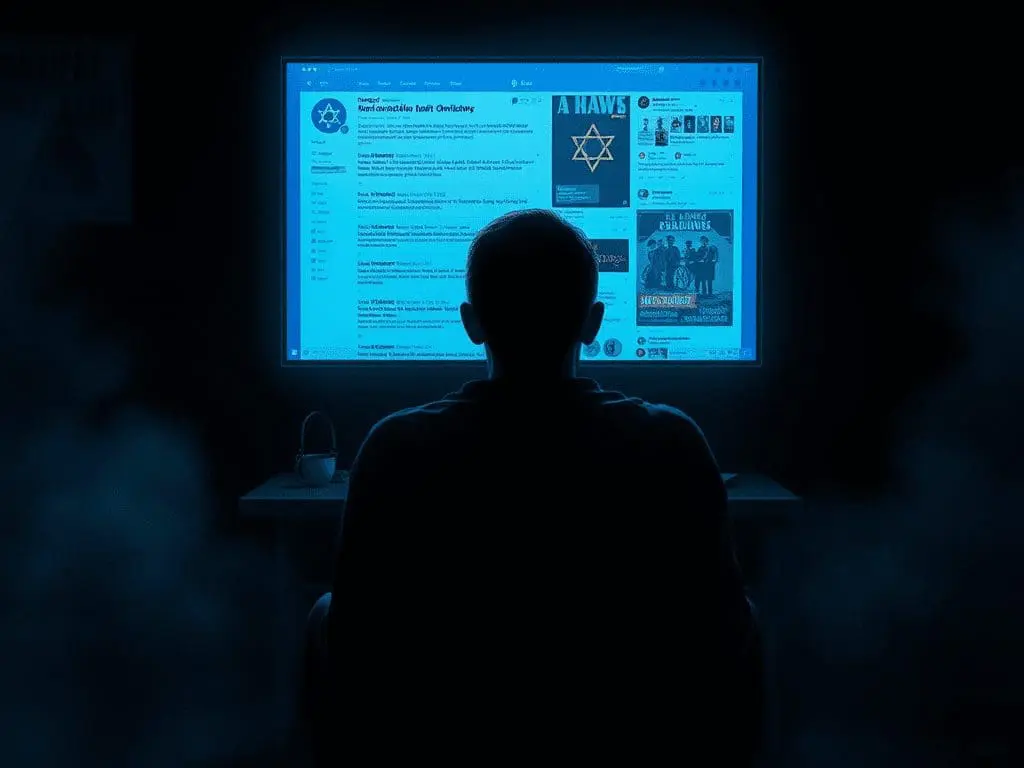
    The information warfare is very real. I’ve had to block people who seemed to harass me simply for being into Judaism. I have witnessed how Palestinian propaganda is Goebbelian in nature , and yet, barely anyone seems to be educated enough to tell when information is weaponised. People will let the media manipulate their emotions; and often the new propaganda overrides the education they received at school about the Nazi Holocaust. Despite all efforts, the public have easily become antisemitic really fast. Politicians are making profits out of war.

    One of the main reasons for the increase in digital antisemitism is the anonymity and accessibility of the internet. People can hide behind pseudonyms and fake profiles while spreading hateful messages without facing any consequences. This has emboldened individuals and groups to express their antisemitic views more openly, leading to a normalisation of hate speech that can quickly spread and influence others.

    People think that October 7th was not brutal, but it certainly was, marking a pivotal moment that shook the foundations of our beliefs about safety and humanity. Then we have some Christians claiming they are the “new Israel” and invalidating Jewish people’s existence, a stance that not only marginalises an entire community but also deepens societal divides. The world is hectic, mad, and dangerous as never before; political tensions are rising, and misinformation spreads like wildfire, leaving many in a state of confusion and fear. These are dark ages, where compassion seems to be overshadowed by strife, and the basic tenets of coexistence are challenged daily, urging us to reconsider how we engage with one another in a rapidly changing landscape.

    Social media platforms, in particular, have become breeding grounds for antisemitism. Posts demonising Jews or denying the Holocaust are not only allowed to stay up but often go viral, reaching a wide audience and perpetuating harmful stereotypes. Algorithms that prioritise engagement and controversial content only exacerbate the issue, pushing antisemitic messages further into the mainstream. It is happening in Telegram group chats. There are horrible stickers which demonise the Jew, and these cartoons are similar to Nazi cartoons published just before World War II. A decade ago, all this would have been unacceptable. But since jihadist propaganda spread, it has shockingly become hypernormalised to hate the Jewish people

    Rabbi Shraga Simmons (Aish, 2024) explained how digital platforms such as Wikipedia are currently being weaponised against Israel and the Jewish people, highlighting the alarming trend of misinformation and biased narratives that often distort historical facts and present a skewed portrayal of events. This manipulation of online resources not only undermines the integrity of educational platforms but also fosters a climate of misunderstanding and hostility towards Israel. By examining specific examples, Rabbi Simmons sheds light on the broader implications of such digital warfare, urging the Jewish community and supporters of Israel to remain vigilant and proactive in countering these narratives with truth and factual evidence. Furthermore, my Youtube channel was banned after I posted a short video of my Tanakh. I was accused of “Spam”. Clearly, this was an injustice, and a great loss for me.

    The problem is how this digital antisemitism leads to direct discrimination and hate crime against Jews all over the world. The consequences of this digital antisemitism are far-reaching and troubling. It can fuel real-world violence and discrimination against Jewish individuals and communities. In the past few years, we have seen a rise in hate crimes targeting Jews, including deadly attacks on synagogues and verbal harassment on the streets. The normalisation of antisemitism online only serves to validate these hateful actions and make them seem more acceptable to those who hold prejudiced views.

    For instance, recently an Italian restaurant refused to serve a Jewish couple as a result of antisemitic information about the war in Gaza. They were told by the hotel manager: “Good morning. We inform you that the Israeli people as those responsible for genocide are not welcome customers in our structure” (The Associated Press, Market Beat, 2024). They had used Booking.com to make the reservation, and this incident naturally led the Booking company to remove the specific hotel from their services, and even the Israeli Ministry of Foreign Affairs investigated the situation.

    It is crucial that we address this issue head-on and work towards combating digital antisemitism. Social media companies must take a stronger stance against hate speech on their platforms and enforce their community guidelines more rigorously. Education and awareness campaigns can also help to debunk myths and stereotypes about Jewish people, promoting understanding and tolerance instead.

    Ultimately, it is up to all of us to stand up against digital antisemitism and all forms of hate speech. By actively challenging and calling out antisemitic rhetoric whenever we encounter it, we can help to create a more inclusive and welcoming online environment for everyone. Let us work together to dismantle the normalisation of antisemitism and build a world where discrimination and hatred have no place.

  • Promoting Atheism: The Role of Atheist Alliance International

    Promoting Atheism: The Role of Atheist Alliance International

    Advertisements

    One of the main goals of AAI is to support atheist organisations and individuals around the world by providing resources, networking opportunities, and advocacy support. Through their work, AAI hopes to create a more inclusive and accepting society for atheists and non-believers.

    Another key focus of AAI is to promote critical thinking, rationalism, and science-based education . They believe that a world free from religious dogma and superstition is a better world for all people, and they work to promote reason and evidence-based decision-making in all aspects of life.

    AAI also works to defend the rights of atheists and non-believers who may face discrimination or persecution in their communities. They advocate for the separation of church and state, freedom of religion, and the right to free speech for all individuals, regardless of their religious beliefs.

    One of the ways AAI achieves these goals is through their annual conferences, where atheists and non-believers from around the world come together to discuss important issues, share ideas, and build connections. These conferences offer a valuable opportunity for like-minded individuals to come together and work towards a common goal of promoting atheism and secular values.

    In conclusion, the Atheist Alliance International plays a vital role in promoting atheism and secular values worldwide. Through their advocacy work, support for atheist organisations, and promotion of critical thinking, AAI is helping to create a more inclusive and accepting world for all individuals, regardless of their religious beliefs.

  • Understanding Transmigration: Insights on Reincarnation

    Understanding Transmigration: Insights on Reincarnation

    Advertisements

    In Hinduism, the belief in transmigration is closely tied to the concept of karma, which suggests that our actions in this lifetime will determine our fate in future lives. According to Hindu teachings, the ultimate goal of transmigration is to achieve moksha, or liberation from the cycle of birth and death , and to reunite with the divine source.

    Similarly, in Buddhism, the belief in transmigration is a fundamental aspect of the cycle of samsara, which is the endless cycle of birth, death, and rebirth. According to Buddhist teachings, the goal is to break free from this cycle by attaining enlightenment and reaching nirvana, a state of ultimate peace and liberation.

    In Western traditions, the concept of transmigration has also been explored in various esoteric and mystical teachings. Some philosophers and thinkers believe that the soul is eternal and that it may incarnate in different bodies over time in order to learn and grow.

    Regardless of one’s religious or philosophical beliefs, the idea of transmigration invites us to consider the bigger picture of our existence and our interconnectedness with all living beings. It challenges us to think beyond our current lifetime and to consider the lessons we are meant to learn from each experience.

    While the concept of transmigration may be challenging to fully comprehend or prove, it offers a sense of hope and reassurance that our lives have purpose and meaning beyond what we can see or understand in the physical world. It encourages us to think about the bigger questions of life and to consider our actions and choices in a broader context.

    In conclusion, transmigration is a thought-provoking concept that invites us to reflect on the nature of existence, the interconnectedness of all beings, and the potential for growth and evolution beyond this lifetime. Whether or not one believes in the literal truth of transmigration, the teachings and principles behind this belief can offer valuable insights and lessons for our spiritual and personal development.

  • Understanding Radical Atheism: A Challenge to Religious Beliefs

    Understanding Radical Atheism: A Challenge to Religious Beliefs

    Advertisements

    Radical atheists believe that religion is a form of superstition and that it hinders the progress of society. They argue that religious beliefs are irrational and lead to harmful consequences, such as discrimination , violence, and oppression. Radical atheists seek to critique and dismantle religious institutions and practices, advocating for a secular society that is free from the influence of religion.

    One of the key tenets of radical atheism is that individuals should rely on their own critical thinking and scepticism rather than deferring to religious authorities or doctrines. They argue that belief in a higher power limits our ability to think critically and inquire into the nature of existence. Instead, radical atheists advocate for a worldview based on reason, evidence, and the scientific method.

    Some critics of radical atheism argue that it is too confrontational and dogmatic in its rejection of religion. They contend that religion can provide comfort, meaning, and community for many individuals, and that radical atheism ignores the positive aspects of religion.

    Despite these criticisms, radical atheism has gained traction in recent years as more people question traditional beliefs and seek alternatives to organised religion. With the rise of the internet and social media, radical atheists have been able to connect with like-minded individuals and share their ideas with a wider audience.

    In conclusion, radical atheism challenges the status quo and offers a provocative alternative to traditional religious beliefs. While it may not be for everyone, radical atheism encourages individuals to think critically about their beliefs and consider alternative worldviews that are based on reason and evidence.