Self-care is an aspect of daily life very much taken for granted by the great majority. They self-care on a daily basis and give little to no thought about the mechanics of such. However, for some people suffering with mental illness, self-care can be daunting and a real struggle, with much thought invested in planning and executing those daily tasks (e.g. taking a shower) which are easy to manage for other people. This leads them to develop self-neglect.
I’ve been researching mental health for ages, and it is still quite a mystery to me why some people end up unfortunately losing such ability to take care of themselves. One thing I’ve noticed is that it is related to motivation and volition; and it is an essential aspect of maintaining physical and mental well-being. It involves taking deliberate actions to nurture and care for oneself. Some self-care practices include physical exercise, taking showers/baths, cutting one’s finger and toe nails, tidying up one’s environment, healthy eating, quality sleep, relaxation techniques, hobbies and leisure activities, setting boundaries, and maintaining social connections
Self-neglect can be a serious concern, especially when it is associated with mental illness. It refers to a lack of self-care and disregard for one’s well-being. When someone is experiencing mental illness, it can be challenging to prioritise self-care. However, taking care of oneself is crucial for managing mental health conditions as lack of self-care can have negative consequences on both your physical and mental well-being. It often occurs when we neglect to prioritise our own needs and fail to engage in activities that promote self-nurturing. Here are some potential effects of self-neglect:
Physical Health Issues: When you neglect self-care, your physical health can suffer. Lack of exercise, poor nutrition, and inadequate sleep can lead to various health problems, including weight gain, weakened immune system, cardiovascular issues, and chronic fatigue.
Mental Health Challenges: Neglecting self-care can exacerbate existing mental health conditions or contribute to the development of new ones. It can increase stress levels, lead to burnout, and trigger symptoms of anxiety and depression.
Emotional Instability: Without proper self-care, emotional stability can be compromised. Neglecting self-care may lead to heightened irritability, mood swings, emotional exhaustion, and difficulty managing emotions.
Impaired Decision-Making Abilities: Self-neglect can diminish cognitive functioning, making it harder to think clearly, concentrate, and make sound decisions. This can have a negative impact on various areas of life, including work, relationships, and personal goals.
Decreased Productivity: When self-care is neglected, productivity levels tend to decline. Inadequate rest and relaxation can lead to decreased motivation, difficulty focusing, and diminished performance in daily tasks.
Strained Relationships: Neglecting self-care may result in increased stress, irritability, and a decreased ability to effectively communicate and connect with others. This can strain relationships and lead to feelings of isolation.
It is crucial to prioritise self-care and make it a daily practice. By taking deliberate actions to care for yourself physically, emotionally, and mentally, you can improve your overall well-being and lead a more fulfilling life. Remember, self-care is not selfish; it is necessary for your health and happiness.
All the time, permanently… I live in an unstable emotional state. This is exhausting. I experience a lot on a daily basis. I feel constantly fatigued and tired too. While there is no known cure for this tribulation, it is possible to manage the symptoms and improve overall well-being.
Borderline personality disorder (BPD), also known as Emotionally Unstable Personality Disorder (EUPD) is a chronic mental illness characterised by instability in emotions, relationships, and self-image. People with BPD often experience intense and fluctuating emotions, have difficulty regulating their emotions, and struggle with impulsive behaviours. It is important to note that BPD is a complex disorder and can manifest differently in each individual. For more in-depth definitions and descriptions, please read my academic article “Women Who Are Mad”.
My emotions are always incredibly intense. The roller coaster is very real in my routine; with only some elements present with great stability such as my lack of care towards myself and my constant confusion in regards to who I am. Furthermore, I experience feelings of depression almost every day, and continually feel stuck in a self-neglecting dynamic. Clinically, I am unwell; and knowing that there isn’t a magic cure for how I feel demotivates me. I want to feel better. As a matter of fact, I want to be normal.
Yet, every day reminds me of my abnormality. Some might perceive my personality as ‘eccentric’; nevertheless, I see it as simply dysfunctional. My every day is heavy and sometimes foggy. I never know who I am, my identity confuses me. I still hope that one day I will be okay, and that I won’t suffer as much as I currently do.
Being diagnosed with BPD was something I did not process to begin with until many years later. The longer it gets, the more I comprehend my disorder. And the more frustrated I feel at not being able to feel better immediately, or later. Simply, it is like living with a chronic pain condition. You can only learn to live with it, cope with it, and ease the symptoms if you are lucky.
Recovery from BPD is a gradual process, and it requires patience, perseverance, and commitment. With the right treatment and support, many individuals with BPD are able to lead fulfilling lives and experience a reduction in symptoms. It’s essential to remember that seeking help is a crucial step towards managing BPD and improving overall mental health. I hope that by taking these steps, I can live normally one day.
What happens when we die? This video introduces the concept of death anxiety, a psychoanalytical description of the fear of death experienced at least unconsciously by all.
The world is full of mental health diagnoses, and each day these are becoming more common as more people get diagnosed with a condition affecting their daily life. Nevertheless, little attention is given to how the system of psychiatric nomenclatures goes on to perpetuate the very pathologies they claim to treat.
psychosis
A person might think they are normal, until they are told they are not. That is, until a diagnosis is given which reinforces the very patterns of behaviours which the clinician is attempting to treat or make absent. As a matter of fact, it isn’t until people are given diagnoses that they begin to identify with specific sets of behaviour. In a way, the clinician prescribes such sets of behaviours when they— often forcibly— attribute a label to a human being who might just be having a hard time.
People have rough times, and sometimes during such rough times, people might act in ways which are out of character; that is, unusual patterns of behaviour which express distress. Nonetheless, the average diagnosis will limit a person’s personality to a criteria which can indeed narrow a person’s imagination and hamper their very dreams.
Is the system creating individuals who are different by labelling them when they are teenagers? Psychology shows us that teenagers are still in major developmental stages where personality and character, among many other traits, become more defined. A label can really throw a teenager off that trajectory and influence their identity to a point in which the human being might feel that all they are is what the label prescribes.
For instance, the diagnoses of personality disorder have somehow made it through so scientific rigour; yet, even the concept of it begins to disintegrate in psychiatric nomenclatures such as the ICD-11. Clinicians can at times forget that behind every label given, there is a human being with a complex life of his or her own. They, thus, enslave an individual to a pattern regardless of the consequences this may have on their general wellbeing.
As someone who has been labelled, I can tell that being ‘marked’ as disordered since I was a teenager affected my identity. It simply affected me more than I could express. It attempted to wash away the uniqueness of my personality, and it tried to box me into a criteria that I did not even fully meet. Now that I am in my thirties, I have come to analyse how the iatrogenic effects affected my development, and I can honestly say that sometimes I think I would have been better off away from the system and not being diagnosed in the first place.
I was only 17 years old when I was labelled. At such an age, I was still forming ‘me’, and being given such a set of criteria only added elements which perhaps might never have appeared if it was not for the neoliberal touch of intervention. But I am not the only one, and apart from everything mentioned already, stigma is also a definite cause for distress in labelled individuals. What for the clinician might be a random job at the office, can become a devastating, life-changing event for the human being being subjugated to an external opinion about their internal functioning. In a way, the clinician creates the pathology by giving a label.
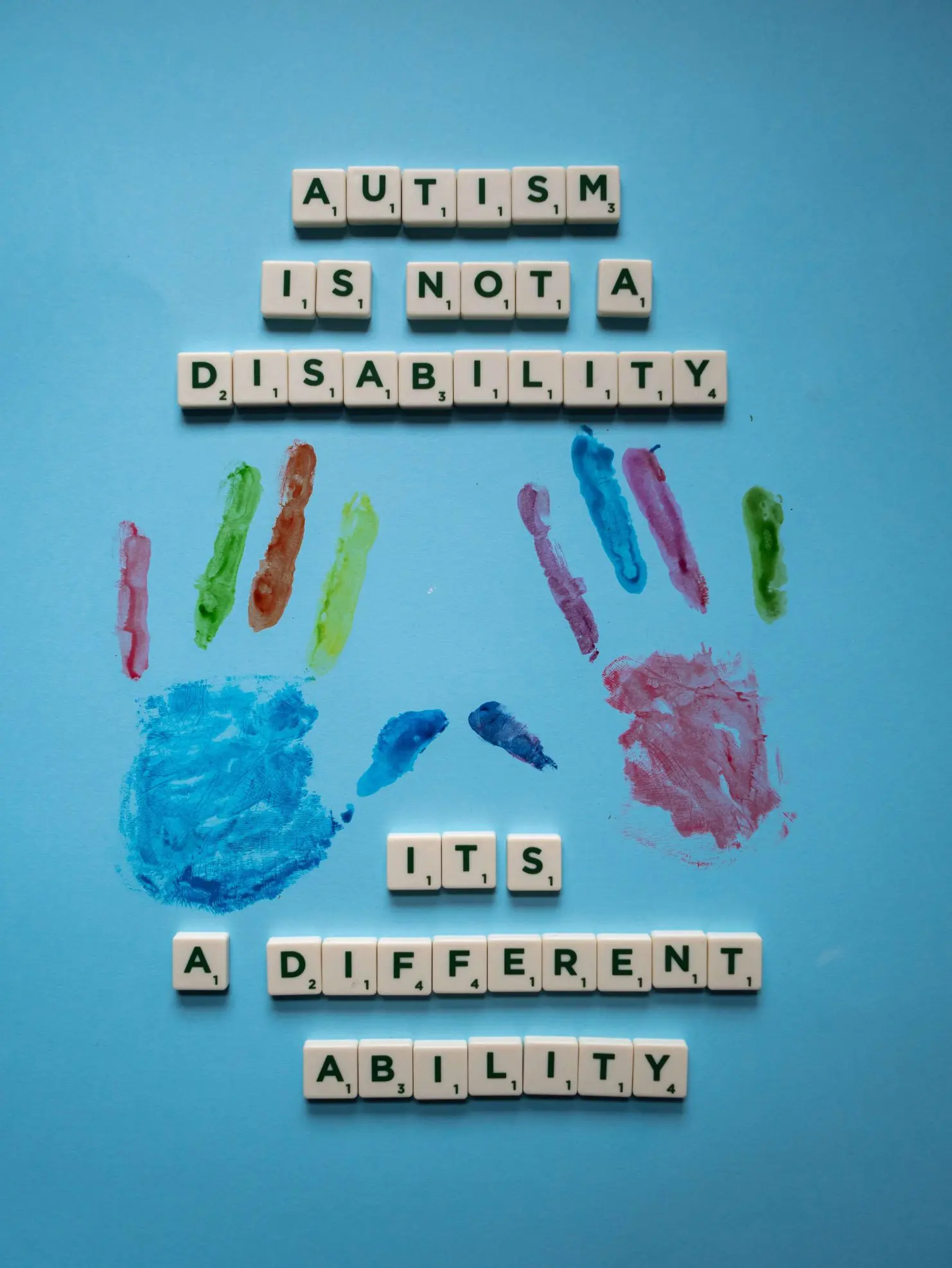
According to the NHS (2019), ‘being autistic does not mean you have an illness or disease. It means your brain works in a different way from other people’. The core characteristics of autism are: (1) poor social communication; (2) poor social interaction; (3) sensory processing differences; (4) sensory sensitivity; (5) repetitive behaviours; and (6) obsessions and fixations on special interests. These characteristics can vary, and some individuals show two or three, whilst others might be more severely affected (Lincoln College, 2022). This blog post will explore these core characteristics, the unofficial subtypes of autism, and the complex process of diagnosis.
Individuals experiencing the behavioural abnormalities, will show a fixation on specific activities, tools, toys, etc. They may use these objects in particular ways. Furthermore, they may engage in repetitive behaviours such as hand flapping or spinning around, might become upset if their routine is disrupted, and will insist on maintaining consistency. Moreover, they might have unusual sensory interests, either a high or low tolerance to pain, unpredictable verbal outbursts, and might become upset at sensory intrusions. Finally, they might also engage in risky or self-injurious behaviour.
Individuals experiencing communication difficulties might have a delayed language development, speech difficulties and/or reliance on alternative communication methods, high levels of articulation, literal interpretation of words (i.e. lack of understanding of jokes or sarcasm), problems starting and maintaining conversations, stereotyped and repetitive use of phrases, a monotonous voice tone, and poor interpretation of body language or other forms of non-verbal communication.
Individuals experiencing social difficulties might struggle to form and sustain friendships, might show a lack of interest in social activities, might engage in inappropriate social responses, might have a lack of awareness of boundaries, might reject expressions of affection such as hugging, might prefer to role play, and might be naive, suggestible and overly trusty of others.
The Unofficial Subtypes of Autism
Due to current diagnostic manuals such as the DSM-V (American Psychiatric Association, 2013) and ICD-11 (World Health Organisation, 2019), individuals are generally given a diagnosis of Autism Spectrum Disorder (ASD) regardless of their profiles. Yet, there are unofficial categories used by the autistic community to understand differences better.
Individuals categorised as having Asperger’s syndrome tend to have a higher than average I.Q., and unlike other forms of autism, no speech or cognitive difficulties. However, interpersonal difficulties are prevalent for them, as they struggle to communicate and interact with others. Yet, the symptoms are invisible and difficult to spot. They may also have pathologies which affect their day to day life (Lincoln College, 2022). Asperger’s syndrome is no longer diagnosed (McCrimmon, 2018) but it is still generally seen as a subtype of autism. It is also believed that Asperger’s syndrome is a form of high-functioning autism (HFA) which according to Lincoln College (2022) entails a delay in development, an inability to read facial expressions, a hypersensitivity to light and noise, and a desire for socialisation without understanding how to effectively do it. Nevertheless, HFA is not diagnosable, although it is also recognised by autistic populations.
Individuals categorised as having Pathological Demand Avoidance (PDA) tend to have intersubjective difficulties and to avoid the demands of everyday life. This profile is not an universally recognised form of autism by healthcare professionals, however, it is still generally used by autistic populations. According to the National Autistic Society (n.d.), an individual with this profile ‘(a) resists and avoids the ordinary demands of life; (b) uses social strategies as part of avoidance, for example, distracting, giving excuses; (c) appears sociable, but lacks some understanding; (d) experiences excessive mood swings and impulsivity; (e) appears comfortable in role play and pretence; and (f) displays obsessive behaviour that is often focused on other people’. Furthermore, Lincoln College (2022) states that these individuals have an anxiety-based desire to remain in control all the time, and can become aggressive if they feel they are not in control. They also seem to get stressed out if anything is expected of them. However, if they feel comfortable, they seem normal.
Individuals labelled as having Kanner’s Autism also known as ‘Classic Autism’ are described as having impairments in communication, and a fixation on activities with restrictive or repetitive behaviour such as hand flapping. The criteria for this autism profile is: (1) an impairment in the use of non-verbal skills, poor eye contact, and an inability to interpret body language; (2) inability to make and maintain friendships; (3) inability to enjoy interests or share activities; (4) inability to respond appropriately to emotion in others; (5) delay in, or complete lack of language development; (6) repetitive use of language; (7) fixation on a particular interest; (8) inflexibility to change routines; and (9) repetitive physical movements (Lincoln College, 2022). However, this is not diagnosable.
Individuals diagnosed as having atypical autism are those whose pattern of behaviour fits most but not all of the criteria for other forms of autism. It can often be undiagnosed for many years as individuals tend to be given this label later in life.
Finally, individuals categorised as having Savant syndrome have skills which are uncommon to most people, as well as having the general characteristics of autism. Among the extraordinary abilities seen in savant autism are being able to mentally solve complex mathematical problems, having great memory for specific details of something, high quality artistic skills, and outstanding musical talent.
Diagnosing Autism
The advantage of diagnosing Autistic Spectrum Disorder (ASD) is that individuals and their families can find as much information as possible about the condition and engage in psychoeducation, which can foster a sense of relief. The diagnosis might help the individuals have more clarity about their difficulties, and might give them more insight into potential comorbidities or wrong diagnoses. Moreover, a personalised care plan with strategies can be devised for ongoing support in all sectors. Nevertheless, a disadvantage of diagnosis is that individuals have to live with the stigma (i.e. negative stereotyping) associated with psychiatric labels, and how the label can affect their relationships and lead to prejudice and discrimination. Furthermore, another disadvantage is that individuals might become depressed with the fact that autism has no cure. They might also experience more adverse circumstances as a result of having a diagnosed disability, and all these negative variables might lead the individual to internalise the label and to embrace the maladaptive behaviours associated with the label which shapes their identity (Lincoln College, 2022).
Diagnosis is usually done through a person’s GP; however, a paediatrician, a speech and language therapist, an educational psychologist, and/or a specialist psychologist might also need to be involved; and sometimes this multidisciplinary approach can take years before a diagnosis is given (Lincoln College, 2022). Moreover, information for diagnosis is also gathered from relatives, teachers and friends of the individual presenting with symptoms. The individual might be observed as he or she conducts activities and skills might be tested. Furthermore, professionals working with people with autism must take on board the National Institute for Health and Care Excellence (NICE; n.d.) guidelines. These specifically state that anyone working with autism should be skilled and competent and have tactful communication skills (Lincoln College, 2022).
There are several factors that influence the diagnosis of autism: (1) culture— behaviours classed as ‘abnormal’ by a society might bring attention and concern to others. Some countries might perceive different behaviours as ‘symptomatic’, whilst others might see the same behaviours as completely ‘normal’. Also, stigma might become a barrier to diagnosis; (2) age— even though the symptoms of autism can be spotted when the individual is 2-3 years old, many professionals refuse to make a diagnosis until later on. However, some professionals are also reluctant to diagnose adults; (3) sex— males tend to get a diagnosis of autism more than females. Some believe that this is due to how different the characteristics manifest, with girls being more able to hide the symptoms; (4) parental attitudes— some children might not get diagnosed because their parents cannot effectively spot the symptoms, or they might ignore these manifestations out of fear of being judged. Alternatively, parents might insist to the family GP that the child has a problem even if such is not the case; (5) coexisting conditions— autism often has mental and physical comorbidities, making it more difficult to pinpoint the exact cause for specific behaviours, and making diagnosis more complicated; and (6) genetic factors— autism has a genetic link that runs in families.
Furthermore, there are also barriers to diagnosing autism such as a lack of local services for autistic people, which means that a formal diagnosis with the necessary multidisciplinary specialists is not always possible as a GP might have limited knowledge of the condition. This might subsequently lead to individuals not being diagnosed for a long time, which might prevent them from wanting a diagnosis in the future. It can also lead to individuals not having a documented developmental history, which can affect the process of diagnosis. Moreover, another barrier to diagnosing autism is how subtle some of the symptoms can be, and how subjective the interpretation of these symptoms also is (Lincoln College, 2022).
References
American Psychiatric Association (2013a) Diagnostic Statistical Manual of Mental Disorders, 5th ed.
World Health Organisation (2019) ‘International Classification of Diseases – 11th Revision’ [Online]. Available at https://icd.who.int/en (accessed 22 February 2022).