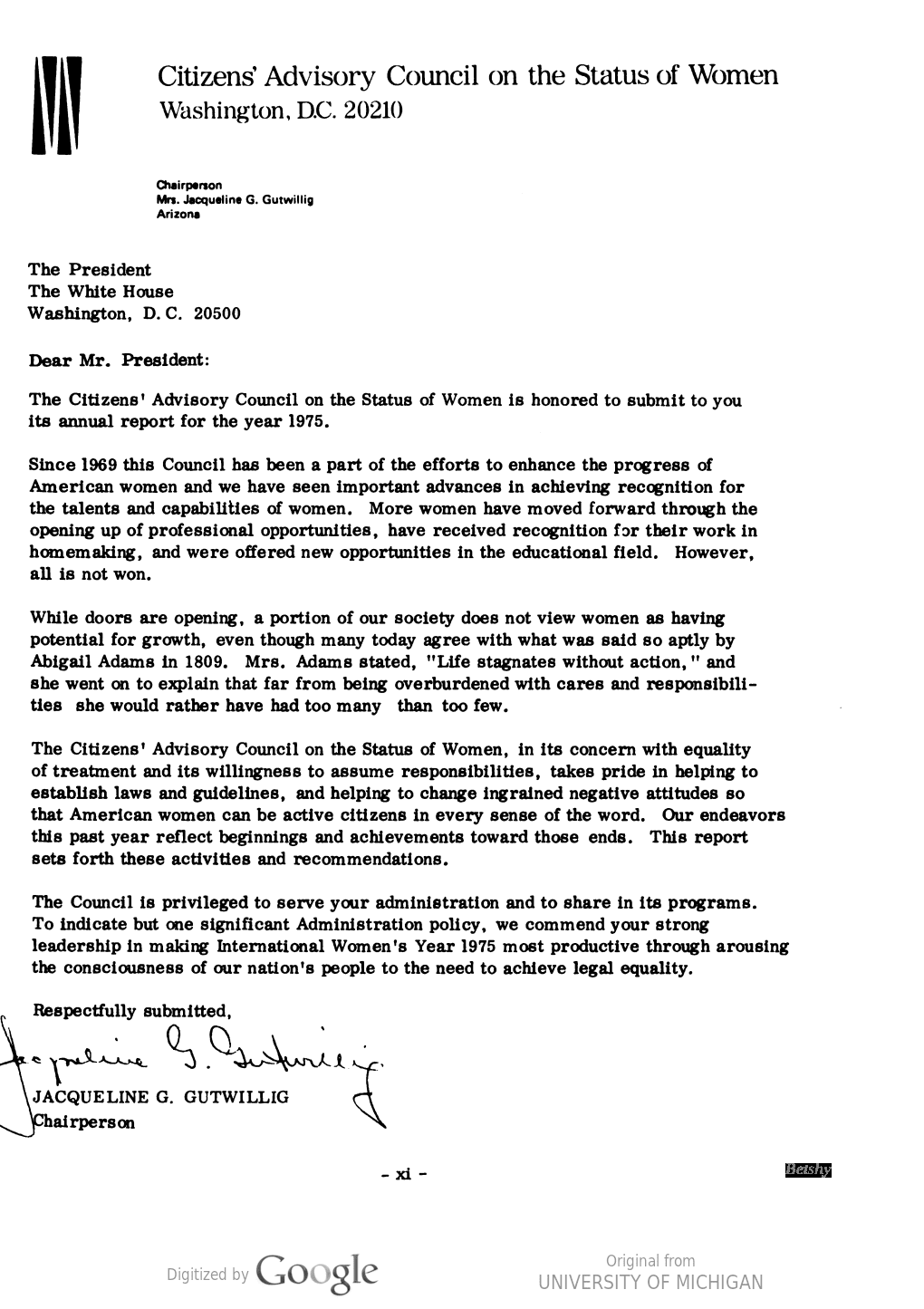

Citizens’ Advisory Council on the Status of Women, 1975. Women, For sale by the Supt. of Docs., U.S. Govt. Print. Off.
Category: History
-

Anthropometric Laboratory
About
Galton’s first Anthropometric Laboratory situated in a corner of the International Health Exhibition in Kensington, London.1884–1885
×
Dismiss alertIn 1888, a reporter from the Pall Mall Gazette paid a visit to Galton’s Anthropometric Laboratory in London, where instruments developed by Galton measured the physical and mental characteristics — from keenness of hearing to breathing power — of over 10,000 people. The resulting article, titled “A Morning With the Anthropometric Detectives”, described Galton’s laboratory as a world of “order and precision, and tests of the nicest accuracy”. “Dumb though they are,” Galton told the reporter, “what splendid detectives our instruments might prove”.
The Public Domain Review
History
Sir Francis Galton sets up his laboratory in London in 1884 and begins mental testing, much of which was conducted mainly under the principles of craniometry. Not only did he measure the participant’s skull but also assessed “performance on a range of simple physical tasks, such as tests of eyesight, strength of grip, colour vision, hearing, hand preference, and so on”
(Byford, 2014).
Book
The Life Letters and Labours of Francis Galton
More
-
No Repetitions
WHAT THE NAGASAKI!
1945For 12 months prior to the nuclear attack, Nagasaki had experienced five small-scale air attacks by an aggregate of 136 U.S. planes which dropped a total of 270 tons of high explosive, 53 tons of incendiary, and 20 tons of fragmentation bombs. Of these, a raid of August 1, 1945, was most effective, with a few of the bombs hitting the shipyards and dock areas in the southwest portion of the city, several hitting the Mitsubishi Steel and Arms Works, and six bombs landing at the Nagasaki Medical School and Hospital, with three direct hits on buildings there. While the damage from these few bombs was relatively small, it created considerable concern in Nagasaki and a number of people, principally school children, were evacuated to rural areas for safety, thus reducing the population in the city at the time of the atomic attack.[11][13][14][15]
On the day of the nuclear strike (August 9, 1945) the population in Nagasaki was estimated to be 263,000, which consisted of 240,000 Japanese residents, 10,000 Korean residents, 2,500 conscripted Korean workers, 9,000 Japanese soldiers, 600 conscripted Chinese workers, and 400 Allied POWs.[15] That day, the Boeing B-29 Superfortress Bockscar, commanded by Major Charles Sweeney, departed from Tinian‘s North Field just before dawn, this time carrying a plutonium bomb, code named “Fat Man“. The primary target for the bomb was Kokura, with the secondary target being Nagasaki, if the primary target was too cloudy to make a visual sighting. When the plane reached Kokura at 9:44 a.m. (10:44 a.m. Tinian Time), the city was obscured by clouds and smoke, as the nearby city of Yawata had been firebombed on the previous day. Unable to make a bombing attack on visual due to the clouds and smoke and with limited fuel, the plane left the city at 10:30 a.m. for the secondary target. After 20 minutes, the plane arrived at 10:50 a.m. over Nagasaki, but the city was also concealed by clouds. Desperately short of fuel and after making a couple of bombing runs without obtaining any visual target, the crew was forced to use radar in order to drop the bomb. At the last minute, the opening of the clouds allowed them to make visual contact with a racetrack in Nagasaki, and they dropped the bomb on the city’s Urakami Valley midway between the Mitsubishi Steel and Arms Works in the south, and the Mitsubishi-Urakami Ordnance Works in the north.[16] 53 seconds after its release, the bomb exploded at 11:02 a.m. at an approximate altitude of 1,800 feet.[17]
Less than a second after the detonation, the north of the city was destroyed and 35,000 people were killed.[18] Among the deaths were 6,200 out of the 7,500 employees of the Mitsubishi Munitions plant, and 24,000 others (including 2,000 Koreans) who worked in other war plants and factories in the city, as well as 150 Japanese soldiers. The industrial damage in Nagasaki was high, leaving 68–80% of the non-dock industrial production destroyed. It was the second and, to date, the last use of a nuclear weapon in combat, and also the second detonation of a plutonium bomb. The first combat use of a nuclear weapon was the “Little Boy” bomb, which was dropped on the Japanese city of Hiroshima on August 6, 1945. The first plutonium bomb was tested in central New Mexico, United States, on July 16, 1945. The Fat Man bomb was somewhat more powerful than the one dropped over Hiroshima, but because of Nagasaki’s more uneven terrain, there was less damage.[19][20][21][22]
Wikipedia: Nagasaki