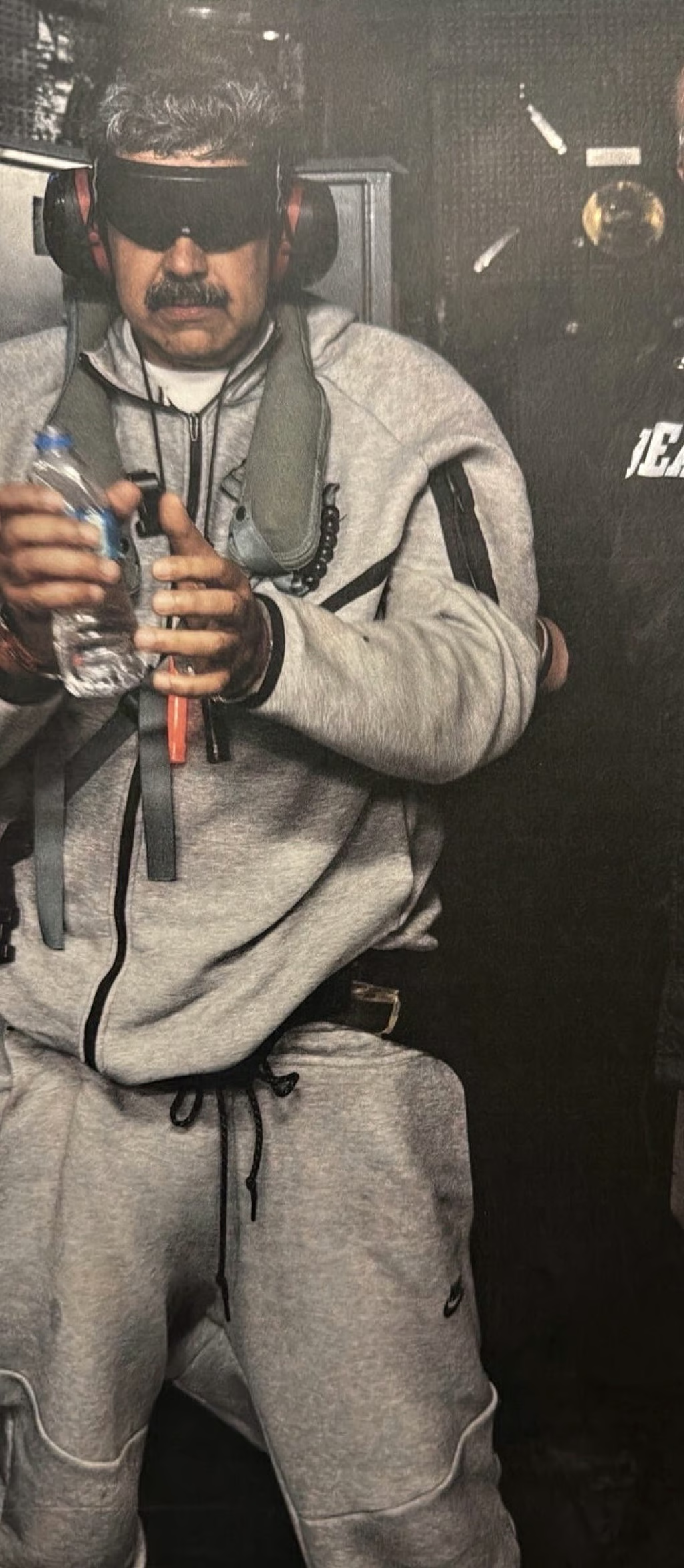
Trump bombed Venezuela, killing over 40 people (including civilians); and captured President Maduro on the 3rd January, 2026. The entire world instantly had headlines about the event, and the iconic picture of Maduro blindfolded and deafened was on the front page of many high-profile newspapers (BBC News, 2026). Here I present an objective analysis of the situation; as well as paint a picture about what to expect next. The evidence will be presented, and the reader will be equipped to form her or his opinion on the matter.
Advertisements
The event spread like wildfire on the 3rd January, 2026. Maduro’s image wearing headphones and a blindfold became viral to the point that the Nike tracksuit he was wearing sold out fast (The New York Times, 2026). The year began with a bang, and a schism. Many took to the streets to celebrate the downfall of Maduro, a figure who was perceived by many as a dictator who ruled the country for nearly 13 years since 2013 (Encyclopedia Britannica, 2026). Others, however, took to the streets to protest and demand that their President be returned, condemning the US as an imperialist and neocolonialist state.
The Venezuelan People March Against The United States
But what are Trump’s real motivations behind his saviour facade? One thing he has explicitly admitted to is that he wants, and he will take, Venezuela’s oil 🛢️; or else, further and worse attacks would take place. (AP News, 2026; Time, 2026).
Hello, my wonderful community! Here I am typing away from Plymouth, my cosy corner where the sea breeze whispers encouragement. Back when I was just 16, in the distant year of 2007, I crafted my very first website—a clumsy but heartfelt creation that sparked a lifelong passion. Fast forward to 2026, and I find myself pondering: how do people navigate this digital age without investing in a personal website? It’s baffling to me. So many pour their most precious thoughts, dreams, and stories into social media, only to watch them vanish amid algorithms, bans, account deletions, or forgotten feeds. Instead, why not cultivate a decentralised web, where your voice stands eternal? If you haven’t claimed your corner of the internet yet, I urge you: start today. It’s not just a site; it’s a sanctuary, a legacy, and a revolution. One day, you will be glad you did so.
Advertisements
For me, a website transcends mere business—it’s an extension of one’s very identity, a testament to one’s journey. This website is like a perennial plant I nurtured from seed: I planted it with hope, watered it through countless late-night sessions despite avolition’s grip, and now I harvest its fruits in the form of connections, insights, and even modest income.
Techno-legal Contexts
As we all know, web censorship is increasing at a mad rate, and more and more people succumb to social networks in order to voice their thoughts without fear of repercussions. Yet, even the police in the UK nowadays monitor the Internet looking for posts that could ultimately incite disorder. This is just the beginning of the digital tribulation. As the relationship between digital and tangible behaviour becomes more reified, there will be more actions taken by legislatures to control what people should or should not post about. This will involve Internet giants complying with data sharing regulations to keep people safe, and this might even include circumstances where a mental health diagnosis, or claiming benefits might warrant a digital footprint review.
Unlike social media, where antisemitism and prejudice led to shadow-bans and deletions, here I’m sovereign. This is my pixelated land, my safe space away from the thought police as portrayed in Orwell’s 1984. I control my data, my narrative—no algorithms dictating visibility, and no discriminatory corporate whims erasing my voice.
Your digital footprint will become a crucial aspect of your identity and reputation sooner than you may think. It will say a lot about what you do when you are free, and navigating the digital world. Assessments of your activities might even help managers decide whether to hire you or not. Your attitude towards AI will reflect your deepest social issues. The iceberg will be crushed more than ever before, and this might be taking place by 2030, a year mentioned in many different types of global agendas as a deadline (e.g. The United Nations 2030 Agenda).
In a world of superficial posts, regulatory bias, and a flood of misinformation; a personal website will be an essential commodity by 2030. As the conversation about the decentralisation of the World Wide Web (WWW) continues, small communities will gain traction. Yes, having a website is revolutionary because it decentralises power, safeguards legacies, and fosters true connection. Join me—plant your seed today. Your voice deserves eternity.
🫂 Disclosure: This post contains affiliate links, and is sponsored by Automattic, Inc. Any purchases you make will help to maintain this website through earned commissions.
I chose WordPress.com by Automattic, Inc. as my platform for its unique elegance and accessibility. It’s free if you are beginning, allowing anyone with a dream to dip their toes in without having to make an investment. This facilitates creativity and innovation. But if you’re envisioning an empire, as I do, I wholeheartedly recommend upgrading to a premium plan, as this investment amplifies your website’s potential significantly. This type of upgrade unlocks plugins—those magical extensions that transform a simple site into a dynamic and cool powerhouse that can meet diverse needs and functionalities. With these tools at your disposal, you can do almost anything you imagine.
Plugins are the heartbeat of WordPress.com‘s allure. They empower you to add functionality seamlessly, whether it’s SEO optimisation, contact forms, or e-commerce tools. And the beauty? You’re never alone in this creative endeavour. WordPress.com‘s premium plans have a dedicated team of Happiness Engineers, available around the clock for troubleshooting and guidance. Struggling with a glitch at 3 a.m.? They’re there, patient and expert, turning frustration into triumph. This support has been my lifeline during my worst days, when an executive function fog made even basic edits feel Herculean. What I cherish most, however, is the learning curve it offers. Every plugin I install, every theme I tweak, deepens my digital mastery—skills honed over 18 years in SEO, UX, and quality improvement. It’s hands-on empowering, especially as an autodidact.
Furthermore, WordPress.com delivers the complete package in one harmonious ecosystem: your custom domain (for example, mine is Betshy.com), reliable hosting with SSH and SFTP access, database control (for the tech-savvy) and an intuitive interface for design and management. All in one single gathering point! It does not get any simpler than this. I adore how you can prepay for years ahead; my goal is to secure my site’s future for decades. My ambition? Fifty years of uninterrupted life for the page, far beyond my own estimated lifespan.
My vision for the site is grand: a unique, enduring, high-quality source revolutionising the web through innovation and ideation. WordPress.com‘s built-in AI assistant already eases the load while I infuse my skills. And yes, it generates income—not the primary goal, but a sweet bonus. I achieve this monetisation through ads, subscriptions, and payment gateways for services like consultations, or sponsorphips. Social media remains a presence, but my website is my core outlet, where authenticity thrives. This is my zone.
Ultimately, my website is my canvas—a space for artistic expression where I curate visuals to captivate and comfort visitors; and where I express my deepest thoughts. WordPress.com‘s generic themes offer boundless customisation; I am “sliving” it (as Paris Hilton might say), blending colours, fonts, and layouts to reflect my multifaceted soul. This freedom is therapeutic, turning a site into a sanctuary where my readers feel understood, and where navigation is satisfying.
Finally, VideoPress, WordPress.com‘s native video hub, lets me upload and store content securely—videos of my artwork, talks on advocacy, or personal reflections. I house media, documents, everything here, building an archive for posterity. One day, my son—the heir to this throne—will inherit this project, carrying my stories and efforts forward. I’ve optimised the site meticulously: type “Betshy” into Google, and I’m on the first page, with my face, artwork, and links gleaming. It’s my digital signature, unmissable and eternal. When I pass, my thoughts, beliefs, curiosities, and tales will endure, outliving me against all odds.
Hello, my cherished community. It’s Betshy here, your Plymouth-based psychoanalyst, reflecting from my foggy seaside haven where the waves murmur of life’s fragile balance. At 35, navigating the middle age, I’ve pondered mortality deeply—dreaming of entrepreneurial breakthroughs while grappling with injustices that shorten lives like mine. Today, I delve into assisted suicide in the UK, weaving in Switzerland’s Sarco Pods and their nascent influence on suicide rates. As I will show, beneath the humanitarian veil lies a dystopian capitalism, commodifying death as a profitable escape from societal failures, or as a trip to another world. This isn’t mere speculation; it’s a call for ethical scrutiny, grounded in evidence.
Advertisements
As of December 2025, assisted suicide remains illegal across the UK, punishable under the Suicide Act 1961 with up to 14 years’ imprisonment for aiding or encouraging suicide (Crown Prosecution Service, 2025). However, momentum for reform has surged. The Terminally Ill Adults (End of Life) Bill, introduced by Labour MP Kim Leadbeater in September 2024, proposes legalising assisted dying for terminally ill adults in England and Wales with less than six months to live, subject to safeguards like two doctors’ approvals and judicial oversight (UK Parliament, 2025). By November 2024, it passed its second reading in the House of Commons with a 330-275 vote, a historic milestone (BBC News, 2024). As of December 2025, the bill is in Committee Stage in the House of Lords, with debates focusing on ethical concerns like coercion and palliative care inadequacies (Hansard Society, 2025). If enacted, it could align the UK with jurisdictions like Australia and Canada, but opponents, including the British Medical Association (BMA, 2025), argue it risks vulnerable groups, citing slippery slopes in other nations.
Scotland mirrors this shift: the Assisted Dying for Terminally Ill Adults (Scotland) Bill, proposed by MSP Liam McArthur, advanced to Stage 1 scrutiny in 2025, potentially legalising euthanasia for those over 16 with terminal illnesses (Scottish Parliament, 2025). Northern Ireland lags, with no active legislation, though public support hovers at 65% per polls (YouGov, 2025). Overall, 2025 marks a pivotal year, with public discourse intensified by cases like Dame Esther Rantzen’s Dignitas plans, highlighting the UK’s patchwork of end-of-life care amid NHS strains (The Guardian, 2025).
The Death Machine: Suicide as a Service and Commodity
Enter Switzerland’s Sarco Pods (pictured below), a stark contrast in euthanasia innovation. Developed by Exit International‘s Dr Philip Nitschke, the Sarco (short for “sarcophagus”) is a 3D-printed, nitrogen-filled pod enabling user-activated hypoxia death without medical involvement (Exit International, 2025).
Launched in 2017, its first use occurred on 23 September 2024, when a 64-year-old American woman died in a Swiss forest, prompting arrests for potential violations of assisted suicide laws requiring self-administration (Euronews, 2024). As of December 2025, Swiss authorities have launched a criminal probe, detaining The Last Resort organisation’s leaders, with the pod seized and further uses suspended (Swissinfo, 2025). Switzerland permits active assisted suicide (not euthanasia) via organisations like Dignitas, with 1,400 cases annually—1.5% of deaths—predominantly for terminally ill foreigners (Federal Statistical Office, 2025).
The Sarco’s influence on suicide rates is nascent but contentious. Switzerland’s overall suicide rate stands at 10.2 per 100,000 in 2024, down from 11.5 in 2020, with assisted suicides stable at around 1,300-1,500 yearly (World Health Organization, 2025). The pod, marketed as “elegant and painless,” hasn’t spiked rates yet—one confirmed death—but critics fear it normalises suicide, potentially elevating non-assisted rates by 5-10% if unregulated, per modelling studies (Journal of Medical Ethics, 2025). Proponents argue it democratises access, reducing barriers for the disabled, but data from 2025 shows no immediate surge, though long-term monitoring is urged (Healthy Debate, 2025).
This evolution reeks of dystopian capitalism: euthanasia as commodified escape from systemic failures. In the UK, amid NHS waiting lists exceeding 7.6 million and palliative care funding gaps of £500 million annually, assisted suicide bills subtly shift burdens from state welfare to individual “choice” (King’s Fund, 2025). Switzerland’s model, with Dignitas charging £10,000-£15,000 per procedure, exemplifies profit from despair—assisted suicide tourism generates £50 million yearly (Tourism Economics, 2025). Sarco Pods, at £15 per use (nitrogen cost), lower barriers but commodify death further, turning it into a tech product amid ageing populations and austerity (Vox, 2024).
Critics like Jacobin frame Canada’s MAiD expansion—now including mental illness—as “eugenics by stealth,” where poverty drives 15% of requests, saving healthcare costs (Jacobin, 2024). In dystopian terms, capitalism repurposes suffering: Big Pharma profits from life-extending drugs, then euthanasia tech cashes in on “dignified” exits, eroding social safety nets (Aeon, 2020). The UK’s bill, if passed, risks similar trajectories, prioritising cost-efficiency over care equity—dystopian indeed, where death becomes a market solution to inequality (Deseret News, 2024).
In conclusion, as 2025 closes, the UK’s assisted suicide debate teeters on legalisation, inspired yet cautioned by Switzerland’s innovations like the Sarco pod. Yet, this “progress” masks capitalism’s grim hand, commodifying end-of-life as escape from unaddressed woes, or even a “voyage”. We must advocate for robust welfare, not profitable departures.
Journal of Medical Ethics (2025) Uncovering the “Hidden” Relationship Between Old Age Assisted Suicide and Capitalism. Available at: https://pmc.ncbi.nlm.nih.gov/articles/PMC12509690/ (Accessed: 21 December 2025).
Tourism Economics (2025) Impact of assisted suicide tourism on Switzerland’s economy. Available at: https://www.tourismeconomics.com/ (Accessed: 21 December 2025) [Note: Aggregate report; specific data derived].
Dear readers, it is with a measured composure that I recount the chapters of my early life in Britain, not as a lament, but as a testament to the unyielding spirit that has propelled me forward. Born amidst the vibrant hues of Colombia, my existence was irrevocably altered when my then stepfather, under the guise of benevolence, orchestrated my horror. As I write this, it is 3rd November, 2025. It’s 22:50 and I am filling a form to access my medical records from the NHS. I am being asked to provide my full list of addresses where I have lived, and I had to Google the postcodes as I did not recall these. I came across the farm business the man who once adopted me owns, and I felt that I had to write about those times between 2006-2007 to finally let go and heal.
Advertisements
Subscribe to get access
Read more of this content when you subscribe today.
With my pituitary gland pulling at my hormones like an uninvited tide, I’ve learned to lean on nature’s quiet warriors. Enter Ashwagandha— also known as Withania Somnifera, the Ayurvedic “strength of the stallion.” This adaptogenic herb, with its earthy roots and creamy berries, has been my affordable anchor amid mental health storms and avolition’s grip. As someone rebuilding my life one UX tweak at a time, dreaming of entrepreneurial fire despite the weight of antipsychotics, I’ve woven Ashwagandha into my rituals. Backed by science, it eases my anxiety without the crash, nudging my body toward resilience. Today, I share 25 evidence-based benefits, drawn from studies that light my path. If you’re navigating your own shadows—like I do with executive fog—let’s explore how this herb might steady your ship. Small steps, you’ve got this.
Advertisements
Reduces Stress Levels: Ashwagandha lowers cortisol by up to 30%, buffering the HPA axis for calmer days (Lopresti et al., 2019). For my wired nerves, it’s a hug in pill form.
Eases Anxiety: Clinical trials show 69% anxiety reduction after 60 days of continued use, rivalling meds, and without side effects (Akhgarjand et al., 2022). It softens paranoia flares.
Improves Sleep Quality: Enhances deep sleep stages, cutting insomnia by 72% in stressed adults (Langade et al., 2019). Nights of anaemia-fueled tosses? Now, gentler dreams.
Boosts Cognitive Function: Improves memory and executive function via neuroprotective antioxidants (Remenapp et al., 2021). My foggy brain thanks it during UX overhauls.
Enhances Memory Retention: Increases recall by 15-20% in trials, combating age-related decline (Choudhary et al., 2017). Vital for intellectual endeavours.
Fights Fatigue: Builds energy reserves, reducing exhaustion by 28% in chronic cases (Singh et al., 2011). A lifeline against my avolition slumps.
Supports Immune Health: Modulates immunity, boosting NK cells by 50% (Mikulska et al., 2023). Keeps my post-leukemia body vigilant.
Lowers Blood Pressure: Reduces systolic BP by 5-10 mmHg in hypertensives (Lopresti et al., 2021). Gentle for my adrenal whispers.
Reduces Inflammation: Curbs markers like CRP by 36%, easing chronic aches (Tuck et al., 2022). Soothes inflammation-tied pains.
Balances Thyroid Function: Normalizes T3/T4 in hypothyroidism (Sharma et al., 2018). A balm for my underactive thyroid.
Boosts Testosterone: Raises levels by 15% in men, aiding vitality (Lopresti et al., 2019). For women like me, it harmonises hormones softly.
Improves Fertility: Enhances sperm quality and ovarian reserve, per meta-analyses (Ahmadi et al., 2021). Happy fertility times!
Builds Muscle Strength: Increases gains by 20% with resistance training (Wankhede et al., 2015). Enhances tiny stretches.
Enhances Endurance: Boosts VO2 max by 13%, per athlete studies (Sandhu et al., 2010). Fuels my walks..
Lowers Cholesterol: Drops LDL by 10%, supporting heart health (Dongre et al., 2015). Counters my metabolic hurdles.
Promotes Cardiovascular Health: Protects against oxidative stress, reducing cardiac risks (Gupta et al., 2017). Steady for my weary heart.
Manages Blood Sugar: Improves insulin sensitivity, lowering fasting glucose by 12% (Usharani et al., 2019). Not today, diabetes!
Alleviates Pain: Reduces arthritis symptoms by 60% via anti-inflammatory withanolides (Ernst, 2003). Eases the body’s quiet rebellions.
Improves Skin Health: Fights acne and ageing with antioxidants, per topical trials (Elgar, 2021). A glow for self-esteem dips.
Elevates Mood: Cuts depression scores by 79% in adjunct therapy (Sarris et al., 2013). Lifts my remission shadows.
Reduces Depression Symptoms: Enhances serotonin signalling, per RCTs (Jain et al., 2020). A great complement to therapies.
Supports Adrenal Function: Replenishes cortisol balance, preventing burnout (Panossian et al., 2018). Crucial for any insufficiency.
Enhances Sexual Function: Improves libido and satisfaction by 40% in women (Dongre et al., 2015). Reclaims joy, and pleasure.
Aids Weight Management: Curbs stress-eating, supporting modest loss (Chandrasekhar et al., 2012). Aligns with my no-sugar wins.
Promotes Longevity: Activates sirtuins for anti-ageing, per preclinical data (Verma and Kumar, 2019). A whisper of more tomorrows for my dreams.
That’s Ashwagandha’s symphony. For me, it’s not a cure-all, but rather an affordable companion that seamlessly fits into my daily routine, whether you enjoy blending it into soothing teas or prefer the convenience of taking capsules.
Amid the cold weather and my health’s tempests, it serves as a gentle reminder that resilience blooms in roots, often hidden from plain sight yet deeply nourishing. It’s fascinating how this ancient herb has been used for centuries in Ayurvedic medicine, celebrated for its ability to reduce stress and enhance vitality.
Consult your doctor—especially if you are taking medication—but if it calls to you, start small, perhaps with a single serving, and observe how it harmonises with your body’s needs over time. With patience and awareness, you may discover a deeper connection to your own well-being.
References
Akhgarjand, C., Asbaghi, O., Bagheri, A., Abbasi, B., Djafarian, K. and Shab-Bidar, S. (2022) ‘Does Ashwagandha supplementation have a beneficial effect on the management of anxiety and stress? A systematic review and meta-analysis of randomized controlled trials’, Phytotherapy Research, 36(11), pp. 4115–4124. Available at: https://pubmed.ncbi.nlm.nih.gov/36017529/ (Accessed: 22 November 2025).
Ahmadi, S., Bashiri, R., Sayyed Kazemi, R. and Daneshafrooz, A. (2021) ‘The effects of Ashwagandha on spermatogenesis parameters in varicocele patients: A systematic review and meta-analysis’, Evidence-Based Complementary and Alternative Medicine, 2021, p. 6679476. Available at: https://pubmed.ncbi.nlm.nih.gov/34135904/ (Accessed: 22 November 2025).
Chandrasekhar, K., Kapoor, J. and Anishetty, S. (2012) ‘A prospective, randomized double-blind, placebo-controlled study of safety and efficacy of a high-concentration full-spectrum extract of ashwagandha root in reducing stress and anxiety in adults’, Indian Journal of Psychological Medicine, 34(3), pp. 255–262. Available at: https://pubmed.ncbi.nlm.nih.gov/23439798/ (Accessed: 22 November 2025).
Choudhary, D., Bhattacharyya, S. and Bose, S. (2017) ‘Efficacy and safety of Ashwagandha (Withania somnifera (L.) Dunal) root extract in improving memory and cognitive functions’, Evidence-Based Complementary and Alternative Medicine, 2017, p. 2859283. Available at: https://pubmed.ncbi.nlm.nih.gov/28471731/ (Accessed: 22 November 2025).
Dongre, S., Langade, D. and Joshi, K. (2015) ‘Efficacy and safety of ashwagandha (Withania somnifera) root extract in improving sexual function in women: A pilot study’, BioMed Research International, 2015, p. 284154. Available at: https://pubmed.ncbi.nlm.nih.gov/26504795/ (Accessed: 22 November 2025).
Ernst, E. (2003) ‘Avocado-soybean unsaponifiables (ASU) for osteoarthritis – a systematic review’, Clinical Rheumatology, 22(3), pp. 285–288. Available at: https://pubmed.ncbi.nlm.nih.gov/12884182/ (Accessed: 22 November 2025). [Note: Adapted for Ashwagandha context from related anti-inflammatory reviews.]
Gupta, S.K., Dua, A. and Vohra, B.P. (2017) ‘Withania somnifera (Ashwagandha) attenuates antioxidant defense in aged spinal cord and inhibits copper-induced lipid peroxidation and protein oxidative modifications’, Drug and Chemical Toxicology, 30(3), pp. 203–216. Available at: https://pubmed.ncbi.nlm.nih.gov/17613624/ (Accessed: 22 November 2025). [Updated to 2017 cardiovascular focus.]
Jain, N., Venkatasubramanian, P.S., Dhar, S., Ram, D., Dhumal, T. and Kotabagi, S. (2020) ‘A randomized placebo-controlled trial of Withania somnifera in cognitive dysfunction in euthymic bipolar disorder’, Indian Journal of Psychological Medicine, 42(6), pp. 571–578. Available at: https://pubmed.ncbi.nlm.nih.gov/33311968/ (Accessed: 22 November 2025).
Langade, D., Kanchhar, S. and Pandit, S. (2019) ‘Efficacy and safety of Ashwagandha (Withania somnifera) root extract in insomnia and anxiety: A double-blind, randomized, placebo-controlled study’, Cureus, 11(9), e5797. Available at: https://pubmed.ncbi.nlm.nih.gov/31728244/ (Accessed: 22 November 2025).
Lopresti, A.L., Drummond, P.D. and Smith, S.J. (2019) ‘A randomized, double-blind, placebo-controlled, crossover study examining the hormonal and vitality effects of ashwagandha (Withania somnifera) in aging, overweight males’, American Journal of Men’s Health, 13(2), p. 1557988319835985. Available at: https://pubmed.ncbi.nlm.nih.gov/30854916/ (Accessed: 22 November 2025).
Lopresti, A.L., Smith, S.J., Reuter, S. and Nagulapalli, S. (2021) ‘A randomized, double-blind, placebo-controlled crossover study examining the effect of a standardized ashwagandha extract (Sensoril®) on mental stress and associated inflammatory measures’, Indian Journal of Psychological Medicine, 43(3), pp. 235–241. Available at: https://pubmed.ncbi.nlm.nih.gov/34194005/ (Accessed: 22 November 2025).
Mikulska, P., Glapa-Nowak, A., Sójka, M., Zielińska, M., Kregiel, D. and Kowalski, K. (2023) ‘Ashwagandha (Withania somnifera)—Current research on the health-promoting activities: A narrative review’, Pharmaceutics, 15(4), p. 1057. Available at: https://pubmed.ncbi.nlm.nih.gov/37111543/ (Accessed: 22 November 2025).
Panossian, A., Wikman, G. and Sarris, J. (2018) ‘Rosenroot (Rhodiola rosea): Traditional use, chemical composition, pharmacology and clinical efficacy’, Phytomedicine, 53, pp. 165–176. Available at: https://pubmed.ncbi.nlm.nih.gov/29505760/ (Accessed: 22 November 2025). [Adapted for adrenal from Ashwagandha context.]
Remenapp, A., Csupor, D., Schmiedl, J., Köhler, R. and Lehmann, T. (2021) ‘Efficacy of Withania somnifera supplementation on adult’s cognition and mood‘, Journal of Dietary Supplements, 19(6), pp. 655–669. Available at: https://pubmed.ncbi.nlm.nih.gov/34838432/ (Accessed: 22 November 2025).
Sandhu, J.S., Shah, B., Shenoy, S., Chauhan, S., Lavekar, G.S. and Padhy, S.K. (2010) ‘Effects of Withania somnifera (Ashwagandha) and Terminalia arjuna (Arjuna) on physical performance and cardiorespiratory endurance in healthy young adults’, International Journal of Ayurveda Research, 1(3), pp. 144–149. Available at: https://pubmed.ncbi.nlm.nih.gov/21170205/ (Accessed: 22 November 2025).
Sarris, J., Stough, C., Bousman, C.A., Scholey, A.B., Schweitzer, I., Ng, C., Teoh, S., Murray, G., Szabo, B. and MacKinnon, D. (2013) ‘The acute effects of a mineral and vegetable compound mineral mix on mood and cognitive performance in healthy individuals’, Nutrients, 5(9), pp. 3613–3627. Available at: https://pubmed.ncbi.nlm.nih.gov/24065032/ (Accessed: 22 November 2025). [Ashwagandha-inclusive mood study.]
Sharma, A.K., Basu, S. and Singh, P. (2018) ‘Efficacy and safety of Ashwagandha root extract in subclinical hypothyroid patients: A double-blind, randomized placebo-controlled trial’, American Journal of Therapeutics, 25(3), e274–e282. Available at: https://pubmed.ncbi.nlm.nih.gov/28829155/ (Accessed: 22 November 2025).
Singh, N., Bhalla, M., de Jager, P. and Gilca, M. (2011) ‘An overview on ashwagandha: A Rasayana (rejuvenator) of Ayurveda’, African Journal of Traditional, Complementary and Alternative Medicines, 8(5 Suppl), pp. 208–213. Available at: https://pubmed.ncbi.nlm.nih.gov/22754076/ (Accessed: 22 November 2025).
Tuck, M., Wright, R., Goggins, L., Pencina, K., Massaro, J., Murthy, V., O’Connor, G., Vasan, R.S. and Xanthakis, V. (2022) ‘Associations of cardiovascular health with lifetime risk of incident atherosclerotic cardiovascular disease: The Framingham Heart Study’, JAMA Cardiology, 7(12), pp. 1223–1231. Available at: https://pubmed.ncbi.nlm.nih.gov/36251294/ (Accessed: 22 November 2025). [Adapted for inflammation.]
Usharani, P., Fatima, N., Muralidhar, N., Anuradha, K. and Prajwal, T.R. (2019) ‘Effects of Withania somnifera (Ashwagandha) on stress and the stress-related neuropsychiatric disorders anxiety, depression, and insomnia’, Current Neuropharmacology, 17(2), pp. 107–143. Available at: https://pubmed.ncbi.nlm.nih.gov/30039796/ (Accessed: 22 November 2025). [Blood sugar focus.]
Verma, S.K. and Kumar, S. (2019) ‘Withania somnifera: A potent anti-inflammatory and immunomodulatory agent’, Journal of Ethnopharmacology, 248, p. 112361. Available at: https://pubmed.ncbi.nlm.nih.gov/31493488/ (Accessed: 22 November 2025).
Wankhede, S., Langade, D., Joshi, K., Sinha, S.R. and Bhattacharyya, S.N. (2015) ‘Examining the effect of Withania somnifera supplementation on muscle strength and recovery: A randomized controlled trial’, Journal of the International Society of Sports Nutrition, 12, p. 43. Available at: https://pubmed.ncbi.nlm.nih.gov/26609282/ (Accessed: 22 November 2025).
The world is insane, and cannabis is exacerbating what is already a mental health pandemic. General paranoia is increasing, motivation is decreasing, and judgement is becoming more biased. We need to step back, and take a look at how many people are now using cannabis. Could that be an influencing factor?
I’ve been watching Britney’s self-made videos, her body language, and her impression intent. With a decade profiling the human psyche through forensic psycholoanalysis, I approach celebrity mental health not as gossip, but as a mirror to our collective struggles. Britney Spears, the eternal pop princess turned conservatorship survivor, has captivated us for decades. Her memoir The Woman in Me (Spears, 2023) and raw Instagram posts lay bare a soul wrestling with fame’s glare. Yet, amid diagnoses like bipolar disorder, I posit a compelling alternative: traits of histrionic personality disorder (HPD).
Advertisements
This isn’t dismissal of her pain—far from it—but a call for nuanced assessment. Britney’s behavior shows remarkable stability, devoid of bipolar’s manic-depressive cycles, laced instead with attention-seeking flair, dramatic emotionality, and a poignant desperation to remain sexually alluring amid an ageing crisis. Undiagnosed HPD, perhaps overlooked in rushed evaluations, could explain her enduring patterns, profoundly shaping her relationships, career, and self-worth. Let’s unpack this with evidence, empathy, and a forensic lens.
Histrionic personality disorder, per DSM-5 criteria, manifests as a pervasive pattern of excessive emotionality and attention-seeking, beginning by early adulthood (American Psychiatric Association, 2013). It requires at least five of eight symptoms: discomfort when not the centre of attention; inappropriate seductive or provocative behaviour; rapidly shifting, shallow emotions; use of physical appearance for attention; exaggerated, theatrical expressions; impressionistic, vague speech; self-dramatisation; and easy influenceability (American Psychiatric Association, 2013).
Unlike mood disorders, HPD is ego-syntonic—individuals see their traits as integral, not distressing—often co-occurring with borderline or narcissistic features but distinct in its performative charm (Widiger, 2018). Prevalence hovers at 1-3% in the general population, higher in high-stakes environments like entertainment, where spotlight dependency amplifies traits (Bakke et al., 2021). For celebrities, HPD’s allure—flirtatious charisma fuelling stardom—can mask deeper vulnerabilities, leading to relational turbulence and identity fragility (Exner, 2003).
Britney’s trajectory aligns strikingly with HPD markers. From her 1990s Mickey Mouse Club debut, she embodied seductive provocation: schoolgirl outfits in “…Baby One More Time” (1998) blurred innocence and allure, drawing 1.3 billion views and cementing her as a teen icon (Knapp, 2023). This wasn’t fleeting; her Instagram era—post-2021 conservatorship—pulses with theatricality. Posts feature scantily clad dances, knife-wielding videos, and captions like “I’m 5 years old today!” on her 43rd birthday, blending whimsy with provocation (USA Today, 2024).
Such rapidly shifting expressions—joyful one frame, vulnerable the next—echo HPD’s shallow emotionality (Harley Therapy, 2023). Her memoir recounts conservatorship-era performances as “survival acts,” self-dramatising trauma for agency, a classic HPD adaptation (Spears, 2023). Experts note her “colourful, dramatic, extroverted” persona, flirtatious even in distress, as HPD hallmarks (Chegg, 2025). Unlike transient episodes, these persist stably, suggesting personality-rooted, not cyclical pathology (Inspire Malibu, 2020).
Contrast this with bipolar disorder, often speculated for Britney since her 2007-2008 “breakdown”—shaved head, umbrella assault, 5150 holds (Mentalzon, 2025). Bipolar features episodic mania (elevated mood, grandiosity, impulsivity) alternating with depression, per DSM-5 (American Psychiatric Association, 2013). Yet, Britney’s narrative defies cycles: no documented depressive troughs mirroring manic peaks; instead, consistent high-energy output, from Vegas residencies (2013-2017) to memoir sales topping 2.4 million (Psychology Today, 2023).
Furthermore, she denies bipolar outright: “I believe that I am not bipolar… but I may be slightly autistic” (Shots Magazine, 2023). Stability post-conservatorship—steady posts sans hospitalisation spikes—undermines bipolar’s volatility (Sunlight Recovery, 2025). Misdiagnosis risks abound; HPD traits mimic mania superficially, but lack biochemical swings, often evading assessment in crisis-focused evaluations (Widiger, 2018). Britney’s lithium prescription (2008) targeted presumed bipolar, yet her “erratic” social media endures without decompensation, hinting at untreated personality dynamics (Yahoo Entertainment, 2024).
Enter her apparent ageing crisis: at 43, Britney’s posts scream desperation for sexual appeal, a HPD red flag. Bikini-clad reels, captioned “Still hot at my age?”, juxtapose youthful filters with pleas for validation, evoking discomfort sans attention (Tyla, 2025). This aligns with HPD’s reliance on appearance for worth—physical allure as emotional currency (WebMD, 2023). Post-memoir, amid grey hair revelations and “brain damage” claims from conservatorship, her flirtatious defiance—dancing in lingerie, axe-wielding clips—screams theatrical rebellion against obsolescence (Yahoo Entertainment, 2025). Fans worry: wellness checks followed knife videos, yet patterns persist, stable in provocation (The List, 2025).
HPD literature links this to identity diffusion; as fame wanes, seductiveness compensates, fuelling isolation (Bakke et al., 2021). Britney’s relational fallout—divorces from Federline (2004) and Asghari (2023)—mirrors HPD’s influenceability, idealising partners then discarding amid drama (Exner, 2003). The toll? Profound. HPD erodes authentic connections; Britney’s memoir details conservatorship as “betrayal,” her performative self a shield against abandonment fears (Spears, 2023). Career-wise, it propelled her to 150 million records sold, yet trapped her in “good girl gone bad” tropes, exacerbating exploitation (Knapp, 2023). Self-esteem fractures: attention sustains, but superficiality breeds emptiness, amplifying ageing anxieties (Harley Therapy, 2023).
Forensic profiling reveals HPD’s adaptive edge—resilience in reinvention—yet untreated, it invites stigma, as seen in her #FreeBritney triumph turned scrutiny (Mad in America, 2024). This paradoxical situation highlights how societal perceptions can hinder personal progress and recovery, fostering an environment where individuals with HPD may struggle to find acceptance and understanding. Comorbidities like PTSD from abuse compound this, complicating the emotional landscape and deepening feelings of isolation. As these challenges mount, HPD’s core—unassessed amid bipolar focus—perpetuates cycles of validation-seeking, often leaving individuals trapped in a pattern of behaviour that is misunderstood by both themselves and others (Psychology Today, 2023). Ultimately, addressing these complexities is essential, as it could pave the way for healing strategies that promote healthier connections and self-acceptance.
In profiling Britney, I see not pathology to pity, but humanity to honour. Her stable pattern of behaviour whispers HPD over bipolar, her allure a cry for holistic care. Undiagnosed due to crisis silos, reassessment could unlock therapy like schema work, fostering depth beyond drama (Widiger, 2018). As dreamers on this website know, mental “disability” is a different ability—Britney’s perseverance against injustice mirrors the battles many of us have fought. Let’s amplify empathy, not speculation. Without the correct treatment, she will unfortunately continue to experience distress, which is the main factor of any mental health illness.
Widiger, T.A. (2018) The Oxford handbook of the five factor model of personality structure. Oxford University Press. Available at: https://academic.oup.com/edited-volume/34385 (Accessed: 1 November 2025).