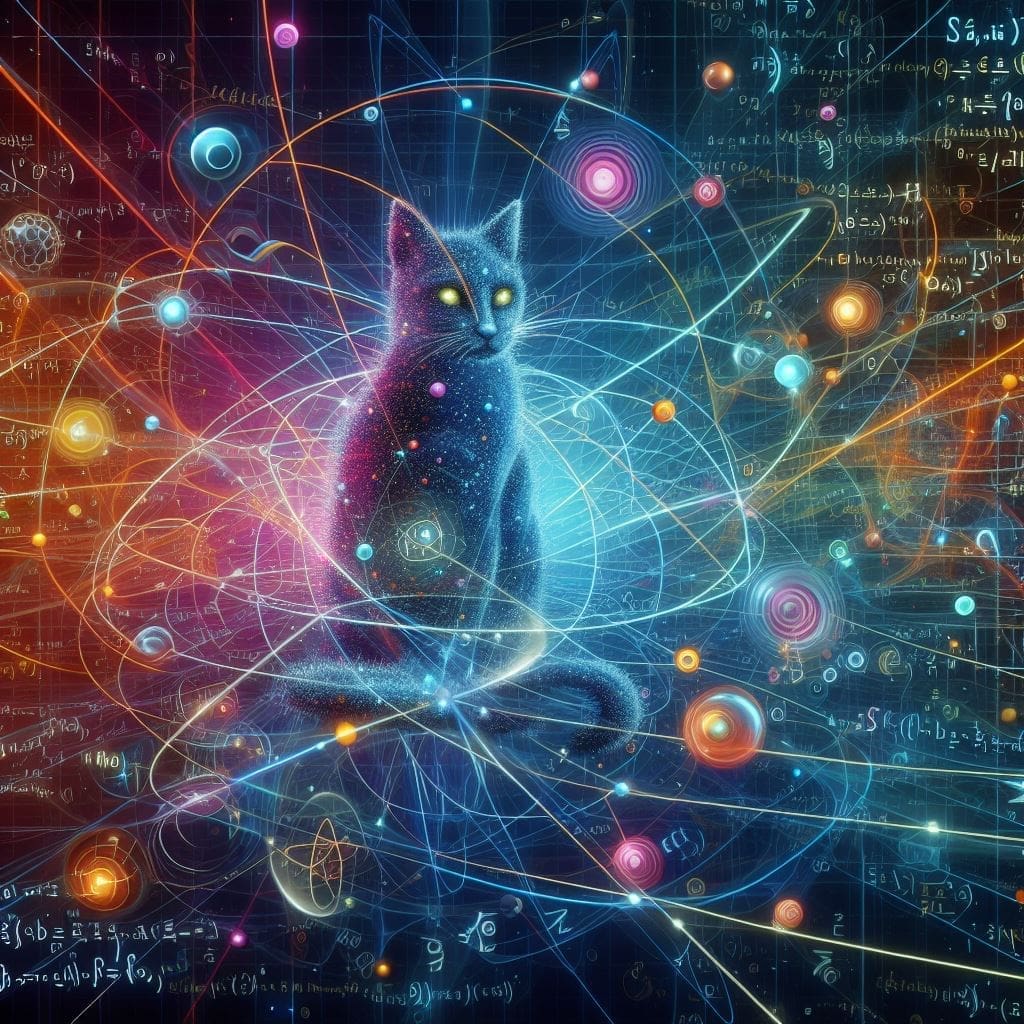

Entanglement theory is a concept in quantum physics that describes the phenomenon where two or more particles become interconnected or entangled, such that the state of one particle is dependent on the state of the other, regardless of the distance between them. This idea has led to significant advancements in our understanding of the fundamental nature of the universe, but it also has implications for the field of psychology.
One of the key aspects of entanglement theory is that it challenges the conventional idea of separateness and individuality. In the classical Newtonian view of the world, we are all seen as distinct and separate beings, with our own individual thoughts, feelings, and experiences. However, entanglement theory suggests that at a fundamental level, we are all interconnected and interdependent, much like the entangled particles in quantum physics.
This idea of interconnectedness has profound implications for our understanding of human psychology. It suggests that our thoughts and emotions are not solely our own, but are influenced by the interconnected web of relationships and interactions that we have with others. This can help explain phenomena such as empathy, intuition, and synchronicity, where we seem to pick up on the thoughts and feelings of others even when they are not explicitly communicated.
Entanglement theory also raises questions about the nature of consciousness and identity. If our thoughts and emotions are influenced by the entanglement of particles, then what does that mean for our sense of self? Are we truly separate individuals, or are we just nodes in a larger network of interconnected consciousness?
Another interesting aspect of entanglement theory is the idea of non-locality, where entangled particles can affect each other instantaneously, regardless of the distance between them. This challenges our conventional understanding of cause and effect, suggesting that there may be mechanisms at work in the universe that transcend time and space.
Overall, the psychology of entanglement theory raises fascinating questions about the nature of reality, consciousness, and human experience. It challenges us to rethink our assumptions about separateness and individuality, and consider the possibility that we are all interconnected in ways that we are only beginning to understand. By exploring these ideas, we may gain a deeper understanding of ourselves and our place in the universe.

Share this:

You Might Also Enjoy Reading