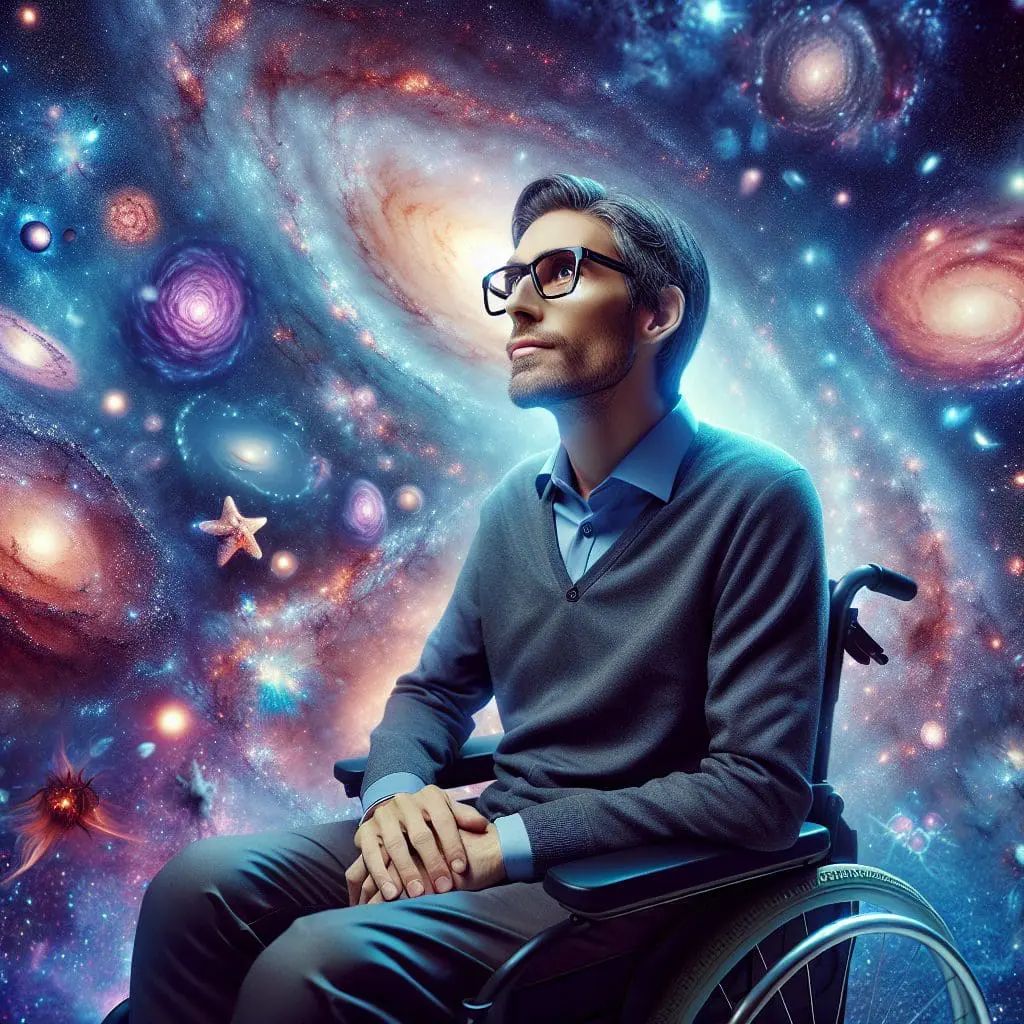

Stephen Hawking, the renowned theoretical physicist, was known for his groundbreaking work in cosmology and black holes. However, he also delved into the realm of philosophy and religion, particularly his thoughts on the concept of God.
Hawking identified as an atheist and believed that the laws of physics, not a divine being, were responsible for the creation of the universe. In his book “The Grand Design,” co-authored with physicist Leonard Mlodinow, he famously wrote, “Because there is a law such as gravity, the universe can and will create itself from nothing. Spontaneous creation is the reason there is something rather than nothing, why the universe exists, why we exist.”
Hawking argued that as our understanding of the universe and its origins deepened, the need for a creator God became less and less necessary. He believed that the mysteries of the universe could be explained through science and natural laws, without the need for a higher power.
Despite his atheism, Hawking did not discount the significance of religion and spirituality in people’s lives. He acknowledged that many people find comfort and solace in their beliefs, and he respected their right to do so. However, he also emphasised the importance of critical thinking and evidence-based reasoning in forming one’s beliefs.
Hawking’s ideas about God sparked debate and controversy among religious communities and atheists alike. Some saw his views as a challenge to traditional religious beliefs, while others lauded him for his intellect and rational approach to understanding the universe.
Ultimately, Stephen Hawking’s thoughts on God serve as a reminder of the importance of questioning and exploring our beliefs, and the capacity of science to shed light on the mysteries of the universe. Whether one agrees with his views or not, his contributions to science and philosophy continue to influence and inspire thinkers around the world.
Share this:

You Might Also Enjoy Reading