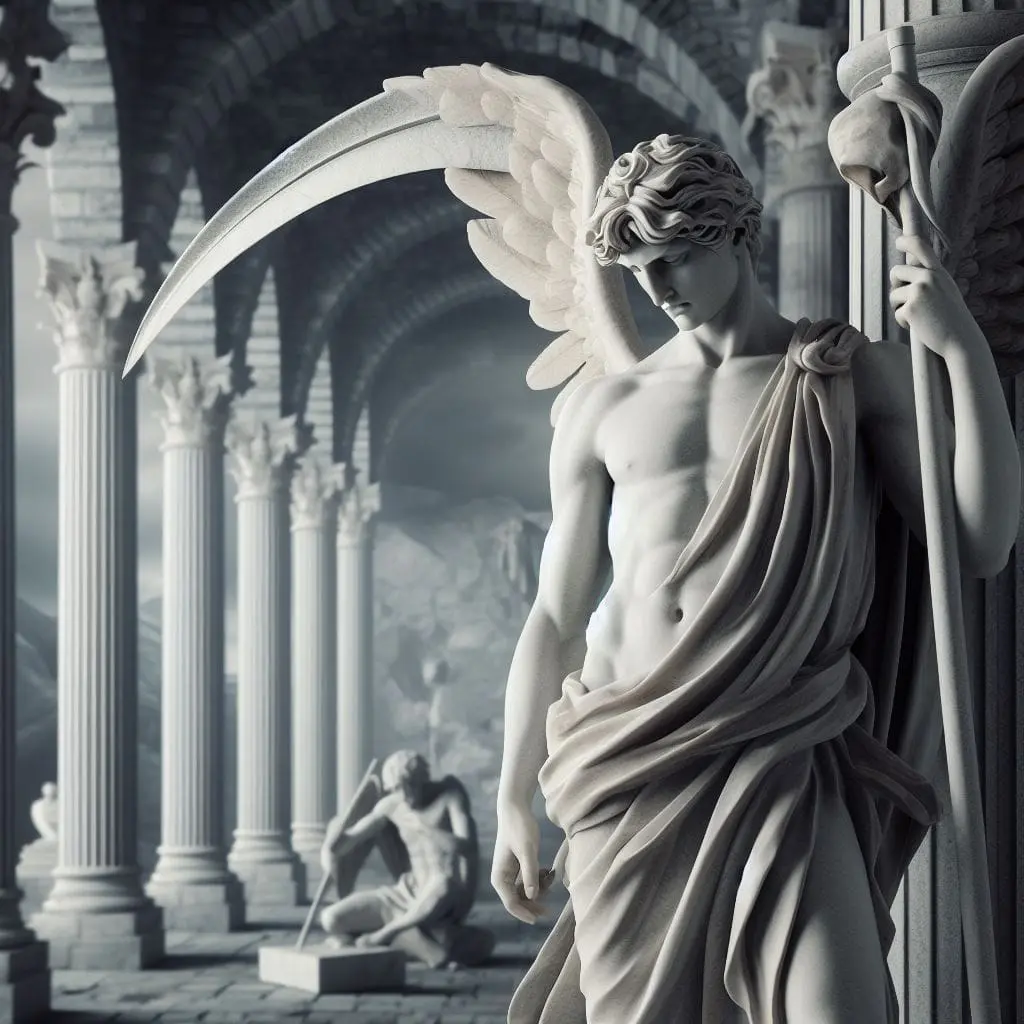

Thanatos, the personification of death in Ancient Greek mythology, has long been a source of fascination and fear. In Greek mythology, Thanatos was often depicted as a winged and bearded figure carrying a sword or a butterfly, symbolising the fleeting nature of life. He was the twin brother of Hypnos, the god of sleep, and together they were responsible for guiding souls to the afterlife.
The myth of Thanatos offers valuable insights into the Ancient Greek perspectives on death and the afterlife. In Greek mythology, death was not something to be feared or avoided, but rather accepted as a natural part of life. The Greeks believed that death was simply a transition to the realm of the dead, where souls would be judged by the gods based on their actions in life.
Unlike modern societies, where death is often viewed as a taboo topic, the Ancient Greeks openly discussed and even celebrated death in their rituals and ceremonies. They believed that honouring the dead through proper burial rites and funerary practices was essential to ensuring their peaceful passage to the afterlife.
The myth of Thanatos also highlights the Greek belief in the cyclical nature of life and death. Just as night follows day, death was seen as a necessary and inevitable part of the natural order. The concept of Thanatos served as a reminder of the transient and fragile nature of life, urging the living to cherish each moment and live virtuously.
While the myth of Thanatos may seem morbid to modern sensibilities, it reflects the Ancient Greek understanding of death as a transformative and ultimately unavoidable experience. By unravelling the complexities of Greek mythology surrounding death, we can gain a deeper appreciation for the ways in which different cultures have grappled with the mysteries of mortality throughout history.
In our own modern society, where death is often feared and hidden away, perhaps we can learn from the Ancient Greeks and embrace death as a natural part of the human experience. By acknowledging the inevitability of death and honouring the memories of those who have passed, we can cultivate a healthier relationship with mortality and find solace in the knowledge that death is not the end, but rather a new beginning.
Share this:

You Might Also Enjoy Reading