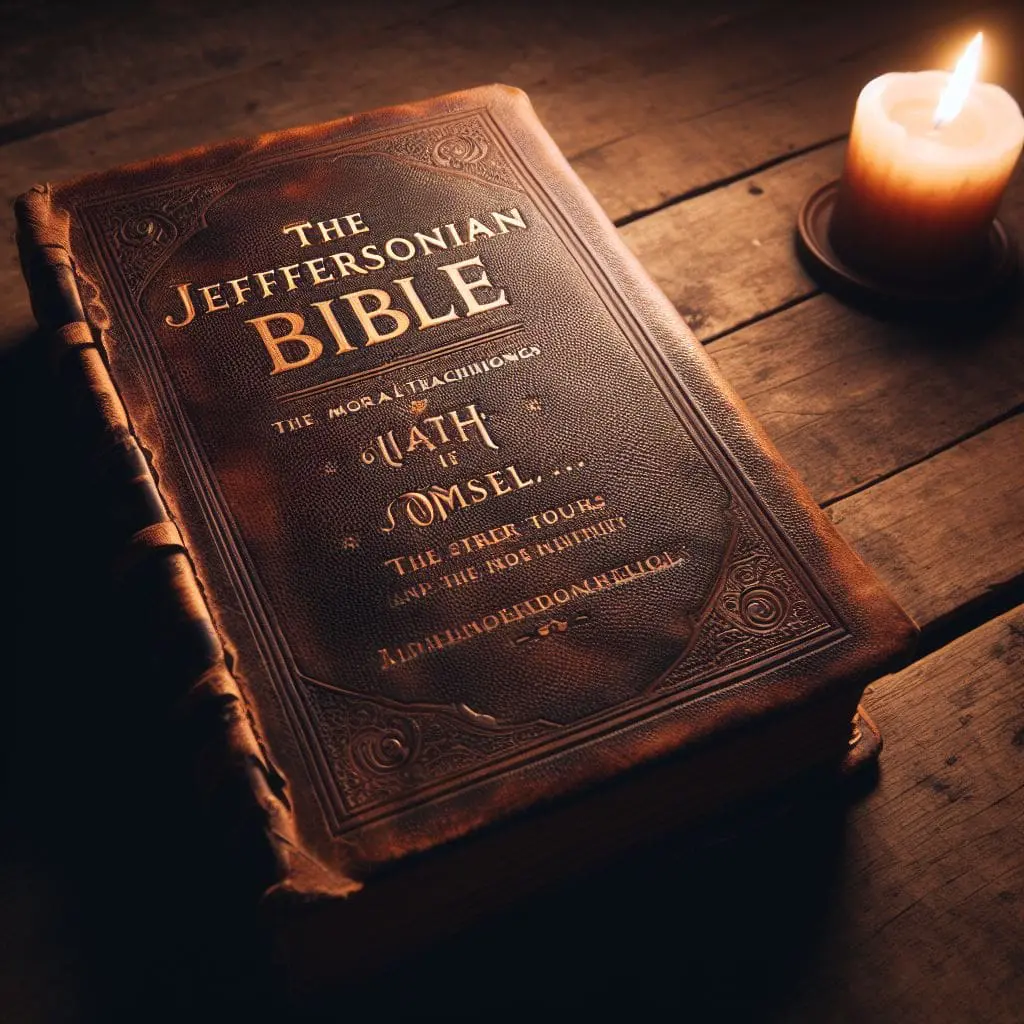

Thomas Jefferson, the third President of the United States, is known for many things – founding father, author of the Declaration of Independence, and architect of Monticello, to name a few. But one lesser-known aspect of his life is his work on what has come to be known as the “Jeffersonian Bible.”
In 1804, Jefferson began his project to create a version of the Bible that he felt was more in line with his own beliefs and values. Jefferson was a firm believer in the separation of church and state, and he was also critical of the traditional Christian doctrines of the time. He wanted to create a Bible that focused solely on the moral teachings of Jesus, rather than the supernatural elements and miracles that he believed had been added to the text over time.
Jefferson meticulously went through the Gospels of Matthew, Mark, Luke, and John, cutting and pasting passages that he felt were the true teachings of Jesus. He eliminated all references to miracles, the divinity of Jesus, and other supernatural elements. What he was left with was a shorter, more focused version of the Bible that he believed reflected the true moral teachings of Jesus.
This version of the Bible, often referred to as the Jefferson Bible or The Life and Morals of Jesus of Nazareth, was not published during Jefferson’s lifetime. It was eventually compiled and published posthumously in 1895 by the U.S. Government Printing Office. The Jefferson Bible has since been reprinted and studied by scholars and historians who are interested in Jefferson’s unique perspective on religion and morality.
The Jeffersonian Bible provides an interesting glimpse into the mind of one of America’s most influential Founding Fathers. Jefferson’s project reflects his scepticism of organised religion and his belief in the importance of individual morality and ethical behaviour. While the Jeffersonian Bible may not be a traditional interpretation of the Christian Gospels, it offers valuable insights into Jefferson’s personal beliefs and values.
Overall, the Jeffersonian Bible remains a fascinating and thought-provoking work that continues to spark discussion and debate among scholars, religious leaders, and historians. It serves as a reminder of the importance of questioning traditional beliefs and exploring new interpretations of ancient texts. Jefferson’s efforts to create his own version of the Bible highlight his commitment to intellectual freedom and his dedication to seeking truth and understanding in all aspects of life.
Share this:

You Might Also Enjoy Reading