
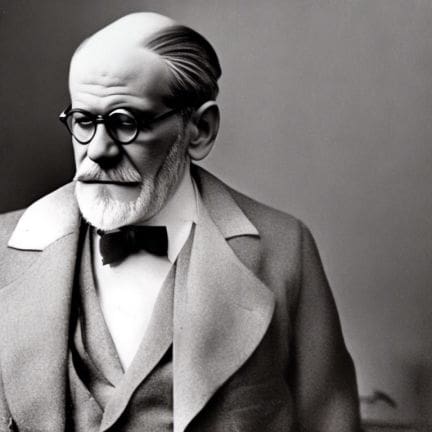

Sigmund Freud, often considered the father of psychoanalysis, has had a profound impact on the field of psychology and our understanding of the human mind. His theories of the unconscious, repressed desires, and the role of childhood experiences continue to shape our understanding of ourselves and our patients. However, Freud’s legacy is not without its critics, who argue that his theories are outdated and unscientific. In this blog post, we will discuss Freud’s relevance today and also explore some of the critiques of his theories.
Freud’s impact on psychology cannot be understated. His groundbreaking work in the late 19th and early 20th centuries shed light on the hidden forces that shape our thoughts, emotions, and behaviours. Through his exploration of psychoanalysis, Freud offered a new approach to understanding psychological problems by delving into the unconscious mind. He believed that many of our thoughts and behaviours are rooted in unconscious desires and unresolved conflicts from our childhood.
One of Freud’s most important contributions was his emphasis on the unconscious mind. He argued that our conscious mind is only a small part of our psychological activity, and that much of what influences our thoughts and behaviours resides in the unconscious. This idea has been influential in shaping modern therapies, such as psychodynamic therapy, which aim to uncover and resolve unconscious conflicts.
Freud’s theories on the importance of childhood experiences in shaping our personalities also remain relevant today. He believed that early experiences, particularly those related to our relationships with our parents, heavily influence our psychological development. This idea is still widely accepted in contemporary psychology and forms the basis of attachment theory, which suggests that our early relationships shape our ability to form and maintain relationships in adulthood.
However, despite his significant contributions, Freud’s theories are not without criticism. One of the main criticisms is that his ideas lack scientific rigour. Freud relied heavily on case studies and clinical observations, which are subjective and difficult to generalise to the larger population. Additionally, his theories are often criticised for being untestable and unfalsifiable, as they rely on interpretations and subjective judgements.
Moreover, Freud’s theories have been accused of being sexist and overly focused on sexual and aggressive instincts. Some argue that his emphasis on sexual desires as the driving force behind human behaviour oversimplifies the complexity of human motivation and ignores other important factors, such as social and cultural influences.
Despite these criticisms, Freud’s theories and concepts continue to be influential in the field of psychology. Many of his ideas, such as the importance of the unconscious and the role of early experiences, have been integrated into contemporary psychological theories and therapies. While some aspects of his theories may have fallen out of favour, his overall legacy on our understanding of the human mind remains strong.
In conclusion, Freud’s legacy in psychology is both relevant and subject to critique today. While his theories have had a profound impact on our understanding of the human mind, some of his ideas have been contested and are seen as outdated or unscientific. Nonetheless, Freud’s contributions have paved the way for the development of new theories and therapies, and continue to shape the landscape of modern psychology.
Share this:

You Might Also Enjoy Reading