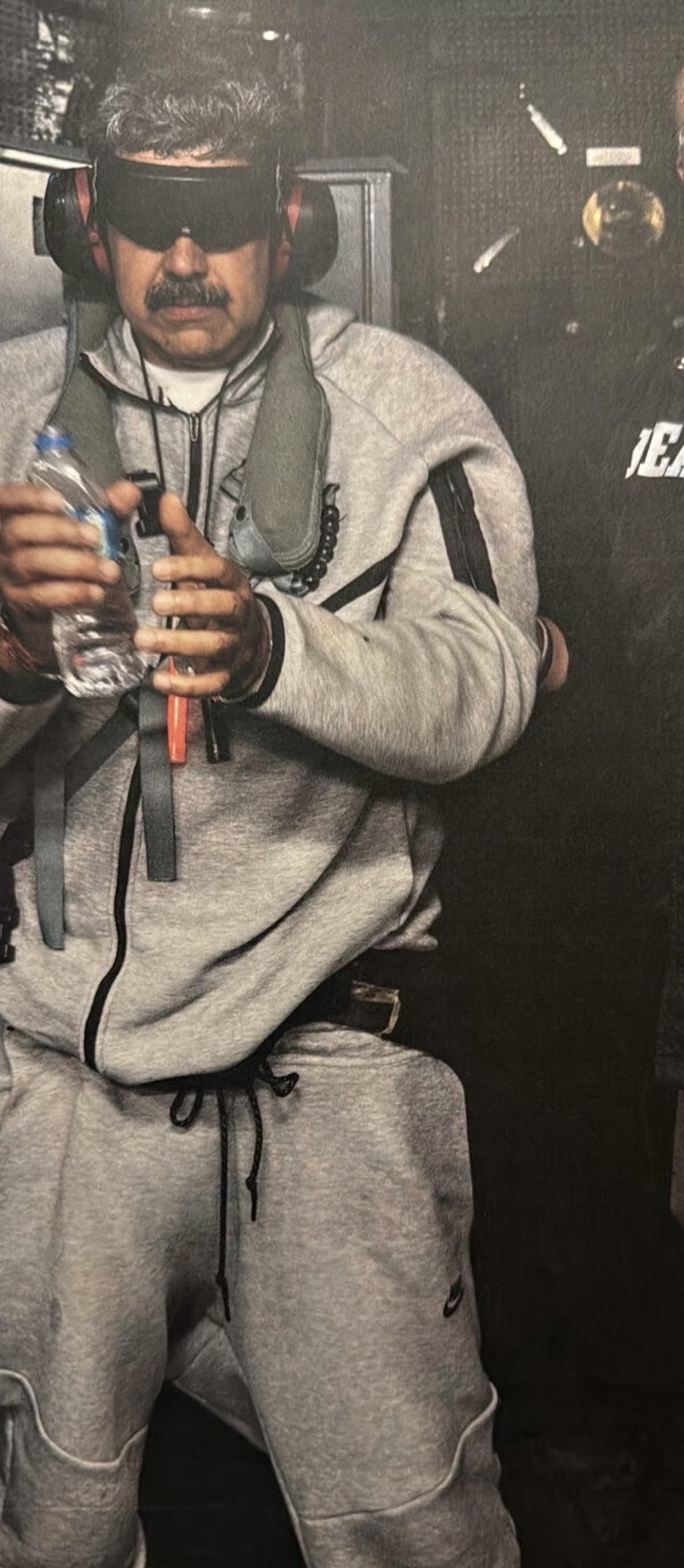
Trump bombed Venezuela, killing over 40 people (including civilians); and captured President Maduro on the 3rd January, 2026. The entire world instantly had headlines about the event, and the iconic picture of Maduro blindfolded and deafened was on the front page of many high-profile newspapers (BBC News, 2026). Here I present an objective analysis of the situation; as well as paint a picture about what to expect next. The evidence will be presented, and the reader will be equipped to form her or his opinion on the matter.
Advertisements
The event spread like wildfire on the 3rd January, 2026. Maduro’s image wearing headphones and a blindfold became viral to the point that the Nike tracksuit he was wearing sold out fast (The New York Times, 2026). The year began with a bang, and a schism. Many took to the streets to celebrate the downfall of Maduro, a figure who was perceived by many as a dictator who ruled the country for nearly 13 years since 2013 (Encyclopedia Britannica, 2026). Others, however, took to the streets to protest and demand that their President be returned, condemning the US as an imperialist and neocolonialist state.
The Venezuelan People March Against The United States
But what are Trump’s real motivations behind his saviour facade? One thing he has explicitly admitted to is that he wants, and he will take, Venezuela’s oil 🛢️; or else, further and worse attacks would take place. (AP News, 2026; Time, 2026).
The United States is known for its freedom of religion and the right to practise any without fear of persecution. However, there are some regions in the country where the Bible is banned or restricted in some way.
Advertisements
In recent years, there have been several cases where the Bible has been banned or censored in public spaces such as schools and libraries, sparking debates about freedom of expression and the role of religion in education. In some cases, school boards have removed the Bible from library shelves or restricted its use in classrooms, citing concerns about separation of church and state. These actions have ignited discussions among educators, parents, and community members about the importance of teaching religious texts as part of a comprehensive education, while simultaneously addressing the legal and ethical implications of allowing religious materials in secular educational environments.
Advocates for access argue that the Bible’s literary and historical significance should not be overlooked, as it has influenced countless works of art, literature, and even moral philosophy throughout history. Meanwhile, opponents express fears of potential indoctrination and the violation of students’ rights to a neutral learning atmosphere. The tensions surrounding these controversies highlight the complex relationship between faith and public education, illustrating that the issue extends far beyond mere access to a book, as it ultimately touches upon fundamental questions of belief, identity, and the values we instil in future generations.
One of the most notable cases of the Bible being banned in the United States occurred in 2017, when an elementary school in Kentucky removed the Bible from its library after a parent complained that it was promoting Christianity. This decision sparked significant controversy and debate within the local community and beyond, as many supporters of the Bible’s presence argued that it is a historical text that conveys important cultural and moral lessons, irrespective of religious beliefs. The school district defended its decision, stating that it was in compliance with the First Amendment, which warrants the separation of church and state; however, critics countered that this removal represented an infringement on religious freedom and the right to access diverse viewpoints. As discussions intensified, the incident highlighted the ongoing tensions surrounding educational content, censorship, and the role of religious texts in public institutions, ultimately prompting a broader dialogue about how schools navigate the complexities of teaching ethics, history, and morality in a pluralistic society.
In June 2023, the Davis School District in Utah made a significant decision to reverse its earlier stance on the availability of religious texts in educational institutions, specifically the King James version of the Bible, which had been slated for removal from both elementary and middle school libraries. This decision came in response to numerous discussions within the community, where parents, educators, and students voiced their opinions on the importance of maintaining access to a wide range of literature, including religious texts that have shaped cultural and historical perspectives. The school district acknowledges the role of the Bible in influencing various aspects of literature, history, and moral education, thereby ensuring that students have the opportunity to engage with this pivotal text as part of their broader learning experience.
In another case, a public library in Florida removed the Bible from its shelves after receiving numerous complaints from patrons who found the religious text offensive and inappropriate for a public institution. This decision stirred significant controversy and ignited a heated debate among community members about the role of religious texts in public spaces. The library eventually reinstated the Bible after facing intense backlash from the community, including protests, petitions, and vocal support from local religious groups who argued that the removal was an infringement on their rights to access spiritual literature. The incident highlighted the ongoing struggle between freedom of expression and the sensibilities of diverse audiences, prompting further discussions on the need for policies that adequately address such conflicts in a way that respects all viewpoints.
While these cases are relatively rare, they highlight the ongoing debate about the place of religion in public spaces in the United States and the complexities that arise from it. Some people argue that the Bible, as a foundational text that has influenced countless individuals and cultural movements throughout history, should be treated like any other book and should be available for all to read in various community settings. They contend that this inclusion fosters a deeper understanding of different belief systems and encourages open dialogue among diverse groups. On the other hand, others firmly believe that the presence of religious texts, including the Bible, in public spaces violates the separation of church and state, a principle designed to ensure that government remains neutral in matters of faith. This dispute underscores a fundamental question about the boundaries of free expression versus the imperative of maintaining a secular public sphere, pushing society to scrutinize its values and priorities.
Ultimately, the issue of banning or censoring the Bible in the United States is a complex one that requires a delicate balance between freedom of religion and the rights of individuals to not be subjected to unwanted religious messages. As the country continues to grapple with these issues, it is important to remember the principles of religious freedom that are enshrined in the Constitution and to respect the beliefs of others, even when they differ from our own.
Muhammad Ali is often remembered as one of the greatest boxers of all time, but he was also a vocal advocate for social justice and civil rights. Throughout his life, Ali’s political beliefs were at the forefront of his public persona, and he never shied away from speaking out on issues that were important to him.
Advertisements
One of the key aspects of Ali’s political beliefs was his opposition to the Vietnam War. In 1967, Ali famously refused to be drafted into the military, citing his religious beliefs as a member of the Nation of Islam and his opposition to the war as reasons for his refusal. He famously said, “I ain’t got no quarrel with them Viet Cong” and “No Viet Cong ever called me n****r.” This decision cost him his boxing title and led to a contentious legal battle that ultimately resulted in his conviction for draft evasion.
Ali’s stance on the Vietnam War made him a controversial figure at the time, but it also solidified his reputation as a champion for civil rights and social justice. He spoke out against racism and segregation in the United States, and he was a vocal advocate for the rights of African Americans.
In the aftermath of 9/11, Ali made a powerful statement in which he expressed his deep sorrow and condolences for the victims and their families. He firmly denounced the actions of the terrorists responsible for the attack, stating that they did not represent the true teachings of Islam. In an interview following the attack, Ali made it clear that terrorism has no place in Islam, and that those who commit acts of violence in the name of religion are misguided and do not understand the true message of Islam. He urged people to not judge all Muslims based on the actions of a few extremists, and to instead come together in unity and understanding.
In addition to his opposition to the war, Ali was also known for his advocacy for religious freedom and tolerance. He converted to Islam in the 1960s and changed his name from Cassius Clay to Muhammad Ali, a decision that was met with both praise and criticism. Despite facing backlash for his beliefs, Ali remained steadfast in his commitment to his faith and used his platform to educate others about Islam.
Ali’s political beliefs were not limited to domestic issues – he also spoke out against apartheid in South Africa and supported humanitarian causes around the world. He used his fame and influence to raise awareness for various causes, including poverty, hunger, and education.
In conclusion, Muhammad Ali’s political beliefs were a central part of his identity as a public figure. He was a fearless advocate for social justice and civil rights, and he used his platform to speak out against injustice and oppression. His legacy as both a boxer and a social activist continues to inspire people around the world to this day.
As the conflict in Syria rages on, the involvement of various military forces from around the world continues to shape the course of the war. Currently, there are several major military operations taking place in Syria, each with their own objectives and tactics.
Advertisements
One of the most prominent military operations in Syria is being conducted by the Syrian government forces, backed by allies such as Russia and Iran. This operation is primarily aimed at regaining control of territories held by rebel groups and terrorist organisations such as ISIS. The Syrian government forces have been making significant gains in recent months, reclaiming key areas in the country and pushing back against opposition forces.
On the other side of the conflict, the United States and its coalition partners are also conducting military operations in Syria, primarily focused on combating ISIS. The US-led coalition has been carrying out airstrikes and supporting ground operations by local forces to weaken and ultimately defeat the terrorist group. While ISIS has been significantly weakened in recent years, pockets of resistance still remain in certain areas of Syria.
Another major player in the Syrian conflict is Turkey, which launched a military operation in northern Syria in 2019 with the aim of creating a buffer zone along its border and pushing back against Kurdish forces. The Turkish military operation has led to clashes with Kurdish fighters and has raised concerns about the potential for further destabilisation in the region.
Overall, the military operations in Syria are complex and multifaceted, with multiple actors pursuing their own agendas and objectives. The conflict shows no signs of abating anytime soon, and the situation on the ground remains volatile and unpredictable. As the various military forces continue to jockey for control and influence in Syria, the civilian population continues to bear the brunt of the ongoing violence and suffering.
It is imperative that all parties involved in the Syrian conflict prioritise the protection of civilians and work towards a peaceful resolution to the conflict. The cycle of violence and destruction in Syria has already caused immense human suffering, and it is high time for all sides to come together and work towards a lasting and sustainable peace in the country. Only through cooperation and diplomacy can the cycle of violence be broken and the people of Syria be given a chance to rebuild their lives and their country.
Throughout history, the United States has often been accused of having a sense of geo-centrism, or the belief that the country is the centre of the world. This mindset can be seen in various aspects of their culture, politics, and foreign policy. The most notable example is calling their country “America”, and their people “Americans” as if only them were part of the continent.
Advertisements
One of the most obvious examples of The United States’ geo-centrism is its tendency to view events and issues from a purely United Stateman perspective. This can be seen in the way that the country often expects other nations to conform to its own cultural norms and values, without considering the unique context and history of each country. This attitude can be seen in everything from trade agreements to military interventions, where the United States often takes a unilateral approach without consulting other nations or considering their perspectives.
Geo-centrism can also be seen in the way that United Statemen often view themselves as exceptional or superior to other nations. This belief in United Stateman exceptionalism can be traced back to the country’s founding principles and has been reinforced over the years through various political and cultural narratives. This mindset can lead to a sense of entitlement and arrogance, where the United States believes that it has the right to dictate the terms of international relations and impose its will on other nations.
In terms of foreign policy, geo-centrism can also be seen in the way that the United States often prioritises its own interests over those of other nations. This can lead to tensions and conflicts with other countries, as the United States seeks to maintain its dominant position in the global order. This attitude can be seen in everything from trade disputes to military interventions, where the United States often acts unilaterally without considering the potential consequences for other nations.
Overall, the United States’ geo-centrism can be seen as a reflection of its position as a global superpower. However, this mindset can also lead to a narrow and self-centred view of the world, which can limit the country’s ability to effectively engage with other nations and address complex global challenges. In order to build a more peaceful and prosperous world, it is important for the United States to move beyond its geo-centrism and embrace a more inclusive and cooperative approach to international relations.