
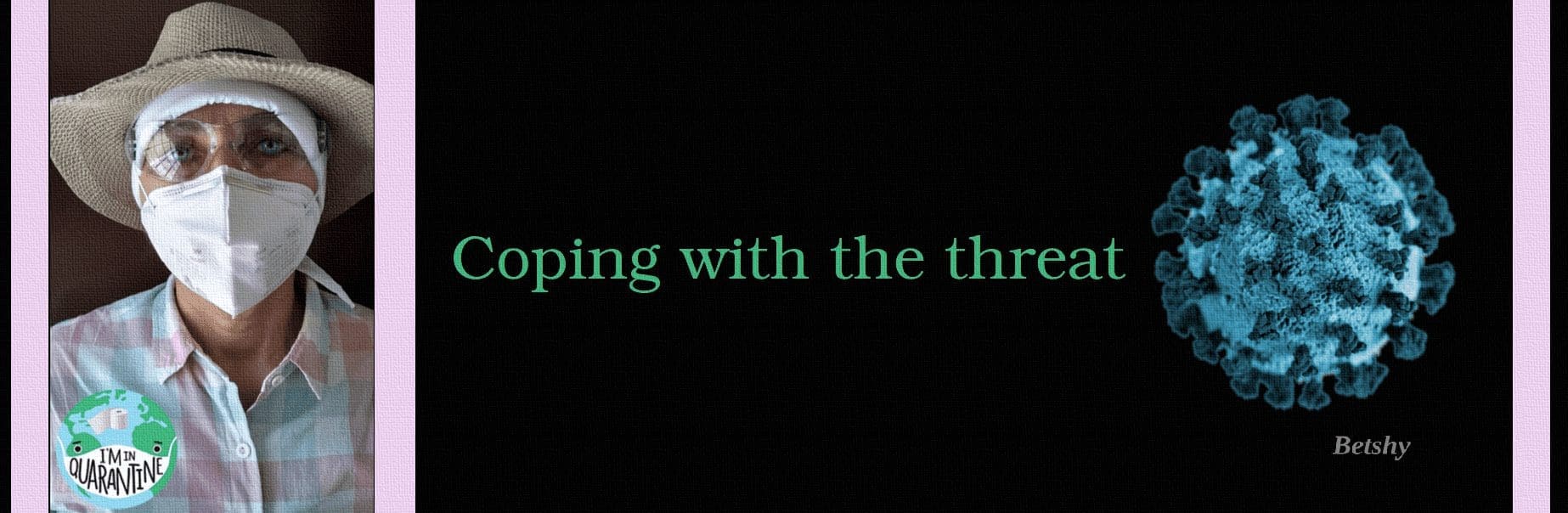
This is a short video answering some questions in relation to how to cope with the intensity of the coronavirus pandemic by focusing on psychological survival and wellbeing at home.
Tag: Public Health
-

COVID-19: Situation Report, Administrative Challenges, and What Psychologists can do to Help the Crisis
UK-specific numbers
As of 10 April 2020:
CONFIRMED CASES: 73,758
PATIENTS DISCHARGED: 344
PATIENTS WHO DIED: 8,958
Worldometers (2020)
Are the numbers to be trusted?
There is a certain ‘mystery’ with the numbers. For instance, the GOV.UK’s (2020a) dashboard has not been updating the recovery section of its spreadsheet since the 22nd March. This has led to much confusion, and many people are suspicious of the numbers being provided. For instance, the media (Merrick, 2020) announced that health secretary Matt Hancock tested positive for coronavirus on the 27th March, 2020. Then on the 2nd April, 2020 he was back to work (Matt Hancock gives first coronavirus briefing since coming out of isolation, 2020) and was looking healthy. Nevertheless, the historic record spreadsheet did not register his recovery, indicating that maybe only those admitted to hospital are being registered in the records.
Another odd discrepancy is the fact that even though Worldometers (2020) updated for the first time this month the number of recovered patients yesterday to 344, the historic record document mentioned above- which is available on the GOV.UK’s (2020a) dashboard- continues to show 135 as the number of recoveries. This is worrisome as it gives an impression of misinformation and it elicits uncertainty. No wonder many people are having a gut feeling of ‘deception’ at the hands of the GOV.
What is the government’s plan?
As of the date of this writing, the GOV.UK’s (2020b) coronavirus action plan is full of misinformation and inaccuracies. I wrote to the Department of Health & Social Care (GOV.UK, 2020c) on the 1st April in order to communicate my concerns in regards to their published document and to request more frequent reviews of it. Nevertheless, nothing has been done about it, and the file continues to create feelings of confusion and uncertainty. Here you can download the analysis I conducted. You will be able to understand the discrepancies better after reading it.
What is the WHO saying?
I attended the World Health Organization’s (2020) press briefing yesterday (10th April). Dr. Tedros Adhanom Ghebreyesus, Director-General stated: “When health workers are at risk, we are all at risk”. There were many important calls to action, such as ensuring that medical staff are able to have adequate rest periods instead of long, exploitative shifts; the development of an immune response; and the clarification of the severity of the disease. For instance, so far we have heard about patients who are in mild, and critical conditions. It was mentioned in the conference that an explanation of the moderate condition would be helpful, as there are confirmed cases of pneumonia which have not required hospitalization.
Another important point discussed was that the death of health workers has become a ‘tragic’ stimulus to action. The health environment was spoken about as a double-edged sword. It was also raised that personal protective equipment (PPE) is therefore a must have in hospitals in order to reduce the exposure of health workers to infectious hazards. This reminds us of the importance of staying at home and protecting the NHS. Furthermore, it was also suggested that psychosocial support for front-line and health workers should be made readily available, and reasonable adjustments should also be made by administrative staff in order to prevent doctors and nurses from developing fatigue as a result of extremely long shifts.
What can psychologists do to help the coronavirus crisis?
The coronavirus (COVID-2019) impacts on different people in different ways. Psychologically speaking, this requires an ongoing decision-making process based on the likelihood of catching the virus, and the perceived severity of the consequences.
“The barriers component may comprise both physical limitations on performing a behaviour (e.g. expense) and psychological costs associated with its performance (e.g. distress)”.
Abraham and Sheeran (1996, p. 33)The outbreak is by all means a stress-generative situation. Exploring the psychopathology of the coronavirus pandemic, such as the negative and positive symptoms it causes (e.g. confusion, neurosis, and psychosis) would help both, professionals and students to feel more efficient in their preparedness for what is to come next. For example, the concept of normal distribution and the curve as illustrated by The Visual and Data Journalism Team (2020) would help people understand what is meant by “the peak” of the outbreak that so many sources are expecting and talking about.

Psychologists are also encouraged to help people understand the serious challenge at hand, and the levels of vulnerability in individual differences. Moreover, it would also be helpful to stimulate the GOV so they respond quicker without the need for the tragic stimulus of death explained above. Furthermore, exploring the cycle of panic and neglect that manifests as response to the threat would help soothe emotionally vulnerable human beings. Advice about how to strengthen the system is welcome. When it comes to forensic psychologists, it would be useful to elucidate how data formulates policy, and why it is important to have accurate data in order to prevent confusion at subnational levels, including criminal justice settings.
How can I check the coronavirus numbers for myself?
There are two ways you can check the coronavirus statistics. For global numbers go to Worldometers.info/coronavirus.
For UK-specific numbers:
- Go to the GOV.UK’s (2020a) Dashboard.
- Click on the ‘About’ tab at the bottom of the page.
- Click on the ‘Access historic data from the dashboard (xlsx)’ link.
- Save the file on your device.
- Open the file with a spreadsheet software such as Google Sheets (n.d.), Microsoft Office Excel (n.d.), or LibreOffice Calc (n.d.).
Please note that GOV staff have neglected the recovery section in the official spreadsheet since 22nd March, 2020. If you are concerned about the numbers, please contact the Department of Health & Social Care on https://contactus.dhsc.gov.uk/ and explain to them your concerns.
References
Abraham, C. and Sheeran, P. (1996) ‘The health belief model’, in Conner, M. and Norman, P. (eds) Predicting Health Behaviour, Buckingham, Open University Press, pp. 23-61.
Google (n.d.) ‘Google Sheets’ [Online]. Available at https://www.google.co.uk/sheets/about/ (Accessed 11 April 2020).
GOV.UK (2020a) ‘Total UK COVID-19 cases’, 4th April [Online]. Available at https://www.arcgis.com/apps/opsdashboard/index.html#/ae5dda8f86814ae99dde905d2a9070ae (Accessed 11 April 2020).
GOV.UK (2020b) ‘Coronavirus action plan: a guide to what you can expect across the UK’, 3 March [Online]. Available at https://assets.publishing.service.gov.uk/government/uploads/system/uploads/attachment_data/file/869827/Coronavirus_action_plan_-_a_guide_to_what_you_can_expect_across_the_UK.pdf (Accessed 11 April 2020).
GOV.UK (2020c) ‘Department of Health & Social Care’ [Online]. Available at https://www.gov.uk/government/organisations/department-of-health-and-social-care (Accessed 11 April 2020).
LibreOffice (n.d.) ‘Calc’ [Online]. Available at https://www.libreoffice.org/discover/calc/ (Accessed 11 April 2020).
Matt Hancock gives first coronavirus briefing since coming out of isolation (2020), Youtube video, added by The Sun [Online]. Available at https://www.youtube.com/watch?v=qrF6Z8s5dmw (Accessed 10 April 2020).
Merrick, R. (2020) ‘Coronavirus: Health secretary Matt Hancock tests positive’, The Independent, 27 March [Online]. Available at https://www.independent.co.uk/news/uk/politics/coronavirus-matt-hancock-boris-johnson-test-positive-covid-19-symptoms-a9430031.html (Accessed 10 April 2020).
Microsoft (n.d.) ‘Office Excel’ [Online]. Available at https://products.office.com/en-gb/excel (Accessed 11 April 2020).
The Visual and Data Journalism Team (2020) ‘Coronavirus pandemic: tracking the global outbreak’, BBC News, 10 April [Online]. Available at https://www.bbc.co.uk/news/world-51235105 (Accessed 11 April 2020).
World Health Organization (2020) ‘Coronavirus Disease (COVID-2019) press briefings’ [Online]. Available at https://www.who.int/emergencies/diseases/novel-coronavirus-2019/media-resources/press-briefings (Accessed 10 April 2020).
World Health Organization (n.d.) ‘Biography of Dr. Tedros Adhanom Ghebreyesus, Director-General’ [Online]. Available at https://www.who.int/antimicrobial-resistance/interagency-coordination-group/dg_who_bio/en/ (Accessed 11 April 2020).
Worldometers (2020) ‘COVID-19 coronavirus pandemic’ [Online]. Available at https://www.worldometers.info/coronavirus/ (Accessed 11 April 2020).
-

Coronavirus (COVID-19): Understanding the New Status Quo, Following Governmental Advice, and Interpreting the Numbers
We have heard the advice, but how can we interpret the information? Why follow the lockdown protocols? This article will clarify the coronavirus’ status quo.
UK-specific numbers:
CONFIRMED CASES: 47,806.
PATIENTS DISCHARGED: 135.
PATIENTS WHO DIED: 4,934.
(GOV.UK, 2020b)
What’s the difference between the coronavirus and COVID-19?
The coronavirus is what people catch, and the COVID-19 is the respiratory disease that can develop. A good analogy for understanding the differences between the two terms is HIV and AIDS. Whilst not all people who test positive for HIV develop AIDS, those who do develop it become severely ill. Similarly, not everyone testing positive for the coronavirus develops COVID-19, but those who do develop it are hospitalised and become severely ill. This is why preventing catching the coronavirus is just as important as preventing catching HIV.

What is the likelihood of catching the coronavirus?
As of the date of this writing, and according to Worldometers (2020a), there have been 47,806 confirmed cases in the UK, which has a population of 67,802,457 (Worldometers, 2020b). This means that the total number of hospital admissions per 1 million population is approximately 704, and the number of deaths per 1 million population is 73. Furthermore, Plymouth (the city where I live) had a population of 264,200 as of February (World Population Review, 2020), and as of the date of this writing it has had a total of 102 hospital admissions (GOV.UK, 2020b), out of which 13 (approximately 12.8%) patients have died (O’Leary, 2020); which means that even though there is a low risk of catching the virus, those who do catch it and develop COVID-19 are at high risk of dying.
Why should I stay at home?
Because you do not know whether you are infected or not, and if you are coronavirus positive but you have not developed COVID-19; you could still pass the virus onto other people who might be more vulnerable than you and who might develop COVID-19. Alternatively, you could catch the virus and in the worst case scenario die.

How is staying at home protecting the NHS?
When you prevent catching the coronavirus, you also prevent spreading it around. This means that you are doing everything you can to make sure that the NHS does not become overwhelmed with patients.
What preventive action can be taken?
- You could self-educate on the topic in order to feel confident that you know what’s going on, and how to survive the crisis.
- You could stay home in order to prevent becoming a patient, or spreading the virus (creating patients). This means that the NHS will have more supplies to deal with the overwhelming number of cases, and those severely ill will have a higher chance of getting the medical attention and equipment that they need.
- You could share the information with your friends and family.

What reliable advice is available?
- The World Health Organization (WHO; 2020a) has a section dedicated to the coronavirus pandemic with all available scientific information.
- The NHS.UK (2020) has a section also dedicated to the disease.
- The GOV.UK (2020a) also has a section dedicated to the lockdown in relation to the pandemic.
How is the virus transmitted?
According the World Health Organization (WHO; 2020b) “COVID-19 virus is primarily transmitted between people through respiratory droplets and contact routes […] transmission of the COVID-19 virus can occur by direct contact with infected people and indirect contact with surfaces in the immediate environment or with objects used on the infected person […] Airborne transmission is different from droplet transmission […]can remain in the air for long periods of time and be transmitted to others over distances greater than 1 m”.
References
GOV.UK (2020a) ‘Coronavirus (COVID-19): what you need to do’ [Online]. Available at https://www.gov.uk/coronavirus (Accessed 5 April 2020).
GOV.UK (2020b) ‘Total UK COVID-19 cases’, 4th April [Online]. Available at https://www.arcgis.com/apps/opsdashboard/index.html#/ae5dda8f86814ae99dde905d2a9070ae (Accessed 5 April 2020).
NHS.UK (2020) ‘Advice for everyone’, 3 April [Online]. Available at https://www.nhs.uk/conditions/coronavirus-covid-19/ (Accessed 4 April 2020).
O’Leary, M. (2020) ‘Ten coronavirus deaths confirmed in past 24 hours across Devon and Cornwall’, Plymouth Herald, 5 April [Online]. Available at https://www.plymouthherald.co.uk/news/uk-world-news/coronavirus-death-toll-uk-risen-4021937 (Accessed 5 April 2020).
World Health Organization (2020a) ‘Coronavirus disease (COVID-19) pandemic’ [Online]. Available at https://www.who.int/emergencies/diseases/novel-coronavirus-2019 (Accessed 5 April 2020).
World Health Organization (2020b) ‘Modes of transmission of virus causing COVID-19: implications for IPC precaution recommendations’, 29 March [Online]. Available at https://www.who.int/news-room/commentaries/detail/modes-of-transmission-of-virus-causing-covid-19-implications-for-ipc-precaution-recommendations (Accessed 5 April 2020).
World Population Review (2020) ‘Plymouth population 2020’, 17 February [Online]. Available at https://worldpopulationreview.com/world-cities/plymouth-population/ (Accessed 5 April 2020).
Worldometers (2020a) ‘COVID-19 coronavirus pandemic’, 5 April [Online]. Available at https://www.worldometers.info/coronavirus/ (Accessed 5 April 2020).
Worldometers (2020b) ‘U.K. Population’, 5 April [Online]. Available at https://www.worldometers.info/world-population/uk-population/ (Accessed 5 April 2020).
-
Coronavirus (COVID-19) Brief: Protection Motivation Theory, Outbreak Appraisal, and Understanding Collective Behaviour
The world is in chaos. The coronavirus has accelerated at an unprecedented rate, leaving planet Earth feeling vulnerable and in a state of collective sorrow. Things have never been like this. Unless you are over 100 years old, you have never witnessed this level of transnosological danger in your entire life. Due to the panic-ridden headlines, many people are experiencing an aversion to potential loss or potential grief. Others seem to be in denial. Where is the balance? This article aims to explore some of the facts, figures, and dynamics determining coronavirus-associated behaviour.
“Protection motivation theory describes adaptive and maladaptive coping with a health threat as the result of two appraisal processes: threat appraisal and coping appraisal“.
Norman and Conner (1996, p. 11)Threat Appraisal
Worldometers (2020)
As of 28/03/2020:
TOTAL GLOBAL CASES: +602,000
TOTAL GLOBAL DEATHS: +27,400
TOTAL GLOBAL RECOVERIES: +133,500
How severe is the threat?
The threat is perceived by the public as extremely severe and unprecedented. Here in the United Kingdom it has been set as high risk; and this is why Primer Minister Boris Johnson has enforced the draconian lockdown (Cabinet Office, 2020). The virus is very contagious, and due to the increasing death rates people are feeling very susceptible with this disease threatening their physical integrity, and potentially their life or the life of those whom they love. Nevertheless, it must be objectively said that 95% of recorded cases worldwide report mild symptoms. Yet, from mild symptoms have arisen many deaths.
How susceptible am I to the threat?
It seems that among the high risk groups are people over 80 years old, those with underlying health conditions, and smokers with chronic pulmonary problems. Furthermore, according to the United Nations (2020): “The risk depends on where you are – and more specifically, whether there is a COVID-19 outbreak unfolding there”. In other words, demographic variables will indicate the level of risk in specific areas. For instance, the South West area where I live in the UK is the area with the lowest risk of contamination (GOV.UK, 2020b), and my city (Plymouth) has only 26 cases so far (O’Leary, 2020). Furthermore, commenting on the safety of packages and deliveries, the UN (2020) further states: “The likelihood of an infected person contaminating commercial goods is low and the risk of catching the virus that causes COVID-19 from a package that has been moved, travelled, and exposed to different conditions and temperature is also low”. So if you are concerned about me, don’t worry, I am ready.

I sanitise my body, my environment, and my mind. Call me mad, but I’ll survive. How is the virus appraised by the global government?
The World Health Organization (WHO) has warned the world about the fact that no antibiotics, no medication, and no vaccination has proven to prevent or cure the coronavirus. Therefore, they appraise this as a serious situation.
World Health Organization (2020).
What are mental health experts saying?
Mental health experts understand that this is without a doubt a stress-generative situation. The uncertainty that COVID-19 triggers is in many cases inevitable. Furthermore, the unpredictability and uncontrollability that manifest with the facts and figures are a source of anxiety for many people. Nevertheless, this does not mean that pre-emptive and preventive action cannot be taken. The GOV and the WHO have issued specific guidance which can help reduce the hazard and intensity of the situation. Sanitary action is in this case reasoned action, and this can be planned, performed, and maintained in order to cope with the threat in an adaptive way. Moreover, because this is an extraordinary situation which has disrupted the standard routines of many people, there is a certain level of confusion, fear, and worry. Remember to:
- Wash your hands with soap as frequently as possible for 20 seconds.
- Stay indoors unless it is absolutely necessary to go out to seek medical care.
- Order groceries online as infrequently as possible instead of going to the shop (even though online deliveries are the least unsafe option, there is still a risk of contamination through such medium).
Coping Appraisal
INTERNAL LOCUS OF CONTROL: Factors which can be totally controlled by and depend solely on the individual.
EXTERNAL LOCUS OF CONTROL: Factors which can’t be controlled by and do not depend on the individual.
(Norman and Conner, 1996).

I see people behaving like nothing is happening. Am I too paranoid?
No. What you see happening is a state of collective denial. People keep going to work, doing physical exercise outdoors, and attending social gatherings because they are underestimating the severity of the threat. The kind of self-absorption that is dominant in individualistic, Western societies is an intellectual disadvantage in this case which requires an analysis of global events and behaviour. It only takes analysing what is happening in China, the US, Italy and Spain to understand that due to the incubation period of the virus (up to 2-3 weeks; Worldometers, 2020) it is quite possible that the COVID-19 is having a delayed impact in the UK. The virus does survive a long time in the air, meaning that it can be breathed quite easily. This is why a two metre distance is advised. Those behaving as if nothing was happening are not able to rationalise the threat because being able to move around gives them a false sense of being in control of the situation. In my opinion, it is an unnecessary risk they are taking. Similarly, those going to work outside the emergency system are still playing down the risk.
According to Norman and Conner (1996), the more an individual perceives potential health susceptibility, and the more that the threat is perceived to be severe, the more fear arousal there is. This means that the way people respond to the outbreak will depend on their level of awareness about the high risk the coronavirus poses. For instance, here in the UK there are more deaths than recoveries, and the counter for recoveries has been stuck at 135 (GOV.UK, 2020b) for several days already, unlike the counters for new cases and deaths, which keep burgeoning. This is problematic and worrisome. So if you are feeling too paranoid and as if you are being too careful, rest assured that you are just being as careful and responsible as you and everyone else are expected to be.
What can I do to calm down?
This is a good question, as everything functions better when people remain calm. There are many variables that are within your locus of control, such as the way you interpret the situation (perception) which can be optimised by engaging in intellectually stimulating activities such as reading, watching films, or having conversations. The more you learn, the more confident you will feel in assessing risk, and the more you will engage in reasoned behaviours that promote health and prevent disease. Another variable that you can control and nourish in yourself is your emotional wellbeing, which can be enhanced by ensuring that you get enough sleep (this will also boost your immune system, and will therefore help you fight off infections; NHS.UK, 2018), that you eat well, and that you have a tidy and clean environment around you. If you have long-term conditions, it is necessary that you continue to take your prescribed medications during this time in order to keep healthy. Furthermore, remember that you have the capacity of preventing contamination by following the guidance. Successfully executing the recommended courses of action will help you feel self-efficient and safe. Engage in some yoga or pilates at home, entertain yourself, and stay in touch with your family and friends digitally. Keep the following points in mind:
- Neither underestimate nor overestimate the magnitude of the situation. Stay tuned for the facts and figures.
- You can sign online petitions to participate in requesting specific outcomes for the common good.
- Plan for short to medium term supplies and associated variables of a lockdown.
- Mental contagion can happen if you allocate too much time and attention to digital material which is sensationalist or misinformed. Be wise about the type of information you consume.
- Double check that your beliefs about what is healthy are not based on misinformation. Here are some myth busters to keep in mind:
What factors are not under my control?

There are several variables that could become a source of frustration during the lockdown. Anything that is outside your mind, and outside your environment is outside your control. You are not responsible for the behaviour of others, and the best thing you can do is share the guidance with your loved ones and hope that they follow it. Moreover, you have no current participation in most of the decision-making processes of the jurisdiction (e.g. the legal measures being duly taken by the GOV in relation to this pandemic). If you are not able to work from home, and cannot make money as a result, you might feel like everything is going to collapse, and in such case all you can do is hope that the GOV will protect your welfare, as such decision is within their locus of control. If you are a key worker, you might feel that your life is being put at risk in order to save the life of others. All you can do is hope that the GOV will listen to the healthcare industry in regards to the much needed protective equipment, spaces, and ventilators. This too is within the GOV’s locus of control. For example, medical staff in Spain are being forced to sedate and asphyxiate the elderly to death in order to use their ventilators on younger patients. Because providing equipment is a decision which only the Spanish political leaders can make, doctors are having a psychological breakdown and are accusing the authorities of genocide for neglecting the welfare of vulnerable citizens. Take a look at this video:
References
Cabinet Office (2020) ‘Guidance: Staying at home and away from others (social distancing)’, GOV.UK, 23 March [Online]. Available at https://www.gov.uk/government/publications/full-guidance-on-staying-at-home-and-away-from-others (Accessed 27 March 2020).
GOV.UK (2020a) ‘Coronavirus (COVID-19): what you need to know’ [Online]. Available at https://www.gov.uk/coronavirus (Accessed 27 March 2020).
GOV.UK (2020b) ‘Total UK COVID-19 Cases” [Online]. Available at https://www.arcgis.com/apps/opsdashboard/index.html#/ae5dda8f86814ae99dde905d2a9070ae (Accessed 27 March 2020).
Hamzelou, J. (2020) ‘How long does coronavirus stay on surfaces and can they infect you?’, New Scientist, 25 March [Online]. Available at https://www.newscientist.com/article/2238494-how-long-does-coronavirus-stay-on-surfaces-and-can-they-infect-you/ (Accessed 27 March 2020).
Johnson, B. (n.d.) ‘About Boris’, Boris Johnson [Online]. Available at http://www.boris-johnson.com/about/ (Accessed 27 March 2020).
NHS.UK (2018) ‘Why lack of sleep is bad for your health’ [Online]. Available at https://www.nhs.uk/live-well/sleep-and-tiredness/why-lack-of-sleep-is-bad-for-your-health/ (Accessed 27 March 2020).
Norman, P. and Conner, M. (1996) ‘The role of social cognition in health behaviours’, in Conner, M. (ed) Predicting Health Behaviour, Buckingham, Open University Press, pp. 1-22.
O’Leary, M. (2020) ‘Four new coronavirus cases confirmed in Plymouth’, Plymouth Herald, 26 March [Online]. Available at https://www.plymouthherald.co.uk/news/plymouth-news/four-new-coronavirus-cases-confirmed-3989498 (Accessed 27 March 2020).
United Nations (2020) ‘Coronavirus (COVID-19): Frequently Asked Questions’ [Online]. Available at https://www.un.org/en/coronavirus/covid-19-faqs (Accessed 27 March 2020).
World Health Organization (2020) ‘Coronavirus disease (COVID-19) advice for the public: myth busters’ [Online]. Available at https://www.who.int/emergencies/diseases/novel-coronavirus-2019/advice-for-public/myth-busters (Accessed 27 March 2020).
Worldometers (2020) ‘Coronavirus Update (LIVE)’ [Online]. Available at https://www.worldometers.info/coronavirus/ (Accessed 27 March 2020).
-

Coronavirus (COVID-19): Base Rate Fallacy, Everyday Heuristics, Panic, and the Media’s Influence
The digital world is spreading the panic disease at a faster pace than the coronavirus outbreak. It is very easy to panic when confronted with sensationalist information. This is why analysing the situation closely is the best thing anyone can do for their mental health.
Overview:
So far, there have been over 244,000 reported cases globally, and out of those over 10,000 have resulted in death, and over 87,000 have resulted in recovery. This suggests that the great majority of infected people recover. Moreover, there are over 147,000 active cases, out of which more than 139,000 are reported as in mild condition, whereas only 7,516 are reported as in critical condition. This indicates that most people diagnosed with the disease are at low risk of death in comparison with the minority which is at high risk of death. It is true that coronavirus death rates have been burgeoning. Nevertheless, there are many reasons why people die, and it is important to keep these rates in mind when making inferences.
Worldmeter (2020).
Daily global deaths:
- Over 1,000 have died today due to COVID-19
- Over 1,000 have died today due to seasonal flu.
- Over 2,500 people have died today by suicide.
- Over 2,500 people have died today due to malaria.
- Over 6,000 people have died today due to alcohol.
- Over 4,000 people have died today due to HIV/AIDS.
- Over 13,000 people have died today due to smoking.
- Over 21,000 people have died today due to cancer.
Worldmeter (2020).
UK specific figures
“As of 9am on 19 March 2020, 64,621 people have been tested in the UK, of which 61,352 were confirmed negative and 3,269 were confirmed positive. As of 1pm 144 patients in the UK who tested positive for coronavirus (COVID-19) have died”.
GOV.UK (2020b)Understanding global emergencies
What is the level of risk with the coronavirus?
Based on the research presented above which was collected today, so far the risk that the coronavirus poses is very similar to the risk that the seasonal flu poses. The problem is that COVID-19 has no vaccination yet, and it is also extremely contagious in comparison to less contagious diseases such as AIDS/HIV. Another risk is that the virus is spreading very fast.
Should I panic?
No. Panic is not good for anyone. Panic happens because the media industry tends to engage in what can be described as a base rate fallacy (Hardman, 2015) which is the idea that people tend attribute a higher level of risk to a situation when they are not aware of the actual base rates of such phenomena. As demonstrated with the above mentioned figures, COVID-19 has still not reached a point where it surpasses other illnesses which are also global emergencies, such as malaria, HIV/AIDS, and cancer. And whilst it is true that the coronavirus’ rates have been burgeoning and it is spreading super fast, there is hope that it can be tackled (i.e. most people recover).
What other cognitive biases should I be aware of when it comes to illness?
Apart from the base rate fallacy, there is another everyday error people make when making sense of information, and this phenomenon is called availability heuristic (Hardman, 2015); which happens when people consciously allocate their attention to a specific situation whilst at the same time ignoring equally important situations, and then believing that whatever they paid attention to has a higher frequency than what they never consciously paid attention to. In the case of COVID-19, as demonstrated above, there are currently other diseases with death tolls way higher than this virus. Nevertheless, due to this cognitive bias people tend to think that COVID-19 has a higher frequency of deaths than other illnesses, but this happens because the media industry is selective about the information they present to the public, and the information they omit. The daily death tolls mentioned above are evidence about base rate fallacy and availability heuristics present in everyday interpretation of data.
What can I do to protect myself?
- Follow the GOV.UK (2020a) advice.
- Take a deep breath, we are all doing the best we can to help.
- If you are experiencing flu-like symptoms, contact your doctor or call 111 (NHS, 2020).
- Wash your hands regularly with soap and warm water.
- Critically judge death rates without panicking.
- Self-isolate, and remain informed about developments of the outbreak.
- Be kind to emergency staff, as their job has no lockdown.
- If you are a journalist, be mindful about how you present your information. Everything functions better when people remain calm.
References
GOV.UK (2020) ‘Coronavirus (COVID 19): UK government response’ [Online]. Available at https://www.gov.uk/government/topical-events/coronavirus-covid-19-uk-government-response (Accessed 19 March 2020).
GOV.UK (2020b) ‘Number of coronavirus (COVID-19) cases and risk in the UK’ [Online]. Available at https://www.gov.uk/guidance/coronavirus-covid-19-information-for-the-public (Accessed 19 March 2020).
Hardman, D. (2015) ‘Everyday errors in making sense of the world’, in Barker, M. J. and Turner, J. (eds), Living Psychology: From the Everyday to the Extraordinary, Milton Keynes, The Open University, pp. 51-85.
National Health Service (2020) ‘Coronavirus (COVID-19)’ [Online]. Available at https://www.nhs.uk/conditions/coronavirus-covid-19/ (Accessed 19 March 2020)
World Health Organization (2020) ‘COVID-19 situation’ [Online]. Available at https://experience.arcgis.com/experience/685d0ace521648f8a5beeeee1b9125cd (Accessed 19 March 2020).
Worldmeter (2020a) ‘COVID-19 Coronavirus Outbreak’ [Online]. Available at https://www.worldometers.info/coronavirus/ (Accessed 19 March 2020).
Worldmeter (2020a) ‘Worldwide’ [Online]. Available at https://www.worldometers.info (Accessed 19 March 2020).