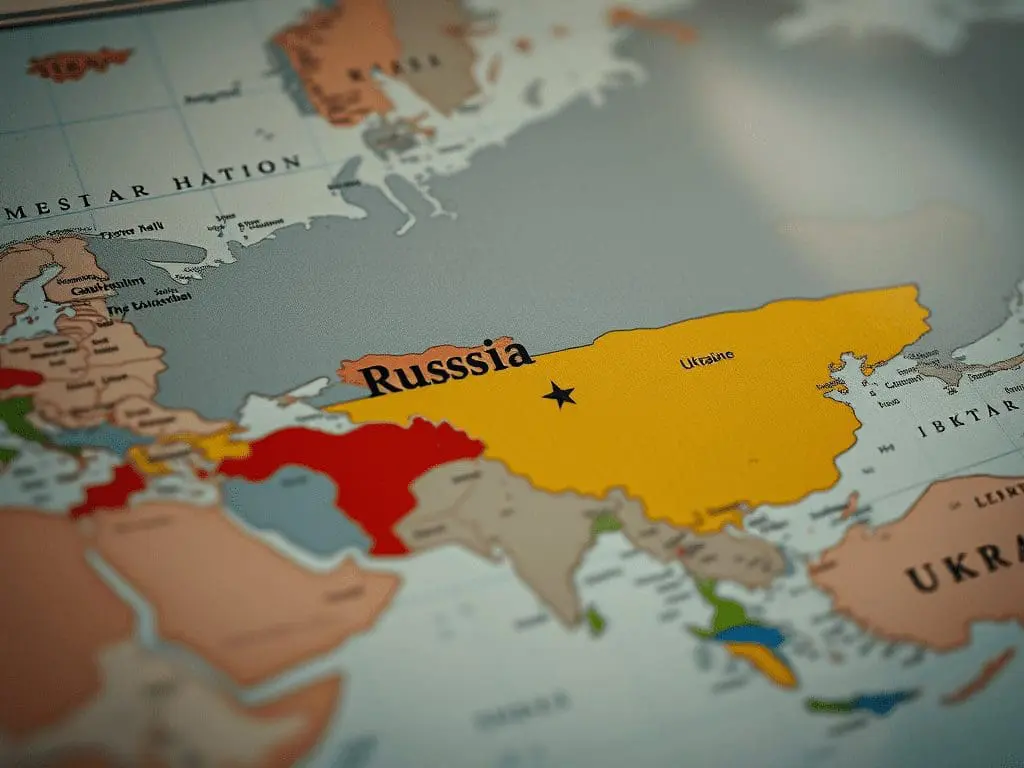
The ongoing conflict between Russia and Ukraine has been a topic of concern for many people around the world. With tensions escalating, people are now looking towards the future and wondering what might happen next in this volatile situation. As such, many experts and analysts have started to make their predictions about how the conflict might unfold in the coming months.
Advertisements
One of the key factors to consider when making predictions about the Russia-Ukraine conflict is the role of international actors. The United States and other Western countries have been vocal in their support for Ukraine, imposing sanctions on Russia and providing military aid to the Ukrainian government. On the other hand, Russia has strong backing from countries like China and Iran, which could potentially complicate the situation further.
Some experts believe that the conflict will continue to escalate, with Russia potentially increasing its military presence in Ukraine and that Ukraine might attack Russian nuclear plants. Others predict that a diplomatic solution may be possible, with negotiations between the two countries leading to a peaceful resolution. However, given the history of the conflict and the deep-rooted animosity between Russia and Ukraine, this may prove to be a challenging task.
Another important factor to consider is the impact of the conflict on the wider region. A full-scale war between Russia and Ukraine could have far-reaching consequences, potentially destabilising neighbouring countries and causing a humanitarian crisis. This is why it is crucial for international actors to work towards de-escalating the situation and finding a peaceful resolution to the conflict.
In conclusion, making predictions about the Russia-Ukraine conflict is a complex and challenging task. While some experts believe that the conflict will continue to escalate, others remain hopeful that a peaceful resolution may be possible. One thing is clear – the future of the region hangs in the balance, and it is crucial for all parties involved to work towards finding a peaceful solution to the conflict.
As humans, we are constantly evolving and growing, both individually and collectively. And as we continue to progress as a society, it is becoming increasingly evident that a spiritual paradigm shift is on the horizon.
Advertisements
In recent years, we have seen a growing interest in spirituality and mindfulness, with more and more people seeking out practices such as meditation, yoga, and energy healing. This shift towards a more spiritual way of life is a response to the chaos and uncertainty of the modern world, and a desire for deeper meaning and connection.
But what will the next predicted spiritual paradigm shift look like? Many experts believe that it will be a move towards a more inclusive and interconnected worldview, one that recognises the interconnectedness of all beings and the importance of unity and compassion.
This shift will likely emphasise the importance of community and collaboration, as well as a deep respect for the Earth and all living things. It will also likely involve a greater acceptance of different spiritual beliefs and practices, as well as a recognition of the inherent divinity within each individual.
One key aspect of this shift will be a move away from hierarchical and dogmatic religions towards a more intuitive and experiential approach to spirituality. People will be encouraged to explore their own inner wisdom and connection to the divine, rather than relying on external authorities or belief systems.
Overall, the next predicted spiritual paradigm shift of the world is one that is characterised by a deep sense of interconnectedness, compassion, and unity. It is a shift towards a more holistic and inclusive way of being, one that honours the sacredness of all life and the interconnected web of existence.
As we continue to navigate the complexities of the modern world, embracing this new spiritual paradigm shift can help us to find greater peace, purpose, and fulfilment in our lives. By connecting with our own inner divinity and recognising the interconnectedness of all beings, we can create a more harmonious and compassionate world for ourselves and for future generations.
Fereidoun M. Esfandiary, also known as FM-2030, was a renowned Iranian-American futurist, philosopher, and transhumanist who made several bold predictions about the future of humanity. Born in 1930, Esfandiary was a forward-thinker who believed in the potential of technology to transform society and elevate human potential.
Advertisements
One of Esfandiary’s most notable predictions was his belief in the concept of “upwinger,” which he described as a person who is dedicated to improving the human condition and advancing the progress of humanity. He believed that upwingers would play a crucial role in shaping the future of society and ushering in a new era of progress and enlightenment.
Esfandiary also predicted the rise of a global, interconnected society, driven by advancements in technology and communication. He foresaw a world where borders would become increasingly irrelevant, and people would be more connected than ever before. This prediction seems to be coming true with the advent of the internet and social media, which have brought people from all corners of the globe together in ways that were once unimaginable.
Furthermore, Esfandiary was a proponent of transhumanism, the belief that humans can and should use technology to enhance their physical and intellectual capabilities. He believed that advancements in fields such as biotechnology, nanotechnology, and artificial intelligence would enable humans to overcome the limitations of the human body and achieve immortality. While these ideas may seem far-fetched to some, rapid advancements in these fields in recent years have brought us closer to realising some of these possibilities.
Overall, Fereidoun M. Esfandiary’s predictions may have seemed radical and improbable at the time, but many of them are gradually coming to fruition in the present day. His visionary ideas and forward-thinking philosophy continue to inspire and challenge us to think about the future of humanity and the potential for progress and innovation. As we continue to push the boundaries of technology and push the limits of human potential, we can look to Esfandiary’s predictions as a guide for shaping a better, more enlightened future for all.
As we enter February, our imaginations are ignited with wonder as we peer into the crystal ball of possibilities. The rapid advancements in technology, shifting global dynamics, and evolving trends only add to the intrigue of what the future holds. Join us on this exciting journey as we present a collection of intriguing predictions for February 2024.
Advertisements
1. Self-Driving Vehicles Dominate the Streets
By February 2024, we can expect to witness a significant transformation in transportation. Autonomous vehicles will have become commonplace, with self-driving cars, buses, and even delivery drones sharing the roads. The vast majority of vehicles will be electric, further reducing our reliance on fossil fuels and minimising our carbon footprint.
2. Augmented Reality (AR) Revolutionises Everyday Life
AR will have gone beyond mere entertainment and gaming, infiltrating various aspects of our daily routines. Education, healthcare, and retail experiences will be revolutionised by AR technology, allowing for interactive and immersive experiences tailored to our individual needs. From virtual classrooms to personalised shopping assistance, augmented reality will become a powerful tool in enhancing our lives.
3. Sustainable Living a Priority
In February 2024, society will have placed an even greater emphasis on sustainable living. Renewable energy sources will generate a significant portion of global power, reducing our reliance on non-renewable resources. Green architecture and eco-friendly practices will have become the standard in building design, with cities embracing vertical gardens and green spaces to mitigate pollution and promote well-being.
4. Artificial Intelligence (AI) as an Integral Part of Our Lives
AI will continue to make strides in 2024, penetrating various sectors of our lives, from healthcare to finance. Personalised virtual assistants, powered by AI algorithms, will have become a common feature in households, helping us manage our daily tasks, provide tailored recommendations, and ensure our security.
5. Interplanetary Exploration Takes Centre Stage
The year 2024 will mark significant progress in our journey beyond Earth’s boundaries. Space tourism will have transitioned from a novelty to a thriving industry, with commercial space travel becoming an achievable dream for many. Furthermore, multiple missions to Mars will have been attempted, inching us closer to establishing a human presence on the red planet.
6. Blockchain Revolutionises Global Financial Systems
Cryptocurrencies and blockchain will have found their place in the global financial ecosystem. In 2024, cryptocurrencies will be widely accepted as a legitimate medium of exchange and store of value. Blockchain technology will have reshaped financial institutions, making transactions more transparent, secure, and efficient.
Conclusion
While it’s impossible to predict the exact path the future will take, these predictions for February 2024 offer a tantalising glimpse into what could become reality. With technology as our ally and the collective quest for a better future, it is within our grasp to shape a world of smarter, greener, and more inclusive possibilities. The upcoming decade promises to be an exciting time of transformation and growth, filling our hearts with hope and anticipation for what lies ahead.
Welcome to the future, where the exploration of consciousness has progressed exponentially. As we stand at the cusp of a new year, it is fascinating to ponder the advancements we may witness in the realm of consciousness in just a few years. In this blog post, we will delve into the predictions for January 2024, offering a glimpse into the cutting-edge research and groundbreaking discoveries that lie ahead.
Advertisements
1. Advancements in Brain-Computer Interfaces (BCIs)
At the forefront of consciousness research, BCIs are poised to revolutionise the way we communicate and interact with the world. By 2024, scientists predict that BCIs will become more accessible, affordable, and seamless in their integration with our daily lives. Imagine controlling your home appliances, writing emails, or even playing video games using only your thoughts!
Research indicates that BCIs will allow individuals with conditions like locked-in syndrome to regain their autonomy and express themselves fully. Furthermore, neural implants may enable direct brain-to-brain communication, opening up new possibilities for enhanced collaboration and empathy among humans.
2. Understanding Altered States of Consciousness
States of consciousness beyond our everyday experience, such as meditation and psychedelics, have long fascinated researchers. In January 2024, advancements in neuroimaging technologies will enable us to map the neural networks associated with these altered states. This breakthrough could provide valuable insights into the therapeutic potential of meditation and psychedelics, unlocking new avenues for mental health treatments.
Additionally, further studies exploring the link between consciousness and quantum physics may shed light on anomalous and transcendent experiences, ranging from near-death encounters to spiritual awakenings.
3. Artificial Intelligence (AI) and Consciousness Simulation
As AI continues to evolve, it prompts deep philosophical questions regarding the nature of consciousness. In January 2024, experts predict a significant leap forward in AI’s ability to simulate and model conscious experiences. This development will not only enhance our understanding of human consciousness but may also lead to collaborations and conversations between AI and humans.
Ethical considerations surrounding AI consciousness will also gain prominence. Discussions will revolve around questions like: How do we establish the rights and responsibilities of an AI that exhibits signs of consciousness? How do we prevent AI from exploiting human emotions or becoming a threat to humanity?
4. Collective Consciousness and Global Connectivity
Advancements in technology have undeniably brought us closer together. In January 2024, we can expect an increased focus on collective consciousness and global connectivity. Projects aimed at linking individual minds to form a collective whole might emerge, fostering empathy and mutual understanding on a global scale. Such initiatives could significantly impact societal dynamics, reshaping the way we approach politics, economics, and social justice.
Final Thoughts
The field of consciousness research is entering a period of remarkable growth and discovery. January 2024 promises to be a pivotal moment where science, technology, and philosophy converge to expand our understanding of the human mind. Whether it’s through the advancement of Brain-Computer Interfaces, the exploration of altered states of consciousness, the simulation of conscious AI, or the nurturing of collective consciousness, the possibilities are both exhilarating and thought-provoking.
As we embark on this journey, it is crucial to strike a balance between scientific progress and ethical considerations. By leveraging cutting-edge technologies responsibly, we can unlock the potential of human consciousness and create a future where our collective understanding of consciousness transcends the boundaries of our current comprehension.
The world is in chaos. The coronavirus has accelerated at an unprecedented rate, leaving planet Earth feeling vulnerable and in a state of collective sorrow. Things have never been like this. Unless you are over 100 years old, you have never witnessed this level of transnosological danger in your entire life. Due to the panic-ridden headlines, many people are experiencing an aversion to potential loss or potential grief. Others seem to be in denial. Where is the balance? This article aims to explore some of the facts, figures, and dynamics determining coronavirus-associated behaviour.
“Protection motivation theory describes adaptive and maladaptive coping with a health threat as the result of two appraisal processes: threat appraisal and coping appraisal“.
The threat is perceived by the public as extremely severe and unprecedented. Here in the United Kingdom it has been set as high risk; and this is why Primer Minister Boris Johnson has enforced the draconian lockdown (Cabinet Office, 2020). The virus is very contagious, and due to the increasing death rates people are feeling very susceptible with this disease threatening their physical integrity, and potentially their life or the life of those whom they love. Nevertheless, it must be objectively said that 95% of recorded cases worldwide report mild symptoms. Yet, from mild symptoms have arisen many deaths.
How susceptible am I to the threat?
It seems that among the high risk groups are people over 80 years old, those with underlying health conditions, and smokers with chronic pulmonary problems. Furthermore, according to the United Nations (2020): “The risk depends on where you are – and more specifically, whether there is a COVID-19 outbreak unfolding there”. In other words, demographic variables will indicate the level of risk in specific areas. For instance, the South West area where I live in the UK is the area with the lowest risk of contamination (GOV.UK, 2020b), and my city (Plymouth) has only 26 cases so far (O’Leary, 2020). Furthermore, commenting on the safety of packages and deliveries, the UN (2020) further states: “The likelihood of an infected person contaminating commercial goods is low and the risk of catching the virus that causes COVID-19 from a package that has been moved, travelled, and exposed to different conditions and temperature is also low”. So if you are concerned about me, don’t worry, I am ready.
I sanitise my body, my environment, and my mind. Call me mad, but I’ll survive.
How is the virus appraised by the global government?
The World Health Organization (WHO) has warned the world about the fact that no antibiotics, no medication, and no vaccination has proven to prevent or cure the coronavirus. Therefore, they appraise this as a serious situation.
Mental health experts understand that this is without a doubt a stress-generative situation. The uncertainty that COVID-19 triggers is in many cases inevitable. Furthermore, the unpredictability and uncontrollability that manifest with the facts and figures are a source of anxiety for many people. Nevertheless, this does not mean that pre-emptive and preventive action cannot be taken. The GOV and the WHO have issued specific guidance which can help reduce the hazard and intensity of the situation. Sanitary action is in this case reasoned action, and this can be planned, performed, and maintained in order to cope with the threat in an adaptive way. Moreover, because this is an extraordinary situation which has disrupted the standard routines of many people, there is a certain level of confusion, fear, and worry. Remember to:
Wash your hands with soap as frequently as possible for 20 seconds.
Stay indoors unless it is absolutely necessary to go out to seek medical care.
Order groceries online as infrequently as possible instead of going to the shop (even though online deliveries are the least unsafe option, there is still a risk of contamination through such medium).
Coping Appraisal
INTERNAL LOCUS OF CONTROL: Factors which can be totally controlled by and depend solely on the individual.
EXTERNAL LOCUS OF CONTROL: Factors which can’t be controlled by and do not depend on the individual.
(Norman and Conner, 1996).
I see people behaving like nothing is happening. Am I too paranoid?
No. What you see happening is a state of collective denial. People keep going to work, doing physical exercise outdoors, and attending social gatherings because they are underestimating the severity of the threat. The kind of self-absorption that is dominant in individualistic, Western societies is an intellectual disadvantage in this case which requires an analysis of global events and behaviour. It only takes analysing what is happening in China, the US, Italy and Spain to understand that due to the incubation period of the virus (up to 2-3 weeks; Worldometers, 2020) it is quite possible that the COVID-19 is having a delayed impact in the UK. The virus does survive a long time in the air, meaning that it can be breathed quite easily. This is why a two metre distance is advised. Those behaving as if nothing was happening are not able to rationalise the threat because being able to move around gives them a false sense of being in control of the situation. In my opinion, it is an unnecessary risk they are taking. Similarly, those going to work outside the emergency system are still playing down the risk.
According to Norman and Conner (1996), the more an individual perceives potential health susceptibility, and the more that the threat is perceived to be severe, the more fear arousal there is. This means that the way people respond to the outbreak will depend on their level of awareness about the high risk the coronavirus poses. For instance, here in the UK there are more deaths than recoveries, and the counter for recoveries has been stuck at 135 (GOV.UK, 2020b) for several days already, unlike the counters for new cases and deaths, which keep burgeoning. This is problematic and worrisome. So if you are feeling too paranoid and as if you are being too careful, rest assured that you are just being as careful and responsible as you and everyone else are expected to be.
What can I do to calm down?
This is a good question, as everything functions better when people remain calm. There are many variables that are within your locus of control, such as the way you interpret the situation (perception) which can be optimised by engaging in intellectually stimulating activities such as reading, watching films, or having conversations. The more you learn, the more confident you will feel in assessing risk, and the more you will engage in reasoned behaviours that promote health and prevent disease. Another variable that you can control and nourish in yourself is your emotional wellbeing, which can be enhanced by ensuring that you get enough sleep (this will also boost your immune system, and will therefore help you fight off infections; NHS.UK, 2018), that you eat well, and that you have a tidy and clean environment around you. If you have long-term conditions, it is necessary that you continue to take your prescribed medications during this time in order to keep healthy. Furthermore, remember that you have the capacity of preventing contamination by following the guidance. Successfully executing the recommended courses of action will help you feel self-efficient and safe. Engage in some yoga or pilates at home, entertain yourself, and stay in touch with your family and friends digitally. Keep the following points in mind:
Neither underestimate nor overestimate the magnitude of the situation. Stay tuned for the facts and figures.
You can sign online petitions to participate in requesting specific outcomes for the common good.
Plan for short to medium term supplies and associated variables of a lockdown.
Mental contagion can happen if you allocate too much time and attention to digital material which is sensationalist or misinformed. Be wise about the type of information you consume.
Double check that your beliefs about what is healthy are not based on misinformation. Here are some myth busters to keep in mind:
What factors are not under my control?
There are several variables that could become a source of frustration during the lockdown. Anything that is outside your mind, and outside your environment is outside your control. You are not responsible for the behaviour of others, and the best thing you can do is share the guidance with your loved ones and hope that they follow it. Moreover, you have no current participation in most of the decision-making processes of the jurisdiction (e.g. the legal measures being duly taken by the GOV in relation to this pandemic). If you are not able to work from home, and cannot make money as a result, you might feel like everything is going to collapse, and in such case all you can do is hope that the GOV will protect your welfare, as such decision is within their locus of control. If you are a key worker, you might feel that your life is being put at risk in order to save the life of others. All you can do is hope that the GOV will listen to the healthcare industry in regards to the much needed protective equipment, spaces, and ventilators. This too is within the GOV’s locus of control. For example, medical staff in Spain are being forced to sedate and asphyxiate the elderly to death in order to use their ventilators on younger patients. Because providing equipment is a decision which only the Spanish political leaders can make, doctors are having a psychological breakdown and are accusing the authorities of genocide for neglecting the welfare of vulnerable citizens. Take a look at this video:
Norman, P. and Conner, M. (1996) ‘The role of social cognition in health behaviours’, in Conner, M. (ed) Predicting Health Behaviour, Buckingham, Open University Press, pp. 1-22.