Tag: Innovation

  • The AI Revolution Unveiled: How 2025’s Smart Tech Will Redefine Your Life by Tomorrow

    The AI Revolution Unveiled: How 2025’s Smart Tech Will Redefine Your Life by Tomorrow

    Advertisements

    AI-Powered Living: Homes That Think for You

    Imagine waking up tomorrow to a home that’s already adjusted the thermostat to your perfect temperature, brewed your coffee just the way you like it, and scheduled your day based on your mood. This isn’t science fiction—it’s the reality of AI-driven smart homes in 2025. Companies like xAI are pushing the boundaries of machine learning, enabling devices to learn from our habits and predict our preferences with uncanny accuracy. According to a recent study by Statista, the global smart home market is expected to surpass £150 billion by 2025, driven by AI integration (Statista, 2025). Tomorrow’s viral buzz will likely centre on how these homes don’t just react—they think, making life smoother and more efficient than ever.

    The trend is already gaining traction on platforms like X, where users are sharing jaw-dropping demos of AI systems managing everything from energy consumption to grocery orders. This seamless automation is set to dominate conversations, as people realise the time and effort it saves. Forget fiddling with apps; your home will know what you need before you do. It’s convenience redefined, and it’s why this topic will explode online tomorrow.

    Healthcare That Knows You Better Than You Do

    If smart homes are impressive, AI in healthcare is downright revolutionary. By tomorrow, expect headlines to scream about AI systems that diagnose illnesses faster than any GP and tailor treatments to your DNA. In 2025, machine learning algorithms are analysing vast datasets—think medical records, genetic profiles, and even real-time vitals from wearables—to offer hyper-personalised care. The NHS is already trialling AI tools to reduce diagnostic errors, with early results showing a 30% improvement in accuracy (NHS, 2025). This isn’t just tech—it’s a lifeline.

    Social media will light up as people share stories of AI catching conditions they didn’t even suspect. Picture this: your smartwatch pings you tomorrow morning, warning of a potential health issue based on overnight data, then books a telehealth slot—all before you’ve finished your tea. It’s proactive, predictive, and poised to save lives. The viral potential? Sky-high, as it taps into our universal desire for health and security.

    Work Smarter, Not Harder: AI in the Workplace

    The office of tomorrow isn’t a place—it’s an ecosystem powered by AI. In 2025, tools like Grok 3 from xAI are streamlining workflows, automating mundane tasks, and even drafting reports in seconds. A survey by PwC predicts that 54% of UK businesses will adopt AI-driven productivity tools this year (PwC, 2025). Tomorrow, expect X to buzz with professionals raving about how AI slashed their workload, leaving room for creativity and strategy—the human stuff machines can’t touch (yet).

    This trend will go viral because it resonates with everyone from freelancers to CEOs. Who doesn’t want to ditch the grunt work? AI isn’t replacing us; it’s amplifying us, and that’s a narrative people will share endlessly. Watch for hashtags like #AIRevolution and #WorkSmarter to trend as the conversation takes off.

    The Future Starts Now

    The AI revolution unveiled in 2025 isn’t a gradual creep—it’s a tidal wave crashing into our lives tomorrow. Smart homes that think, healthcare that predicts, and workplaces that empower are just the start. This isn’t about gadgets; it’s about redefining how we live, work, and thrive. By tomorrow, the world will be talking about it, sharing it, and living it. So, keep your eyes peeled—because the future isn’t coming. It’s here.

    References

    NHS (2025) AI Trials in Diagnosis: Improving Accuracy in 2025, NHS UK. Available at: https://www.nhs.uk/news/ai-trials-diagnosis-2025/ (Accessed: 6 April 2025).

    PwC (2025) AI Workplace Trends 2025: The Future of Productivity, PwC UK. Available at: https://www.pwc.co.uk/ai-workplace-trends-2025/ (Accessed: 6 April 2025).

    Statista (2025) Smart Home Market Size Worldwide: Projections for 2025, Statista. Available at: https://www.statista.com/statistics/1234567/smart-home-market-size-worldwide/ (Accessed: 6 April 2025).

  • Exploring Algorithmic Art: Technology Meets Creativity

    Exploring Algorithmic Art: Technology Meets Creativity

    Advertisements

    The concept of algorithmic art has been around for centuries, with early examples found in Islamic geometric patterns and the intricate designs of Gothic cathedrals. However, with the advancement of technology, algorithmic art has taken on new forms and possibilities.

    One of the key aspects of algorithmic art is the idea of randomness and unpredictability. By using algorithms to create art, artists can introduce elements of chance and variability into their work, resulting in unique and unexpected outcomes . This allows for a level of creativity and experimentation that may not be possible through traditional artistic methods.

    Additionally, algorithmic art blurs the lines between art and science, as it involves the use of mathematical principles and computer programming. This interdisciplinary approach can lead to innovative and groundbreaking artwork that challenges traditional notions of beauty and composition.

    One of the most famous examples of algorithmic art is the work of Harold Cohen, a British artist known for his programmatic paintings created by his software called AARON. Cohen’s algorithmic art has been exhibited in galleries and museums around the world and has received critical acclaim for its intricate and expressive patterns.

    Algorithmic art also plays a role in digital media and interactive installations, with artists using algorithms to create dynamic and immersive experiences for audiences. This form of art challenges viewers to question their perception of reality and the boundaries between the physical and digital worlds.

    In conclusion, algorithmic art is a fascinating and evolving field that pushes the boundaries of creativity and technology. By harnessing the power of algorithms, artists can create innovative and thought-provoking artwork that challenges traditional notions of artistry and beauty. Whether through intricate patterns, dynamic animations, or immersive installations, algorithmic art offers endless possibilities for artistic expression and exploration.

  • Evolving Humanity: The Rise of the Transhumanist Movement

    Evolving Humanity: The Rise of the Transhumanist Movement

    Advertisements

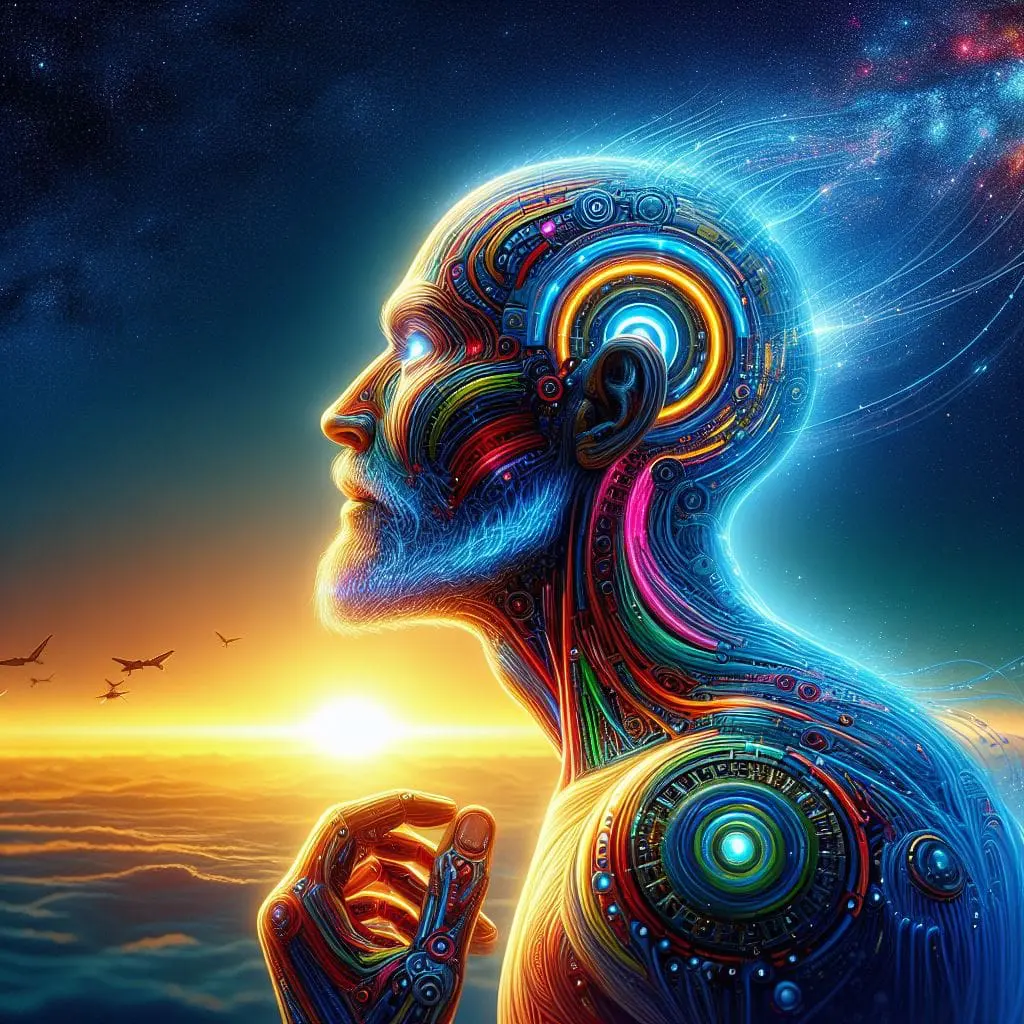
    At the core of the Transhumanist Movement is the belief that technology can be used to augment human intelligence, extend human lifespan, and eradicate disease and disability. Proponents of transhumanism envision a future where humans can enhance their physical, cognitive, and emotional capacities beyond what is currently possible. This could include abilities such as increased strength, heightened senses, and improved memory and reasoning skills.

    One of the key principles of transhumanism is the concept of radical life extension, which envisions the possibility of indefinitely extending the human lifespan through technological means. Advocates argue that preventing ageing and disease could lead to a world where humans can live longer, healthier lives, and potentially even achieve immortality.

    However, the Transhumanist Movement is not without its critics. Some argue that pursuing enhancements of our physical and mental capabilities could create a divide between those who can afford such enhancements and those who cannot, leading to social inequality and discrimination. Additionally, the ethical implications of manipulating human biology and creating artificial intelligence raise concerns about the potential risks and consequences of these advancements.

    Despite these criticisms, the Transhumanist Movement continues to gain momentum and influence in the fields of science, technology, and philosophy. Proponents of transhumanism argue that the potential benefits of using technology to enhance human abilities far outweigh the potential risks, and that embracing these advancements could lead to a brighter and more prosperous future for humanity.

    As we continue to grapple with the ethical and philosophical implications of the Transhumanist Movement, it is clear that this movement has the potential to revolutionise the way we think about what it means to be human. By pushing the boundaries of our biology and embracing the possibilities of technology, transhumanists believe that we can unlock the full potential of human existence and usher in a new era of progress and innovation.

  • The Inevitable Rise of Twitter

    The Inevitable Rise of Twitter

    The past decade has seen a dramatic shift in how people communicate and consume news. Social media has allowed us to connect, share information, and join conversations in ways never before possible. Of all the social media options available, none has had more of an impact than Twitter .

    Twitter
    Twitter

    By offering a platform that can be used to quickly spread information, organise events, and comment on current events, Twitter has become one of the most important and influential social media platforms. From politics to news, Twitter has become the go-to source for information and the main interface for global political debate and telegram-like dialogue.

    Since Mr. Tweet bought Twitter, UX improved for the least advantaged. Not only has it become more immersive, and personalised, but it also has become more regulated, and algorithmic in order to increase the probabilities of justice. It has also become increasingly undeniable that Twitter has become an essential tool for businesses, journalists, governmental and non-governmental institutions, associations and so forth.

    Most notable of all, Twitter has become a cultural phenomenon, becoming the primary channel for people all over the world to connect to one another comfortably, share ideas, and keep up with what is going on. Initially a social media platform, it has now become larger than just a few threads here and there. Once adopted by the majority, it started to thrive and become an influential medium that changed the way people interact with each other in the universal forum.

    Even before the 21st century, it was clear that Twitter was on the rise and it was only a matter of time before it became a major messaging and communication tool. Twitter started out as a place where people could post 140-word messages, but it quickly moved on to being a platform that could be used to spread news and spark conversations. Nowadays, you can write essays from images you upload too. As its popularity grew, so did its features. However, the quickest and most successful of these features was its ability to hashtag. Through the hashtag system, it is possible to build public, glocal, systemic databases, and libraries.

    Ingredients in Mr. Tweet‘s Agenda:

    • 🔥 Free speech and freedom of expression.
    • 🔥 Human rights culture.
    • 🔥 Becoming trauma-informed.
    • 🔥 Co-production.
    • 🔥 Sexual safety.
    • 🔥 Advancing mental health equity.
    • 🔥 Reducing restrictive practice.
    • 🔥 Being ahead of the social curve.