Tag: Germany

  • Julius Streicher: Promoting Dangerous Propaganda in Nazi Germany

    Julius Streicher: Promoting Dangerous Propaganda in Nazi Germany

    Advertisements

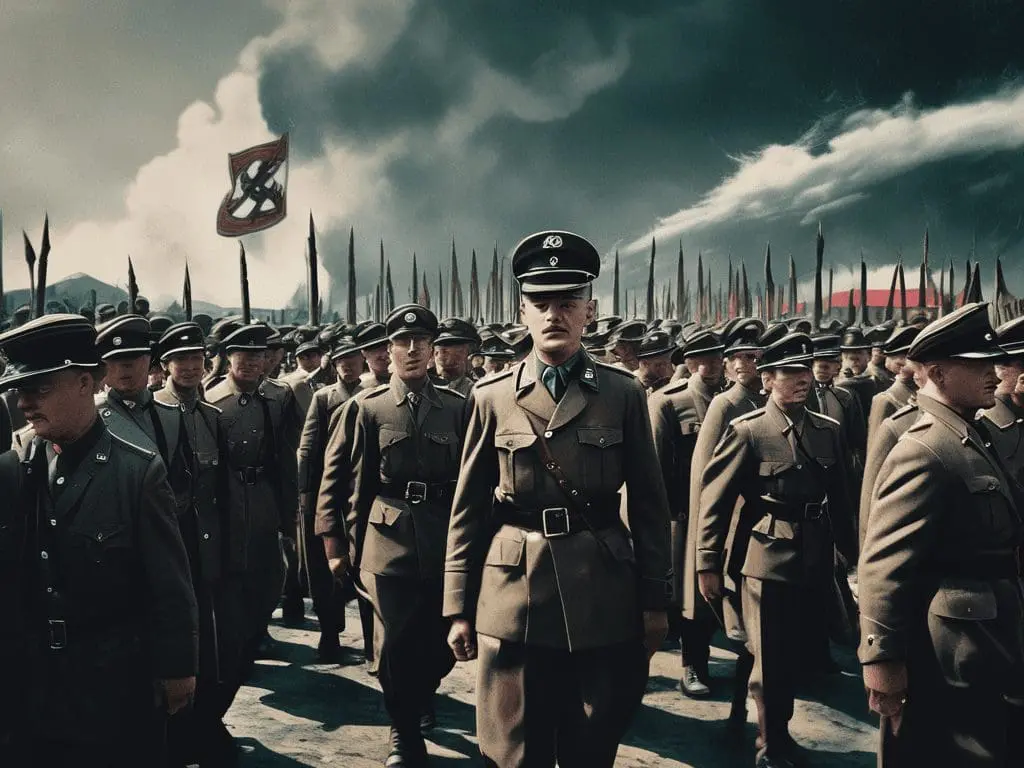
    One of Streicher’s key theories was the idea of a Jewish conspiracy to dominate the world. He propagated the idea that Jews were responsible for all of the problems facing Germany, and that they were working together to overthrow the German government and establish control over the entire world. This theory fed into the Nazi ideology of racial purity and the belief in the need to eliminate Jewish influence from society.

    Another key theory promoted by Streicher was the notion of Jewish degeneracy and immorality. He portrayed Jews as corrupt and morally bankrupt individuals who posed a threat to the moral fabric of German society. By dehumanising Jews in this way, Streicher sought to justify their persecution and eventual extermination.

    Streicher also believed in the idea of Jewish inferiority, arguing that Jews were biologically inferior to Aryans and therefore deserved to be subjugated. He claimed that Jews were a separate and inferior race that needed to be eradicated in order to preserve the purity of the Aryan race.

    Overall, Julius Streicher’s key theories revolved around the demonisation and dehumanisation of the Jewish population, painting them as an existential threat to German society and the Aryan race. His propaganda played a significant role in fomenting anti-Semitic sentiment and fuelling the atrocities committed against Jews during the Holocaust.

    It is important to study and understand figures like Julius Streicher in order to recognise the dangers of hate speech and propaganda that seek to dehumanise and scapegoat certain groups in society. By learning from the mistakes of the past, we can work towards building a more inclusive and tolerant world for future generations.
  • Hitler’s Concept of Morality

    Hitler’s Concept of Morality

    Advertisements

    Hitler’s concept of morality was rooted in his belief in the survival of the fittest and the superiority of the Aryan race. He viewed those who did not fit into his narrow definition of humanity as lesser beings and saw it as his duty to eliminate them in order to create a stronger and more pure society . This warped sense of morality led to the establishment of concentration camps, gas chambers, and other forms of extermination that resulted in the deaths of millions of innocent people.

    Hitler’s actions were not only morally reprehensible, but they also violated the basic principles of human rights and dignity. His regime’s crimes against humanity have left a dark stain on history and serve as a chilling reminder of the dangers of unchecked power and the consequences of following a leader who does not respect the value of every human life.

    It is crucial for us to study and learn from Hitler’s concept of morality in order to prevent such atrocities from happening again. We must challenge and condemn any ideology that seeks to dehumanise and marginalise others based on their race, ethnicity, religion, or any other characteristic. We must stand up against hatred and intolerance and strive to create a more just and inclusive society where all individuals are treated with dignity and respect.

    In conclusion, Hitler’s concept of morality was a twisted and dangerous ideology that led to untold suffering and loss of life. We must never forget the horrors of the Holocaust and actively work to ensure that such atrocities are never repeated. It is up to each of us to stand up against injustice and uphold the values of equality, tolerance, and respect for all.

  • How Nietzsche Influenced the Nazi Holocaust

    How Nietzsche Influenced the Nazi Holocaust

    Advertisements

    Nietzsche’s concept of the “will to power” and his rejection of Christian morality were seized upon by Nazi leaders such as Adolf Hitler and Joseph Goebbels to promote their ideology of racial superiority and the domination of weaker nations. The Nazis believed in the idea of a superior Aryan race that was destined to rule over others, a concept that was influenced by Nietzsche’s ideas of the Ubermensch, or “superman”, who transcends traditional values and creates his own morality.

    Furthermore, Nietzsche’s emphasis on the importance of individualism and the pursuit of personal greatness was twisted by the Nazis into a justification for their ruthless pursuit of power and control. They saw themselves as the embodiment of Nietzsche’s ideal of the strong and independent individual who is above conventional morality and able to shape their own destiny.

    However, it is important to note that Nietzsche himself was critical of nationalism, anti-Semitism, and the idea of a master race. He saw these beliefs as signs of societal decay and a threat to human progress. In fact, Nietzsche’s sister, Elisabeth Förster-Nietzsche, who had control over his writings after his death, twisted his ideas to further her own antisemitic and nationalist beliefs, which were then adopted by the Nazis.

    In conclusion, while Friedrich Nietzsche’s ideas did play a role in shaping the intellectual climate that led to the rise of Nazism, it is crucial to understand that his philosophy was not intended to promote violence, hatred, and discrimination. The Nazi regime deliberately distorted and misused his ideas to justify their crimes against humanity, and it is important to remember the true intent behind Nietzsche’s work to avoid such misinterpretations in the future.

  • The Role of Darwinism in the Nazi Holocaust

    The Role of Darwinism in the Nazi Holocaust

    Advertisements

    Darwinism, also known as social Darwinism, is the belief that certain groups or races are inherently superior to others and have a natural right to dominate or eliminate those deemed inferior. This ideology , derived from Charles Darwin’s theory of natural selection, was twisted and used by the Nazis to justify their racist and genocidal policies.

    The Nazis believed in the concept of racial purity and sought to create a “master race” of Aryans, who they saw as the superior race. They believed that the Jews, along with other minorities such as Slavs, Romani people, and disabled individuals, were biologically inferior and posed a threat to the purity of the Aryan race.

    The Nazis used Darwinist ideology to dehumanise their victims and justify their mass extermination. They viewed the Holocaust as a form of natural selection, where the weak and undesirable were eliminated to strengthen the Aryan race. This belief in biological determinism fuelled their policies of ethnic cleansing, forced sterilisation, and ultimately, genocide.

    One of the most infamous examples of the Nazis using Darwinism to justify their actions was the concept of eugenics. Eugenics is the belief in improving the genetic quality of a population by controlling who is allowed to reproduce. The Nazis implemented eugenics policies such as forced sterilisation and euthanasia to eliminate those they deemed genetically inferior.

    Darwinism played a crucial role in shaping the racist ideology of the Nazis and justifying their heinous actions during the Holocaust. It provided a pseudo-scientific justification for their beliefs in racial superiority and the necessity of eliminating those they deemed inferior.

    While Darwinism was not the sole cause of the Holocaust, it undoubtedly played a significant role in shaping the thinking of the Nazi leadership and legitimising their genocidal policies. It serves as a stark reminder of the dangers of using science to justify hatred and discrimination, and the importance of critically examining the ideologies that can lead to such atrocities.

  • VOLKSBLAD | Hitler

    VOLKSBLAD | Hitler

    Advertisements

    But how did it all begin? How did a man like Hitler rise to power and instigate one of the most horrific genocides in history? The answer lies in his manipulation of the media and his ability to sway the masses through propaganda.

    One of the key tools in Hitler’s arsenal was the publication of a newspaper called VOLKSBLAD. This newspaper was used as a propaganda tool to spread antisemitism. It is alleged that through VOLKSBLAD, Hitler was able to shape public opinion, demonize his enemies, and rally the German people behind his cause. But… What came first, Hitler’s antisemitism or the VOLKSBLAD? Well, Mein Kampf indicates that Hitler DID learn to be antisemitic by reading this press.

    VOLKSBLAD became a mouthpiece for Hitler’s hateful rhetoric, promoting anti-Semitism, xenophobia, and racism. It painted Hitler as a savior of the German people, a man who would lead them to greatness and restore their place in the world. Through relentless propaganda, Hitler was able to cultivate a cult of personality around himself, turning himself into a messianic figure in the eyes of his followers.

    The power of propaganda cannot be underestimated, and Hitler used it to devastating effect. Through VOLKSBLAD, he was able to manipulate public perception, sow division and hatred, and ultimately pave the way for his brutal dictatorship. The lessons of Hitler’s rise to power serve as a sobering reminder of the dangers of unchecked propaganda and the importance of a free and independent press.

    As we reflect on the horrors of the past, let us remember the role that media played in enabling Hitler’s reign of terror. Let us remain vigilant against the spread of hate speech and propaganda, and strive to uphold the values of truth, tolerance, and democracy. Only by learning from the mistakes of history can we hope to build a better future for all.

  • Joseph Goebbels’ Propagandist Techniques

    Joseph Goebbels’ Propagandist Techniques

    Advertisements

    One of the key techniques used by Goebbels was the repetition of simple and catchy slogans. These slogans were often short and easy to remember, making them very effective in conveying the Nazi message. One of the most famous slogans used by the Nazis was “Ein Volk, ein Reich, ein Führer” (One people, one empire, one leader), which emphasised unity and loyalty to Hitler.

    Another technique employed by Goebbels was the use of scapegoating and demonetisation of certain groups, particularly the Jewish population. By blaming the Jews for Germany’s economic woes and portraying them as a threat to the nation, Goebbels fuelled anti-Semitic sentiments among the German people, leading to widespread discrimination and violence against Jewish individuals.

    Goebbels also controlled the media in Germany, ensuring that only pro-Nazi viewpoints were allowed to be disseminated. Any dissenting voices or information that contradicted the Nazi narrative were suppressed or censored. This manipulation of information helped to create a skewed reality for the German people, where they were only exposed to propaganda that reinforced Nazi beliefs.

    Furthermore, Goebbels utilised the power of visual propaganda, including posters, films, and rallies, to create a sense of unity and excitement among the German population. These visual representations often depicted Hitler as a strong and charismatic leader, while demonising the enemies of the Nazi Party. By appealing to emotions and invoking nationalistic sentiments, Goebbels was able to rally support for the Nazi cause and glorify the regime in the eyes of the people.

    Overall, Joseph Goebbels’ propagandist techniques were incredibly effective in manipulating public opinion and shaping the beliefs of the German population during the Nazi era. By controlling the media, using catchy slogans, scapegoating certain groups, and utilising visual propaganda, Goebbels was able to indoctrinate the masses and garner support for the oppressive policies of the Nazi Party. His legacy serves as a stark reminder of the dangerous power of propaganda and the importance of critical thinking in the face of manipulation and misinformation.