




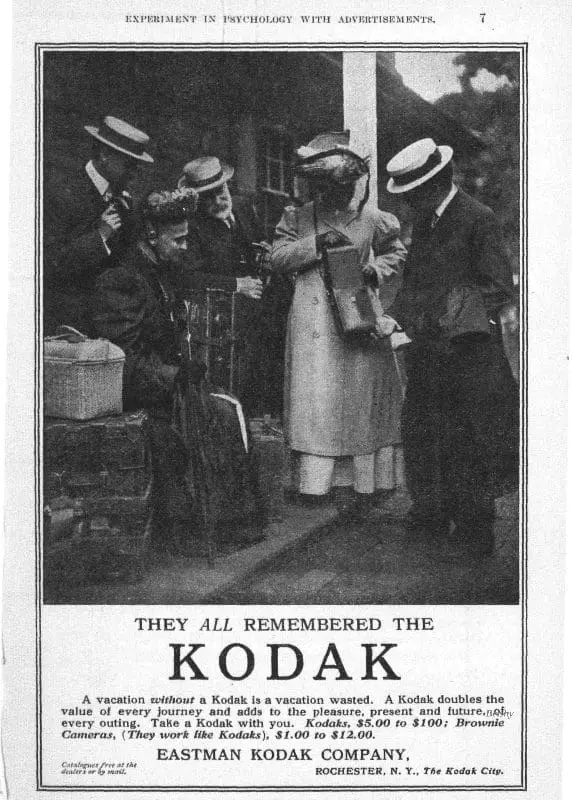
A psychological experiment conducted by the army through Eastman Kodak Company advertisements as explained by Robert Yerkes in 1912.
Yerkes, R. M. et al. (1912) ‘The class experiment in psychology with advertisements as materials’, Journal of Educational Psychology. Warwick & York, 3(1), pp. 1–17. doi: 10.1037/h0072656.
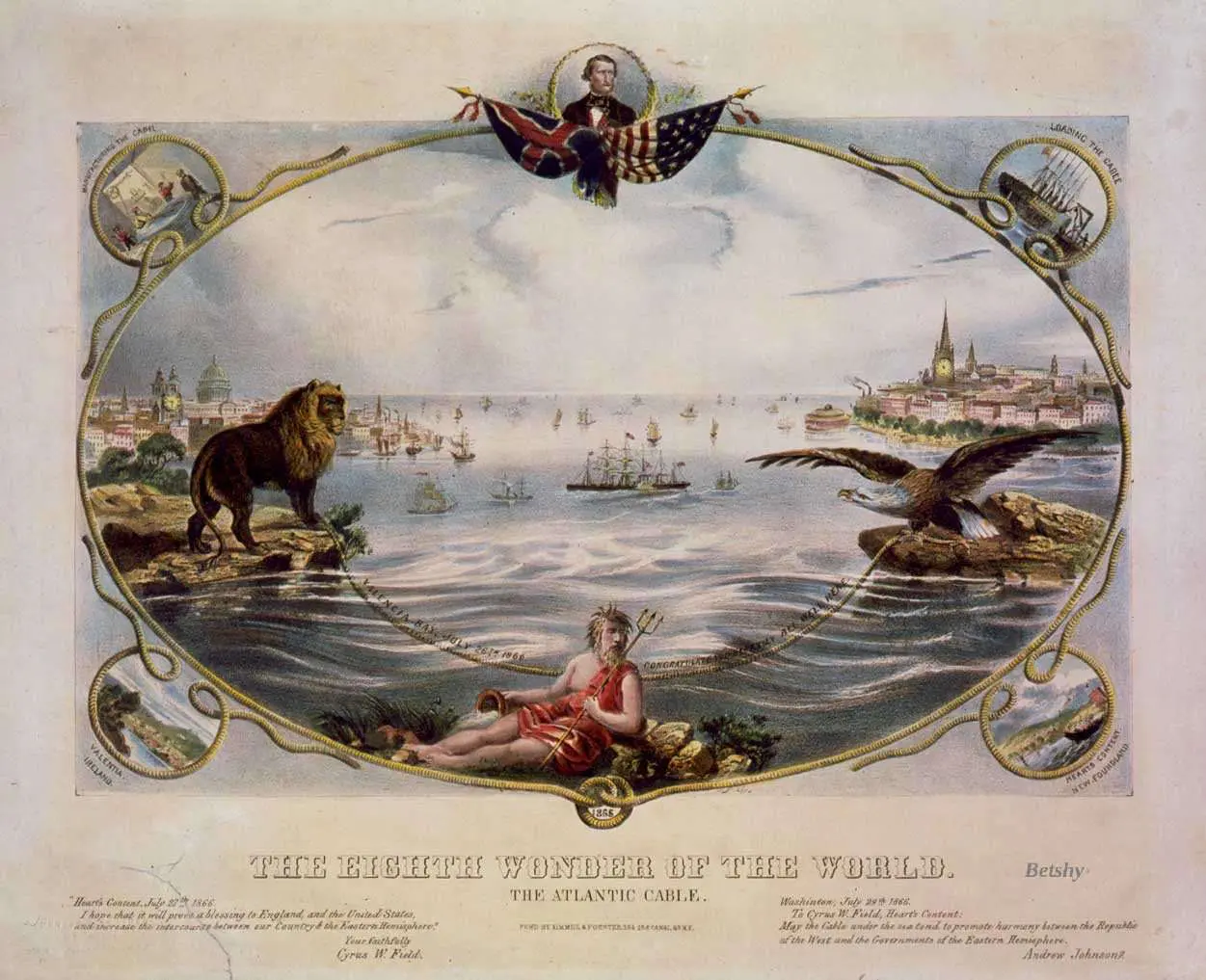
The transatlantic cable, completed in July 1866, was the beginning of distance telecommunications. It was created by Cyrus W. Field and built in New York.

About
Galton’s first Anthropometric Laboratory situated in a corner of the International Health Exhibition in Kensington, London.
1884–1885
×
Dismiss alert
In 1888, a reporter from the Pall Mall Gazette paid a visit to Galton’s Anthropometric Laboratory in London, where instruments developed by Galton measured the physical and mental characteristics — from keenness of hearing to breathing power — of over 10,000 people. The resulting article, titled “A Morning With the Anthropometric Detectives”, described Galton’s laboratory as a world of “order and precision, and tests of the nicest accuracy”. “Dumb though they are,” Galton told the reporter, “what splendid detectives our instruments might prove”.
History
Sir Francis Galton sets up his laboratory in London in 1884 and begins mental testing, much of which was conducted mainly under the principles of craniometry. Not only did he measure the participant’s skull but also assessed “performance on a range of simple physical tasks, such as tests of eyesight, strength of grip, colour vision, hearing, hand preference, and so on”
(Byford, 2014).
Book
The Life Letters and Labours of Francis Galton
More
2007
“It’s like ‘CSI,’ only it’s in records,” says Neil Carmichael, the supervisory archivist. “You never know what you’re going to get.”
The work, says Jeanne Schauble, is “esoteric,” all about arcane rules and layers of document review. She holds the rather Orwellian title of director of the Initial Processing and Declassification Division at the National Archives, which means she leads the beleaguered team of archivists faced with the task of making open government real.
“The United States has the most open government in the world,” says Steven Aftergood, director of the Project on Government Secrecy at the Federation of American Scientists, “but it also has the most secretive government in the world, if you measure it by the production of new secrets.”