Category: Research

This category is about topics that are currently being researched about and where key findings are shared.

  • The Psychology of Nature: Climate Change and the Anthropocene

    The Psychology of Nature: Climate Change and the Anthropocene

    Climate change is happening, and the natural world is struggling. The scientific world and the media industry are signifying “doomsday”, and the evidence is accumulating. Human beings have been aware of this for a while, and in 1988 the IPCC (Intergovernmental Panel on Climate Change) was created in order to tackle such problems (UN, 2017). Nevertheless, global warming is still happening, threatening to destroy our natural world and the survival of our species. Adams (2015) explained that even though there are people who know and care about climate change, they still struggle in their efforts to take individual action, and make the necessary changes. This document will address all these issues, as well as the relationship humans have with the natural world, and what happens when nature is not accessible.  For purposes of clarification, the term “nature” will be used along with Stevens’ (2015, p. 327) definition of the natural world: “those environments which have not been heavily modified by human activity”. 

    According to Zalasiewicz et al. (2016), the term “anthropocene” is understood as the epoch we currently live in, which is considered the most environmentally destructive time in history due to anthropogenic (man-made) activity. In other words, the way in which people go about their daily lives (including their habits) is having a record-breaking negative impact on the environment. This suggests that human beings are in some way or another responsible for global climate change (GCC). The evidence is compelling (NASA, n.d.), and has been disseminated for such a long time that there even exists an international legal framework for it.  The United Nations Framework Convention for Climate Change (UNFCC) took effect in 1994 and since then, it has been guiding global initiatives to reduce the greenhouse effect. Before this was the case, in 1988 the United Nations Environment Programme (UNEP) and the World Meteorological Organization (WMO) created the IPCC (n.d.) to conduct assessments, and report information about the topic. Furthermore, Adams’ (2015) work posits the fact that there are many problems directly related to climate change; such as the potential extinction of wildlife, overpopulation, deforestation, and air pollution. Such serious threats and their increasing likelihood cause a lot of collective distress, and this has led psychologists to wonder why despite the fact that survival is at stake, and despite there being so much circulation of such information; people are still living as if nothing was happening. Adams (2015) further explained using Freud’s psychoanalytic framework that people develop defence mechanisms to protect their mind from the unpleasant knowledge of reality. This is problematic, as the urgency for taking action increases every year, and an individual behavioural focus is necessary.

    The UK Department for Business, Energy and Industrial Strategy (BEIS, 2019) cited in Sonnichsen (2020) conducted a national survey in 2019 where 4,224 participants from randomly selected households in the UK were interviewed face-to-face and were asked the question: “How concerned, if at all, are you about current climate change, sometimes referred to as ‘global warming’?” 45% of respondents stated that they were “fairly concerned”, 35% stated that they were “very concerned”, 13% said they were “not very concerned”, 5% stated that they were not at all concerned, and only 1% stated that they did not know. Therefore, it can be inferred that the great majority of people in the UK are conscious about climate change.  Furthermore, the same sample was asked about their beliefs in the causes of climate change: 40% believed that both natural and anthropogenic processes were to blame. 33% believed that it was caused mainly by the anthropocene. 15% believed that human activity was the sole cause, 2% were skeptical about it, and the rest either did not know or had no opinion about it. More questions were asked which showed that in the UK, changes are expected both from government and society.

    Further evidence (Evans, 2019) has compounded that the behavioural impact of society on the climate is rising along with the temperatures. This means that factors such as negative affect, conflict, and psychological distress are more common as exposure to extreme weather events and threats increases. What all of the mentioned above suggests is that GCC is a result of urban, every day industrial and domestic activities (Adams, 2015; Evans, 2019). Not surprisingly, scientists are worried about a potential doomsday (Meckling, 2020), and they are not the only ones. Research (Stevens, 2015) has shown that people have higher levels of arousal when they are exposed to urban environments than when they are exposed to natural environments. This indicates that anthropogenic city life is associated with more stressful experiences than rural life. The term biophilia means “love for life” (Stevens, 2019b), and it is used to describe the way in which human beings have an inherent attraction towards and a need for nature. Evidence about embedment- the idea that the environment in which the body is located has an effect on mood and behaviour- suggests that individual identities are made and remade in the light of the world around the body (the ego; Sanchez Marrugo, 2019); and such world influences mental health (Bishop, 2015). Ulrich et al. (1991) as cited in Stevens (2015) produced evidence about how the natural world triggers relaxing psychosomatic responses, which means that it serves as a mood stabiliser. Whether it is a picture, a visualisation, or an actual trip to nature.

    Moreover, Stevens (2015) highlights the importance of a restorative environment when it comes to healing. Ulrich (1984) cited in Stevens (2015) conducted research to determine whether the outside view of a window influenced the speed of recovery for patients, and found that indeed those who were able to see natural landscapes from their windows had a faster recovery and were subsequently discharged earlier than those who could only see a brick wall. This evidence suggests that exposure to the natural world is beneficial for people. Since humans have a natural need to embed themselves in the natural world due to the unique and impossible to replicate sensory stimulation provided by such an environment, it can be said that having a close relationship with nature is therapeutic. According to Louv (2005) cited in Stevens (2019a), a good descriptive term when it comes to this phenomenon is “Nature Deficit Disorder (NDD)”.  He posited that not embedding oneself in nature often enough can have detrimental effects on overall wellbeing, and this could be interpreted as a form of self-neglect because if a person does not meet their natural, psychoevolutionary needs; they can indeed forget what it feels like to love life, and might even become suicidal. The Office for National Statistics (ONS) reported an increase in suicide rates in recent years (Kaur and Manders, 2019), which suggests that less people are in love with life. Evidence indicates that people can heal from nature deficits through what is known as attention restoration therapy (ART; Stevens, 2015). It consists of embedding oneself in an environment that is away from urban life, and which elicits grounding and relaxation. For instance, it has been found that sunlight has a positive effect on human health when it touches the skin, as it triggers a chemical reaction and creates vitamin D, which boosts the immune system and improves mood (Stevens, 2015). Therefore, embedding oneself in natural places has many benefits. This compounds the understanding of natural environments as a necessity.

    To summarise, the threat of climate change is very real and every human being is impacted by it. The natural world has an important role to play in mental health wellbeing, and lack of access to it can have detrimental effects on public health. Suicide, the anti-thesis of biophilia has been increasing in the UK. It is unclear at this point how biophilia can be elicited through the status quo in order to reduce anti-life outcomes such as suicide and global warming.

    References 

    Adams, M. (2015) ‘The wider environment’, in Taylor and Turner (eds) Living Psychology: From the Everyday to the Extraordinary, Milton Keynes, The Open University, pp. 373-409.

    Ainslie, D. and Clarke, H. (2019) ‘UK Environmental Accounts: 2019’ [Online], Office for National Statistics. Available at https://www.ons.gov.uk/economy/environmentalaccounts/bulletins/ukenvironmentalaccounts/2019 (Accessed 30 January 2020).

    Bishop, S. (2015) ‘Boundaries of the self’, in Taylor and Turner (eds) Living Psychology: From the Everyday to the Extraordinary, Milton Keynes, The Open University, pp. 287-318.

    Evans, G.W. (2019) ‘Projected Behavioural Impacts of Global Climate Change’, Annual Review of Psychology, vol. 70(1), pp. 449-474 [Online]. Available at https://pmt-eu.hosted.exlibrisgroup.com/permalink/f/13ueeno/TN_annual_reviews10.1146/annurev-psych-010418-103023 (Accessed 30 January 2020).

    IPCC (n.d.) About [Online]. Available at https://www.ipcc.ch/about/ (Accessed 30 January 2020).

    Kaur, J. and Manders, B. (2019) ‘Suicides in the UK: 2018 Registrations’ [Online], Office for National Statistics. Available at https://www.ons.gov.uk/peoplepopulationandcommunity/birthsdeathsandmarriages/deaths/bulletins/suicidesintheunitedkingdom/2018registrations (Accessed 30 January 2020).

    Meckling, J. (2020) ‘It is 100 Seconds to Midnight: 2020 Doomsday Clock Statement’, Bulletin of the Atomic Scientists [Online]. Available at https://thebulletin.org/wp-content/uploads/2020/01/2020-Doomsday-Clock-statement.pdf (Accessed 31 January 2020).

    NASA (n.d.) Climate Change: Evidence [Online]. Available at https://climate.nasa.gov/evidence/ (Accessed 30 January 2020).

    Sanchez Marrugo, B.P. (2019) TMA 02, Milton Keynes, The Open University. 

    Sonnichsen, N. (2020) ‘Levels of concern about climate change in the United Kingdom (UK) 2019’, Statista, 31 January [Online]. Available at https://www-statista-com.libezproxy.open.ac.uk/statistics/426733/united-kingdom-uk-concern-about-climate-change/ (Accessed 1 February 2020).

    Stevens, P. (2015) ‘Relationships with the natural world’, in Taylor and Turner (eds), Living Psychology: From the Everyday to the Extraordinary, Milton Keynes, The Open University, pp. 327-363. 

    Stevens, P. (2019a) ‘6 Nature Deficiency’, DD210 Week 13: Relationships with the natural world [Online]. Available at https://learn2.open.ac.uk/mod/oucontent/view.php?id=1467723&section=6 (Accessed 30 January 2020).

    Stevens, P. (2019b) ‘5 Biophilia’, DD210 Week 13: Relationships with the natural world [Online]. Available at https://learn2.open.ac.uk/mod/oucontent/view.php?id=1467723&section=5 (Accessed 1 February 2020).

    United Nations (2017) Basic Facts about the United Nations, 42 edn, New York, United Nations Department of Public Information.

    Zalasiewicz, J., Williams, M. and Waters, C.N. (2016) ‘Anthropocene’, in J. Adamson, W.A. Gleason & D.N. Pellow (eds), Keywords for environmental studies, New York, New York University Press [Online]. Available at  https://search-credoreference-com.libezproxy.open.ac.uk/content/entry/nyupresskes/anthropocene/0  (Accessed 1 February 2020).

  • Sicario Culture: An Analysis of Violent Crime and Aggression in Colombia During the 80s and 90s

    Sicario Culture: An Analysis of Violent Crime and Aggression in Colombia During the 80s and 90s

    According to Blackburn (2005, pp. 211-223), “aggression describes the intentional infliction of harm, including psychological discomfort as well as injury, although it is sometimes loosely equated with vigour in competitive situations […] a constant need to discharge aggressive energy governs human behaviour […] anger is a socially constructed emotion […] In personality disorders, ego weakness results in the repression of aggression […] Ferguson and Rule, for example, suggest that anger is aroused not simply by the degree of perceived aversive treatment by others, but also by judgements of whether the aversion is intentional, malevolent, foreseeable, and unjustified”.

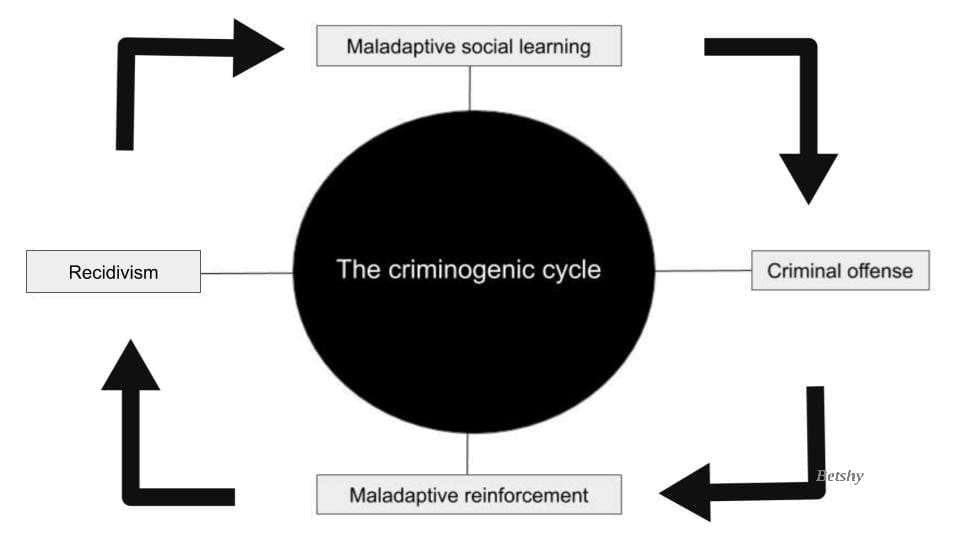
    The cycle of criminogenic behaviour

    Gillespie and Mitchell (2018, p. 85) describe individuals diagnosed with psychopathy as a personality disorder (ASPD) as “outwardly normal, but were nonetheless extremely callous and unable to express remorse or guilt, to the point where they seemed to be devoid of human emotion. The patients were typically of above average intelligence and seemingly charming, though lacked the capacity for love”. Psychopaths who go through the criminal justice system can at times exhibit great criminal versatility. The following is a diagram I designed to illustrate how such criminogenic needs and versatility develop and recur.

    Recidivism

    National homicide rates per 100 000 population, c. 1984

    Blackburn (2005) included a table in his chapter about violent crime and aggression where Colombia is listed as the country with the highest homicide rate in 1984 and this was published in the United Nations year-book (1988). Even though the data has changed massively, and Colombia has dramatically reduced its crime rates; such bloody past would have caused generational trauma without a doubt, and the Colombian people would have had to adapt to survive potential death anywhere at any time if they upset the wrong person. Many political leaders were assassinated in order to stop the people from interfering with the criminal business of the mafia. A lot of blood was shed, and the Colombian people were over-exposed to extreme levels of danger to the point where the entire nation was having a humanitarian crisis, which still echoes, and which is still being solved.

    CountryRate
    Colombia37.4
    Mexico17.9
    Brazil13.4
    Venezuela12.9
    USA 8.5
    Ecuador 7.1
    Argentina3.8
    Hungary2.7
    Canada2.3
    Italy2.1
    Australia1.9
    Poland1.6
    Austria1.4
    Israel1.4
    France1.3
    Scotland1.3
    New Zealand1.2
    FDR1.2
    Spain1.0
    Greece0.9
    England and Wales0.7
    Egypt0.5

    Source: United Nations (1988). Demographic yearbook. New York: United Nations Publishing.

    Case study: the criminal career of sicario alias Popeye

    The following video covers the developmental trajectory of Jhon Jairo Velasquez Vasquez’ criminal career, the political context in which he was rewarded with attention and money for being a hired gun; and how such media attention has led to some of the Colombian people seeing and treating him as a celebrity. Behind this story is a real case of a mental health crisis where the hypernormalisation of violence from recent decades was so extreme, that many people became desensitised to the actions of this type of individual, seeing no difference between what is right and what is wrong. Furthermore, this documentary analyses some of the confessions of Popeye as the primary psychopath that he was, and shows how what is ‘normal’ in a country, is ‘abnormal’ in other places. Popeye specialised in crime, and developed all the skills needed for the criminal business. This makes an interesting case for forensic psychology, and for media studies.

    References

    1989: un año para la memoria (2014) Youtube video, added by El Espectador [Online]. Available at https://www.youtube.com/watch?v=fDFsNNaTQIY&t=4s (Accessed 9 March 2020). 

    2015 Popeye Full TV Interview. Part 1 of 3. English Subtitles (2018) Youtube video, added by Colombian History X [Online]. Available at https://www.youtube.com/watch?v=M6NGWNrzg88 (Accessed 8 March 2020). 

    Blackburn, R. (2005) The Psychology of Criminal Conduct, West Sussex, John Wiley & Sons/ University of Liverpool, pp. 210-245.

    Escobar’s Hitman. Former drug-gang killer now loved and loathed in Colombia (2017) Youtube video, added by RT Documentary [Online]. Available at https://www.youtube.com/watch?v=BQy_LJdZ7qw (Accessed 8 March 2020).

    Gillespie, S. M. and Mitchell, I.J. (2018) ‘Psychopathy’, in Davies, G.M. and Beech, A.R. (eds), Forensic Psychology: Crime, Justice, Law, Interventions, 3rd ed, West Sussex, British Psychological Society/ John Wiley & Sons, pp. 85-100. 

    Popeye: The Jailhouse Interviews Pt. 1 – English Subtitles  (2018) Youtube video, added by Colombian History X [Online]. Available at https://www.youtube.com/watch?v=EaPw1EEPOCc  (Accessed 8 March 2020). 

    Popeye: The early years (2018) Youtube video, added by Colombian History X [Online]. Available at https://www.youtube.com/watch?v=ZAPsQ0P_4Q0  (Accessed 8 March 2020).

    United Nations (1988) Demographic Year-Book, New York, United Nations Publishing Division. 

  • Book review: Witness for the Defense: the Accused, the Eyewitness, and the Expert who puts Memory on Trial

    Book review: Witness for the Defense: the Accused, the Eyewitness, and the Expert who puts Memory on Trial

    Rating: 5 out of 5.

    If you are a student of psychology, you might have already come across Professor Loftus’ work on eyewitness memory. She is the pop star and hollywood personality within the field of forensic psychology, and has served as an expert witness in high profile cases such as Ted Bundy and more recently Harvey Weinstein (Associated Press in New York, 2020). Furthermore, Professor Loftus’ work has become highly controversial, and has caused many reactions from victims due to her experiments on eyewitness memory, and how unreliable episodic memory actually is. Her book Witness for the Defense: The Accused, the Eyewitness, and the Expert Who Puts Memory on Trial (1991) narrates her experience working with defendants in the criminal justice system, whilst also delighting the reader with the theory of her experiments and findings.

    “There is a generally accepted theory in our field that memory doesn’t work like a videotape recorder. We don’t record an event and then play it back later. The process is much more complex […] In such circumstances there is an increased risk that an innocent person will be convicted […] One of the most obvious reasons for forgetting is that the information was never stored in memory in the first place; even the most common, everyday items frequently fail to find a niche in our memory […] With the passage of time, with proper motivation, or with the introduction of interfering or contradictory facts, the memory traces change or become transformed, often without our conscious awareness”

    Selected excerpts from Loftus and Ketcham (1991, pp. 4-17)

    Recently The Guardian wrote a news report about Harvey Weinstein’s trial and described the situation as follows: “Lawyers for Harvey Weinstein turned on Friday to an expert known for studying false, repressed and unreliable memories who has worked on behalf of clients including the serial killer Ted Bundy” (Associated Press in New York, 2020). Needless to say there are many critiques of Professor Loftus due to her tendency to work for the defense instead of the prosecution, and this has led to journalists wondering why such is the case. For students of forensic psychology like me, there are a series of questions that only her books can answer. I truly recommend this book to those seeking to understand eyewitness memory better, and also those seeking to learn about the behind the scenes of the criminal justice system.

    Relevant Questions & Answers

    Why work for the defense instead of the prosecution?

    Professor Loftus is highly concerned with justice, and prefers to prevent injustice by studying cases meticulously and scientifically. Having already been involved in cases where a potentially innocent person got a death sentence after biased procedures (e.g. Demjanjuk; Loftus and Ketcham, 1991), Dr. Loftus knows the importance of the presumption of innocence. Many studies conducted on eyewitness memory have demonstrated that memories are vulnerable to distortion and contamination. Hindsight bias and post-event information (misinformation effect) are particularly important concepts when trying to understand why miscarriages of justice have occurred in the history of the western societies and their criminal justice systems. In regards to this, her book states: “Although witnesses try hard to identify the true criminal, when they are uncertain- or when no one person in the lineup exactly matches their memory- they will often identify the person who best matches their recollection of the criminal. And often their choice is wrong” (p. 23). This has become a general rule of thumb and a system variable when investigating cases from a psychological perspective. “But in a stressed mind, under intense pressure to come up with someone who could be blamed for this horrible crime, those connections could have been created, welded together by fear and pain and a desire to be done with it all, to stop thinking, to find an answer, a solution” (p. 191)

    Why did she defend Ted Bundy as he is not innocent?

    According to her book, when Bundy’s lawyer contacted her, he described the case to her as relevant to her work, and as if the prosecution had an “extremely weak case” against his client. Back then she had not heard the name “Theodore Robert Bundy”, and did not know that the famous “Ted cases” were related to him, and it was in 1975 that John O’Connell (Bundy’s solicitor) consulted her in regards to the kidnapping charge against him. At the time, Bundy was a law student in Seattle, and his profile was surprisingly charismatic to the point where it was very difficult to imagine him committing such terrible acts. Dr. Loftus did not expect what came after that, and describes being surprised about this case and remembers having a conversation with O’Connell where she explained her theory: “First, the acquisition stage, in which the perception of the original event is put into the memory system; second, the retention stage, the period of time that passes between the event and the recollection of a particular piece of information; and third, the retrieval stage, in which a person recalls stored information” (p. 77). Furthermore, she describes her impression of Ted Bundy’s death as follows: “The scene switched to an interview with Ted Bundy the night before his electrocution. Prison had removed the arrogance from his smile, sharpening his features. The eyes seemed deeper set, the nose longer and straighter, the creases in his forehead permanently etched […] I felt lightheaded, slightly sick to my stomach” (pp. 90-91). Professor Loftus recalls wondering what would have happened if her expert contribution had led to an acquittal in Utah, and seemed to be distressed about the entire situation as more evidence accumulated about Bundy.

    What common cognitive biases does Dr. Loftus study?

    Professor Loftus conducts holistic investigations. There are many variables that she analyses, but all of them together are beyond the scope of this article. However, she does mention some of these in the book: “I hit the return key on my computer three times and typed in the words photo-biased identification […] Unconscious transference was the third item on my list […]Next on my list was time estimates. Jurors are aware that memory is better when you have a longer time to look at something, but they are often not aware that later, when a witness tries to estimate how long a particular event lasted, there is a strong tendency to overestimate its durations […] Confidence. Like most people, jurors tend to believe there is a strong relationship between how confident a witness is and how accurate he or she is” (pp. 169-170). In a nutshell, she is a memory expert. “

    An example: “We’ve shown people a simulated bank robbery that lasts for half a minute and they will say it lasted for five minutes, eight minutes, even ten minutes. In one experiment people saw an event that lasted four minutes and they said it lasted ten minutes; some said twenty minutes. There is a very strong tendency in the memory to enlarge these complex and stressful events so that they appear to have occurred over a longer period of time than they really did […] Unconscious transference is the mistaken recollection or confusion of a person seen in one situation with a person who has been seen in a different situation. But what is happening here is the merging of an image of a person seen in one situation with a totally different incident. And that is an important phenomenon. Many people do not realise how easy it is for an ‘unconscious transference’ to occur, to take a person with your memory of an experience that happened at a different time” (pp. 200-201).

    What is her view on penology and prisons?

    Dr. Loftus’ position about penal punishment within the criminal justice system can be appreciated with her closing statement on the Ted Bundy chapter: “Bundy was guilty; there was no longer any doubt about the fact. But he was also a human being, and now he was dead. Where, I wondered, is the triumph, the glory in that” (p. 91). I interpret such statement in the context of human rights law (Equality & Human Rights Commission, 2018), with the right to life being relevant when it comes to capital punishment.

    Were the deaths of Steve Titus and Detective Parker correlated?

    Last year I emailed Professor Loftus to inquire about her chapter Dark Justice: Steve Titus, about one of the clients she defended, and who was wrongfully convicted of rape. It was a case of bureaucratic corruption. At the end of the chapter, Professor Loftus narrates the following events: “On February 8, 1985, eleven days before he would have faced his tormentors in court, Steve Titus died. He was thirty-five years old […] On June 8, 1987, six years to the day after Titus’ conviction was overturned, Detective Ronald Parker was found slumped next to his gym locker, dead of a heart attack. He was forty-three years old” (p. 60). I asked her whether she wanted to imply a potential correlation between these two deaths, or whether she just wanted to make a historical record. Thirteen days later I received a reply from her where she explained that Titus had died of a heart attack due to the stress he had gone through, and that she was not sure what happened in the case of the detective. Moreover, she said that both, Steve Titus and the detective are buried near each other in the Washington Memorial Cemetery in New York (Anderson, 1991), which is quite ironic.

    Can you mention an experiment conducted by Professor Loftus on memory?

    Yes, I can indeed. She actually summarises her experiment on semantics in the book: “I hesitated for a moment, trying to decide whether to tell Kurzman about an earlier experiment I’d conducted with adult subjects who watched a film clip of an automobile accident and then were interviewed and asked suggestive questions. By using the verb ‘smash’ instead of ‘hit’, we were able to change not only the subjects’ estimate of the speed of the cars when the accident occurred, but also the probability of reporting broken glass- even though there was no broken glass in our interviews. This particular experiment supported the theory that the subjects experienced an actual change in the original memory” (p. 137).

    Irrelevant Questions & Answers

    Why did she defend Harvey Weinstein as he is not innocent?

    Even though this is not in the book, I see this is along the same lines of why she defended Ted Bundy. Professor Loftus’ work focuses mainly on how people absorb information (learn), store events, and retrieve such details later on. So her involvement in such high profile cases has to do with ruling out the common cognitive and procedural biases found in estimator and system variables of eyewitness accounts and processes; which for her is a fairly straightforward, algorithmic, and systematic, reliable procedure. From what I understand, Harvey was found guilty of 2/5 allegations. This means that Professor Loftus had to make sure that all processes regarding the accusations were put through rigorous scientific methods for mitigation, as well as the examination of potential contamination in the memories of both, accusers and the defendant. This process often involves a detailed episodic, chronological reconstruction of the crime and the parties involved. As an expert witness, Loftus has a duty to be impartial, professional and objective about human memory. This means that her defendant was found guilty of actually sexually assaulting two of the five victims, and only these two accounts were successful in proving consistency in episodic recall. In other words, having Loftus study the case means that it is undeniable to the jury that Weinstein did do those two things, but that it was not proven that he did do those other three things beyond reasonable doubt (Levenson, 2020).

    Does all this mean that Professor Loftus does not support the #MeToo movement?

    No, that is not what all this means. All this simply means that Professor Loftus had to mitigate human memory empirically in order to clarify to the best of her ability as a scientist what really happened in Hollywood. Expert witnesses tend to be demonised due to the controversial work they carry out. Nevertheless, nothing of the mentioned above is evidence that she is anti-feminist.

    My personal favourite:

    “It is a fine line I walk as a psychologist in a court of law. While the debate about guilt and innocence is waged with passion and partisan zeal, it is my task to deal with the facts. As an expert witness, the facts I must deal with extend beneath the surface, deeper than the newspaper headlines, deeper even than the confidential police reports and the court transcripts. I am privy to the defense lawyer’s strategy; I’ve read the victims’ descriptions of the accused; I know the sordid and intimate details of the crimes; I’ve viewed the lineups and listened to tape-recorded interviews. But still there are facts I will never hear, details that are beyond my expertise or concern. The defense attorneys tell me what they want me to know, selecting only the facts I will need in order to testify. I do not have access to the prosecutor’s files. I rarely have the opportunity to talk at length with the defendant. And I don’t venture into the jury room to hear their confidential and privileged conversations about guilt, innocence, and reasonable doubt” (p. 241).

    References

    Anderson, R. (1991) ‘Port Most Ingenious in Public Spending’, The Seattle Times, 6 July [Online]. Available at https://archive.seattletimes.com/archive/?date=19910706&slug=1292967 (Accessed 7 March 2020).

    Associated Press in New York (2020) ‘Harvey Weinstein trial hears from expert on unreliable memory’, The Guardian, 7 February [Online]. Available at https://www.theguardian.com/film/2020/feb/07/harvey-weinstein-trial-unreliable-memories-elizabeth-loftus (Accessed 7 March 2020).

    Equality and Human Rights Commission (2018) ‘The Human Rights Act’ [Online]. Available at https://www.equalityhumanrights.com/en/human-rights/human-rights-act (Accessed 7 March 2020).

    Levenson, M. (2020) ‘Who’s Who in the Harvey Weinstein Trial’, The New York Times, 21 February [Online]. Available at https://www.nytimes.com/2020/02/19/nyregion/weinstein-trial.html (Accessed 7 March 2020).

    Loftus, E. (2019) Email to Betshy P. Sanchez Marrugo, 22 October [unpublished]

    Loftus, E. and Ketcham, K. (1991) Witness for the Defense: The Accused, the Eyewitness, and the Expert Who Puts Memory on Trial, New York, St. Martin’s Press.

    Sanchez Marrugo, B. P. (2019) Email to Dr. Elizabeth Loftus, 9 October [unpublished].

  • Understanding Evolutionary Theory in the Context of Animal Minds

    Understanding Evolutionary Theory in the Context of Animal Minds

    Evolutionary theory refers to the ontogenetic, social and phylogenetic developmental trajectory of species as a mechanism for adaptation and survival. (Hewson et al., 2015, p. 67-68). Comparative psychology draws pathological and behavioural associations between human and nonhuman animals, including how evolution occurs interspecies through the use of tools. For instance, Taylor has been investigating the intelligence of birds (The Open University, 2019b). He built a complex puzzle apparatus which required eight steps to solve, and he demonstrated how a New Caledonian crow named 007 was able to quickly solve it to get the food reward. The bird had to be trained first to use each of the individual components of the apparatus (The Open University, 2019a). This shows that birds can enhance their sophisticated, transferable, problem solving skills through the use of tools.  Furthermore, when it comes to understanding cooperation as an evolutionary trait, Professor de Waal (The Open University, 2019d) explained how animals help each other in complex ways. Two monkeys were put through extremely stressful tasks for research purposes in which one of them was privileged in terms of food, and the other was not. This food competition paradigm (The Open University, 2019e) can be considered a form of monkey-economy based on inequality. Brosnan and De Waal (2003, p. 297) called their distressed, responsive behaviour an “aversion to inequity”. All this corroborates Panksepp’s theory (The Open University, 2019c) of the seven primary emotions among which empathy is included. Whilst chimpanzees might be able to understand perception and knowledge in conspecifics; they cannot, however, understand when another individual is misinformed (i.e. when someone has a false belief; Hewson et al., 2015, pp.96-98; The Open University, 2019e).   

    References

    Brosnan, S.F. and De Waal, F.B.M. (2003) ‘Monkeys reject unequal pay’, Nature. Nature Publishing Group, 425(6955), pp. 297–299. Available at https://pmt-eu.hosted.exlibrisgroup.com/permalink/f/gvehrt/TN_nature_a10.1038/nature01963 (Accessed 11 October 2019).

    Hewson, C., Ramsden P., and Turner, J.  (2015) ‘Animal minds’, in Turner, J., Hewson, C., Mahendran, K. and Stevens, P.  (eds), Living Psychology: From the Everyday to the Extraordinary, Milton Keynes, The Open University, pp. 63-99.

    The Open University (2019a) ‘Alex Taylor explains the problem-solving task for crows’ [Video], DD210-19J Living Psychology: From the Everyday to the Extraordinary.  Available at https://learn2.open.ac.uk/mod/oucontent/view.php?id=1467709&section=5.2 (Accessed 11 October 2019).

    The Open University (2019b) ‘Chris Packham and The New Caledonian crow puzzle’ [Video], DD210-19J Living Psychology: From the Everyday to the Extraordinary.  Available at https://learn2.open.ac.uk/mod/oucontent/view.php?id=1467709&section=5.1  (Accessed 11 October 2019).

    The Open University (2019c) ‘Jaak Panksepp at the TEDx Rainier conference’ [Video], DD210-19J Living Psychology: From the Everyday to the Extraordinary.  Available at https://learn2.open.ac.uk/mod/oucontent/view.php?id=1467709&section=4.2  (Accessed 11 October 2019).

    The Open University (2019d) ‘TEDx Talk: Professor Frans de Waal’ [Video], DD210-19J Living Psychology: From the Everyday to the Extraordinary.  Available at https://learn2.open.ac.uk/mod/oucontent/view.php?id=1467709&section=5.3  (Accessed 11 October 2019).

    The Open University (2019e) ‘3.6 Animals’ understanding of false belief’, DD210-19J Week 3: Animal minds [Online]. Available at https://learn2.open.ac.uk/mod/oucontent/view.php?id=1467709&section=6.2  (Accessed 11 October 2019).

  • Understanding Self-esteem and Why it is Important

    Understanding Self-esteem and Why it is Important

    According to the online Etymology dictionary (n.d.) , the verb “esteem” originates from 14c Latin meaning “to value, determine the value of, appraise”. Based on this definition, to self-esteem is to self-appraise and to consequently establish one’s own self worth. Nevertheless, in psychological research, the concept of self-esteem is a much disputed one. It encompasses other key terms such as self concept (the awareness a person has about themselves), and self-efficacy in relation to the status quo (the way a person assesses their own abilities and skills; Mahendran, 2015).  Is self-esteem a cognitive attitude or a relational phenomenon? Some of these terms will be explored further below, in order to analyse the psycholinguistics and psychodynamics of everyday self-appraisal, and how this reveals the way someone understands and relates to the world around them. 

    Self-esteem is an everyday psychological phenomenon that permeates all aspects of a person’s life. Psychologists have at times described this concept as one that encompasses all types of attitudes an individual has about themselves (Mahendran, 2015, p. 159). Now, in order to understand how this concept might influence everyday executive functions, it would be helpful to first elucidate what is meant in psychology by the word “attitude” in relation to “self”. According to Mahendran (2015), an attitude has three core components: the cognitive component encompasses the way in which an individual sees their own object, that is, themselves. The affective component explores the feelings an individual has towards their own object. And third, the behavioural component encompasses the general views an individual has about their own identity, and how this perceived identity shapes the person’s behaviour within the public environment. The following paragraphs will elaborate on the cognitive and relational aspects of self-appraisal as an attitude and behaviour. Furthermore, labelling theory proposes that the ‘self’ is socially constructed, and such construal determines what is labelled as ‘deviant’ or ‘criminal’, or ‘normal’  (Blackburn, 2005). This would suggest that by evaluating one’s understanding of the self-concept (including its historical biography), and its relations to the world around it (the episodic map); one can gain a more accurate understanding of what it means to self-esteem. Furthermore, Tafarodi and Milne (2002) cited in Mahendran (2015, p. 178) described self-esteem as having two main components: self-competence and self-liking. Based on this construct, it can be said that a person’s subjective definition of competency, and the mores shaping their milieu and SUPEREGO ; contribute to what a person considers worthy, desirable, and acceptable. In correlation, James (1952) cited in Mahendran (2015, pp. 171-173) saw self-esteem as essentially having four components: the material self (the body and possessions), the social self (the personality presented to other people), the spiritual self (the stream of consciousness, and the observer of subjective experience); and the pure ego (a person’s individuality and self-concept in solitude). Furthermore, Branden (1988) cited in Mahendran (2015, p. 161) defined the term self-esteem as having two main feelings: “personal competence” and “personal worth”. 

    After the self-esteem political movements of the 1980s and 1990s, and after Baumeister cited in Mahendran (2015, p. 162) officially promoted self-esteem as being the key to health and happiness, more and more people began to get in touch with this aspect of themselves consciously. Moreover, the concept of self-esteem gained a collective status, and became a central focus of social psychology. It was realised that self-esteem has intricate environmental and socio-cultural factors which are not always in the control of an individual (that is, that self-esteem  is at times a correlational phenomenon). All of this public attention to the subject led eventually to further concerns about whether collective self-esteem could be raised at all without first challenging the status quo. But why would this concept of self-love be relevant to forensic psychology? Branden (1988) cited in Mahendran (2015, pp. 160-161) described self-esteem as being the root of all psychological evils; including crime, mental health problems, social problems, poor wellbeing, and even suicide: “I cannot think of a single psychological problem […] that is not traceable, at least in part, to the problem of deficient self-esteem”. What this perspective suggests is that self-esteem should be considered a basic need in civil society, rather than a privilege of  a selected few, or a future project. Moreover, Bull et al. (2012) explains that sexual offenders, for example, can often be motivated to offend by their low self-esteem (in psychoanalysis, the ID); and often rely on cognitive biases to self-justify their behaviours and autobiographical discourses (impaired or deficient SUPEREGO). In view of such evidence, it is not surprising therefore that at some point a self-esteem deficit was considered to be a security risk, and this is why in 1986 the Task Force for Self-Esteem and Personal and Social Responsibility was established in the US California State Department cited in Mahendran (2015, p. 162), which promoted the deterrence and desistance from crime through interventions designed to increase morality and self-esteem levels in individuals. 

    Furthermore, in psychoanalysis the self is often referred to as a relational object, which has a personality that is presented to the outside world (the EGO; Eysenck, 2000); where identity is socially constructed  (Mahendran, 2015, pp. 188-190). A culture’s social norms and definitions of what is termed as “desirable” and “acceptable” impact on a person’s SUPEREGO*, and therefore their process of self-identification, as well as their object-relations are shaped by the dynamics between ID, EGO, and SUPEREGO. Burkitt (2008) cited in The Open University (2019) reinforces this idea about the self being relational within the social sphere: “Our self-worth is dynamic; it changes as we move through the world with our individual biographies”. One of the most influential approaches to understanding self-esteem was proposed by Rogers (1951) cited in Mahendran (2015, p. 174), who understood ‘self-fulfilment’ as the gap between the actual self (who we are) and the ideal self (who we want to be). By the same token, James (1952) cited in Mahendran (2015, p. 171) proposed a model claiming that self-esteem could be developed by manifesting the potential of one’s actual self into the ideal self, finding this way congruence within. Subsequently, Rogers also posited how in order for a person to mind this gap between the actual and ideal selves, they would have to let go of societal expectations and stereotypes. What all the above mentioned suggests is that self-actualisation, also known as self-realization (the capacity to reach one’s current maximum potential) relies on the individual challenging the status quo (Mahendran, 2015, p. 175). Indeed, exposure to unrealistic media stereotypes, for instance,  can influence individual and societal constructions of object identities and relations by setting manufactured personas as standards for what is desirable and competent (Kennedy, 2007). Blindly following or measuring oneself against such stereotypes can result in self-object dissatisfaction and therefore low self-esteem as a byproduct of the existing levels of inequalities, which reproduce all types of distortions related to the ontology of self-image presentation, and representation. Calogero (2013) cited in Mahendran (2015, pp. 192) proposed the system justification theory which sees activism as a healthy manifestation of self-love, because a person challenges the disproportionate general standards of what is considered nice. In other words, the way in which someone internalises the world around them- including the social, environmental, cultural, political and economic dimensions- influences self-esteem (Mahendran, 2015). 

    This would support the approach to understanding self-esteem as a cognitive attitude (e.g. internalisation of circumstances), and yet this would not be mutually exclusive with the idea of self-esteem as relational phenomena. Leary (2003) cited in Mahendran (2015, p. 180) proposed the sociometer theory, which posited that self-esteem levels can sometimes be attributed to external, rather than internal inputs. This theory highlights the importance of understanding object-relational dynamics. On the other hand, there are several cognitive biases which prevent people from maintaining a healthy level of self-esteem (Mahendran, 2015). For instance, an individual can make a fundamental attribution error if they assume that self-esteem is all about personal attitudes and has nothing to do with the milieu they live in (Mahendran, 2015, p. 180). This is why self-esteem should not be interpreted as belonging only to one single aspect of reality, but rather, it should be seen as a phenomenon that really permeates every aspect of a person’s life at all times; and is therefore subject to both, interoception and exteroception. Nevertheless, Pyszczynski et al. (2004) cited in Mahendran (2015, p. 181) proposed a somewhat nihilistic account of self-esteem where self-love is presumably used as a defence mechanism derived from denial about the brutal reality of death. What this suggests is that all approaches to understanding self-esteem have been a byproduct of the subconscious fear that the human individual has about the imminent probability of dying. Maslow’s and James’ models, for example, would be a byproduct of the subconscious need to distract the mind from the imminent reality of mortality. Consequently, Mruk (2006) cited in Mahendran (2015, p. 169) proposed a phenomenological definition of self-esteem which focused on the way in which a person tries to make sense of their day to day world, supporting the approach to understanding self-esteem as a cognitive attitude in relation to reality. He described it as a status which is lived, and which can be developed through time. This goes hand in hand with some of the approaches developed through humanistic psychology on the topic, such as the phenomenological accounts offered by Rogers, which focused on the holistic aspect of qualia (Mahendran, 2015, p. 174). 

    To summarise, there are several approaches to understanding self-esteem, and these are not always mutually exclusive. As it has been demonstrated, there are several different aspects that make and remake a person’s self-concept. Therefore, based on the above evidence, it can be said that self-esteem is both a cognitive and a relational phenomenon with direct relevance to forensic psychology when trying to understand the underlying causes of offence culture and offending behaviour.

    References

    Blackburn, R. (2005) The Psychology of Criminal Conduct, West Sussex, John Wiley & Sons, pp. 87-110.

    Bull, R., Cooke, C., Hatcher, R., Woodhams, J., Bilby, C. and Grant, T. (2012) Criminal Psychology: Beginners Guides, London, Oneworld Publications, pp. 186-207.

    Eysenck, M. W. (2000) Psychology: A Student’s Handbook, East Sussex, Psychology Press Ltd., pp. 16-41.

    Kennedy, B. M. (2007) ‘THINKING ONTOLOGIES OF THE MIND/BODY RELATIONAL’, in Kennedy, B. and Bell, D. (eds) CYBERCULTURES, 2nd edn, Oxon, Routledge, pp. 773-787.

    Mahendran, K.  (2015) ‘Self-esteem’, in Turner, J., Hewson, C., Mahendran, K. and Stevens, P.  (eds), Living Psychology: From the Everyday to the Extraordinary, Milton Keynes, The Open University, pp. 155-194.

    Online Etymology Dictionary (n.d) Esteem (v) [Online]. Available at https://www.etymonline.com/word/esteem (Accessed 22 November, 2019).

    The Open University (2019) ‘5.1 Beyond managing self-esteem’, DD210-19J Week 7: Self-esteem [Online]. Available at https://learn2.open.ac.uk/mod/oucontent/view.php?id=1467715&section=5.1 (Accessed 22 November 2019).

  • Forensic profiling: What Are The Subtypes of Psychopathy?

    Forensic profiling: What Are The Subtypes of Psychopathy?

    Psychopathy is a much debated topic in psychology. A lot of people are wondering nowadays what the difference is between a psychopath, a narcissist, and a sociopath. Because these terms tend to overlap with each other in meaning, there are models created in forensic psychology to illustrate the varied manifestations of this condition, which is often diagnosed in psychiatry as antisocial personality disorder (ASPD). This essay will focus on the word “psychopath” as a concept and will try to explain how those with psychopathic behaviours can be detected. After reading this article, you should be able to:

    Because this is such a complex topic which is beyond the scope of one single post, I will in the future expand on these maladaptations which are permeating the status quo. For instance, the local newspaper has been increasingly reporting fairly recent fire incidents in Plymouth which are suspected arson incidents (Preston-Ellis, 2020). As a student of forensic psychology, I think this is truly a worrisome situation, as arson has been for a long time a hallmark of psychopathy; and to see that such symptoms are becoming an epidemic poses numerous serious questions about public health.

    Gillespie and Mitchell (2018, p. 85) describe psychopaths as “outwardly normal, but nonetheless extremely callous and unable to express remorse or guilt, to the point where they seemed to be devoid of human emotion”. Moreover, they have contributed to the contentious debate of whether psychopaths are capable of feeling anxiety at all. The first subtypes of antisocial personality disorder that emerged were primary psychopathy and secondary psychopathy. Secondary psychopathy is less prototypical, and its manifestations can be confused with other personality disorders, such as narcissistic personality disorder (NPD) and borderline personality disorder (BPD). Primary psychopaths are unable to feel fear or anxiety (Gillespie and Mitchell, 2018), and their brains have serious neurodevelopmental deficits; whereas secondary psychopaths are perceived as being capable of having social anxiety traits and depression. There is much neuropsychological research about primary psychopathy emphasising the role of the brain in such lack of ability to experience the primary emotions that all animals with a limbic system can experience. For instance, Durães and Borralho (2017, p. S681) stated:

    “Defects in the amygdala and the prefrontal cortex have been implicated in the pathological basis of psychopathy. The most affected areas are the ventromedial prefrontal cortex (VMPC) and the associated anterior cingulated cortex. Alterations in connectivity between the amygdala and the VMPC with other areas of the brain have been demonstrated and seem to be responsible for the non-empathetic, unemotional, and amoral features of psychopaths”

    According to Duggan and Howard (2015), there are four types of psychopaths. This has been illustrated in a model containing all subtypal characteristics. Even though this model covers a wide range of traits, it is still a contentious topic, and the psychopathy debate requires clearer and more consistent transnosological definitions in order to elucidate the construct for the layperson. Not all mental health professionals think similarly, and whether psychopaths can be socially anxious and vulnerable continues to fuel the cycle of enquiry.

    Types of Psychopaths
    Psychopathy subtypes

    Zooming into the above information and adopting an interpersonal context for analysis, here are a few signs that could alert you of the possibility of knowing a psychopath in your life. Some of these traits might already be familiar to you, especially if you read online psychology magazines such as Psychology Today (n.d) which often cover these types of topics. Because ALL psychopaths are narcissistic, we will focus on this consistent trait across models to interpret their behaviours:  

    • This person will mistake your kindness for weakness. He or she will think that you are kind because they tricked you into being nice. A false belief that leads them to react explosively once you say “no” to a whim. This is a narcissistic injury for the malignant person. 
    • The malicious person will also deliberately prey on those they perceive to have greater advantage over, especially if they are also severely addicted to a substance. The addictive personality will manifest in the most dysfunctional, and antisocial way when intoxicated. 
    • Secondary psychopaths have the capacity to feel anxiety and fear, unlike the primary psychopath  (see Ted Bundy for the iconic primary prototype). They are essentially what people call “sociopaths”, and they can experience states of narcissistic melancholia when they go through inconvenient circumstances, or when things do not go their way. They tend to have a weak superego, and are unable to understand how their anger management problems were formed, interpreting these types of behaviours as normal.

    Relevant Questions & Answers

    Do all psychopaths commit crimes?

    No, the reality is that there are many psychopaths who choose careers where they can develop their moral side. These psychopaths do not become dysfunctional, especially if they were raised in a relatively healthy environment. It is dysfunctional psychopaths that often make it to the criminal justice system, and who specialise in criminal careers. Controlled psychopaths, however, can succeed and thrive.

    Why do they treat people like that?

    These extreme personalities depend on all types of self-justifications, and their grandiose narcissistic side is actively concerned with trying to deceive the other person because they cannot use reason to assess their irrational behaviour, and cannot pinpoint their own inconsistencies. Especially in the case of the grandiose secondary psychopath, as this person tends to consider themselves “good”, “educated”, and “evolved”; but because they cannot tap into the social constructionism of these terms, and because they think that everyone else is stupid, they are less willing to receive knowledge and information that challenges whatever they have determined themselves to believe, regardless of the evidence (e.g. doing class A drugs because this person is “immune”, when as a matter of fact they are not immune, and they simply have not done their research about substance tolerance). They are extremely sensitive to any situation which reveals their mental problems (because this person does not even know that their issues are obviously wrong), and they don’t like changing because they think they are superior, and fine as they are. 

    What is a good person in their opinion?

    For the malignant personality, a good person is anyone who does not offend, insult, or accidentally outsmart…  them. As long as you are soothing their narcissistic needs, you are lovely. You must always do the right thing, and the right thing to do for the malicious person is to please their demands. Not meeting such expectations can trigger the worst in them.

    Do they change?

    Rarely. As a matter of fact, that’s how you can recognise the malignant personality. They hate to have to change, and expect the world to adjust to them instead. They think they deserve all the entitlement they get, and are often willing to use coercion rather than hard work for many purposes. Truth is too painful for the narcissist, so they prefer to think everyone else is abnormal, even though that’s not how truth and democracy works mathematically, so they avoid changing and often severely damage those who try to help. 

    How about their childhood… Should I care?

    Whilst it is true that dark personalities are created in truly traumatic childhoods, some do even become worse than their parents. Secondary psychopaths are at times constantly re-living their childhoods, and can show signs of regressive behaviour, suggesting that there might be a relationship between specific childhood fixations and reaction formation being displaced towards those who are more vulnerable than them, just like their childhood felt. 

    How can these individuals function socially?

    It would require daily socialisation and intensive community support. In most cases, it is a personality disorder, not a mental disorder. This means that progress for the sociopath would entail first developing environmental and social skills. These individuals can be highly inconsistent (on one side they might claim to love Earth, but on the other side they might litter their own homes, not recycle,  and live in truly filthy and abnormal conditions). Furthermore, if a psychopath becomes dysfunctional and notorious, then this might be a result of their childhood experiences, their circumstances, or their mental health. As stated above, there are many psychopaths who lead normal, functional, and even moral lives. They are able to learn how normality works, and are intelligent enough to know that breaking the law is a subtle prediction for bad consequences. The dysfunctional psychopaths are a minority.

    What’s the UK GOV doing to provide forensic rehabilitation for psychopaths?

    When malignant personalities go as far as causing criminal harm, the court might order them to attend psychotherapy. Apart from that, not much is done to protect these people (and their victims) from making decisions that are harmful to themselves or others. Truth is that it is often when something goes terribly wrong that these personalities come to the attention of the authorities. Until then, there is rarely any concern, as the GOV tends to prioritise public safety over individual wellbeing and crisis prevention; as well as security over treatment. So this is a really unfortunate situation in the UK.

    Disclaimer: Please note that there are many other conditions which may cause a person to behave in ways that are antisocial, such as psychosis. If you or someone you know is acting in an abnormal way, and have been diagnosed with a mental disorder; it is most likely that they are having a crisis, and need professional intervention. Call 999 if anyone is at risk of hurting themselves or others. 

    References

    Duggan, C. and Howard, R. (2015) ‘Personality Disorders: Assessment and Treatment’, in Chrighton, D.A. and Towl, G.J. (eds), Forensic Psychology, 2nd ed, West Sussex, British Psychological Society/ John Wiley & Sons, pp. 265-288.

    Durães and Borralho (2017) ‘Can psychopathy be treated?’, European Psychiatry,  Elsevier,  pp. S681–S681 [Online]. Available at https://pmt-eu.hosted.exlibrisgroup.com/permalink/f/gvehrt/TN_sciversesciencedirect_elsevierS0924-9338(17)31194-X  (Accessed 18 May 2019).

    Gillespie, S. M. and Mitchell, I.J. (2018) ‘Psychopathy’, in Davies, G.M. and Beech, A.R. (eds), Forensic Psychology: Crime, Justice, Law, Interventions, 3rd ed, West Sussex, British Psychological Society/ John Wiley & Sons, pp. 85-100. 

    Preston-Ellis, R. (2020) ‘Plymouth rocked by two weeks of devastating fires- a timeline’, Plymouth Herald, 6 February [Online]. Available at  https://www.plymouthherald.co.uk/news/plymouth-news/plymouth-rocked-two-weeks-devastating-3814187 (Accessed 10 February 2020).

    Psychology Today (n.d) [Online]. Available at https://www.psychologytoday.com/gb (Accessed 10 February 2020). 

  • PM-cube: The Best Android Mental Health App for Academics

    PM-cube: The Best Android Mental Health App for Academics

    For a while, I had been looking for an app that immediately had a foundational, cognitively constructive effect on my experience. I must say this is not an app to go to if you are having a mental health crisis. Instead, it is an app that works wonders for anyone with a workload. Since human memory can be so unreliable as demonstrated by Loftus’ work on eyewitness and episodic memory, and being a student of Forensic Psychology, I wanted an app that soothed the academic in me, and that helped me successfully make sense of my thoughts, which are many; I mean, let’s be honest, I am a student, and I am an artist; and I have to think a lot about my future because I am trying to implement my plan of action to upgrade my quality of life, and to improve my mental health in the evergreen way. And well, that entails absorbing a lot of information. This is why I would like to recommend the app PM-cube. Every single time I use the app, there are immediate constructive results. 

    Relevant Questions & Answers

    Here are some questions you might be wondering in relation to what I mean about academic mental health.

    Is this a ‘relax and meditate’ app?

    No, at least not in the conventional way. I am a university student, I don’t have the time, money or luxury to relax. If I relax for too long, I freak out. The only thing that gives me inner peace is to learn more about lifeology, and to develop the skills necessary to sustain myself in peace with people and the environment. If you, like me, have been feeling stuck in uncertain times; then this app might help you premeditate, and boost your executive functions.

    But, is this app designed for mental health?

    I don’t know at this stage what the intent was with the creation of the app; however, I assume that it was designed to help people manage their lives and projects better. I have found it very helpful when I am feeling stuck. It makes a difference, and gets me out of the cognitive paralysis that can happen when I have 99 problems and finding an app that works for me is just 1 of them.

    Will it work for every academic?

    Probably not, although I assume that most academics are very busy people , so maybe it will soothe them.

    What is an academic?

    Funny you ask. According to the Macquarie Dictionary (2017), an academic is a person who is “a teacher or a researcher in a university or college”. For instance, Professor Loftus is an academic who is very much loved and respected internationally for all of her contributions to psychology and criminology (and who gave expert testimony for Ted Bundy‘s defence in court).

    Should I meditate?

    Meditation does not work for me, but premeditation does. Nevertheless, just because it does not work for me, it does not mean that it will not work for you.  However, if meditation apps are NOT what you are looking for, then you should defo try PM-CUBE (Marxer, 2015).

    Are you okay?

    Absolutely. Thanks for asking. Life is going relatively steady, and PM-Cube really helps me make it better. 

    Is this an ad? 

    No. I actually think this app is truly helpful. Hopefully you will find it helpful too. 

    References

    Butler, S. (2017) ‘Academic’, In Macquarie Dictionary, 7th ed [Online].Available at http://libezproxy.open.ac.uk/login?url=https://search.credoreference.com/content/entry/macqdict/academic/0?institutionId=292  (Accessed 2 February 2020).

    Loftus, E. (2020) Professional Profile, UCI School of Social Ecology [Online]. Available at https://faculty.sites.uci.edu/eloftus/ (Accessed 2 February 2020). 

    Marxer, C. G. (2015) The Project Management Cube [Android App]. Available at https://play.google.com/store/apps/details?id=ch.cubisma.thepm_cube (Accessed 2 February 2020).