
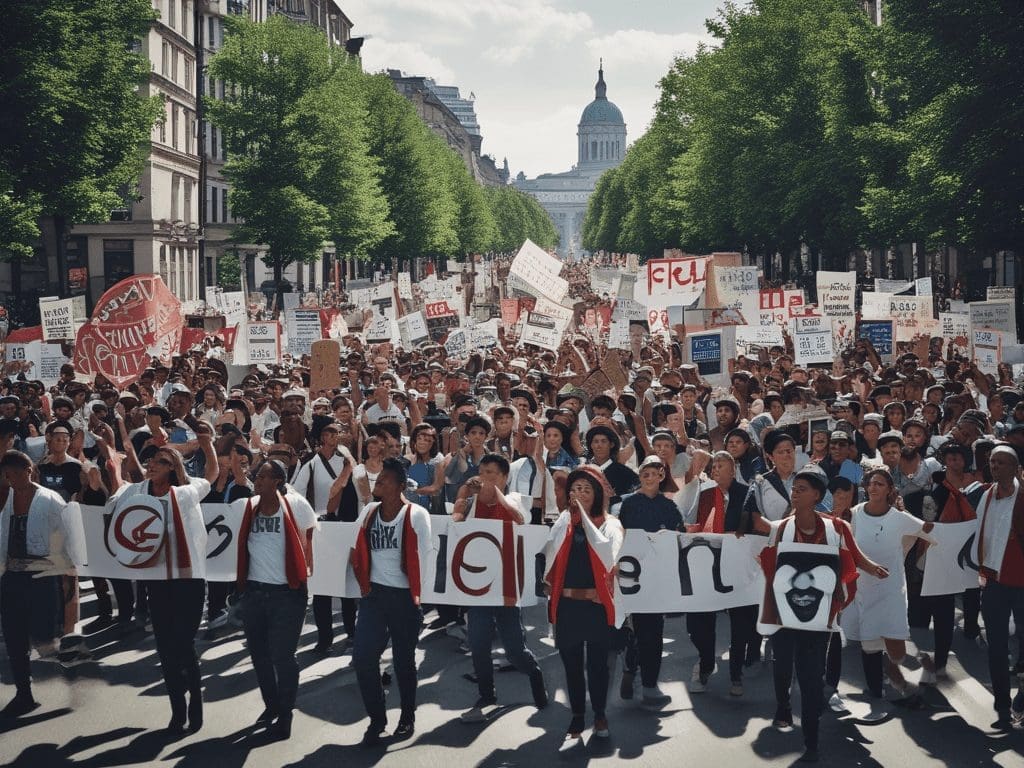

Democratisation is a term that has been increasingly used in political discourse over the past few decades. It refers to the process of making a society more democratic, by extending the participation and representation of its citizens in the political decision-making processes.
The concept of democratisation can take many different forms, depending on the specific context in which it is being applied. In some cases, it may involve the transition from authoritarian rule to a more democratic form of government. In others, it may involve the expansion of civil liberties and political rights within an already established democracy.
One of the key goals of democratisation is to ensure that all citizens have an equal say in the decisions that affect their lives. This is often achieved through the establishment of democratic institutions, such as free and fair elections, a robust system of checks and balances, and the protection of individual rights and liberties.
Democratisation is not a one-size-fits-all process, and it can often be messy and complex. It requires the active engagement of citizens, political leaders, civil society organisations, and other stakeholders in order to be successful. It also requires a commitment to the principles of democracy, such as tolerance, pluralism, and respect for the rule of law.
There have been many success stories in the field of democratisation, where countries that were once ruled by authoritarian regimes have successfully transitioned to democratic governance. However, there have also been many challenges and setbacks along the way, as entrenched interests and systemic issues can often stand in the way of progress.
Ultimately, democratisation is a continual process that requires ongoing vigilance and effort in order to ensure that democracy remains vibrant and inclusive. It is a goal worth striving for, as it holds the promise of a more just, equitable, and prosperous society for all.
Share this:

You Might Also Enjoy Reading