The idea of an extraterrestrial invasion has been a captivating topic in science fiction for decades, evoking excitement, curiosity, and sometimes fear among enthusiasts. But what if we were to ask ourselves: is it truly possible? In this blog post, we delve into this intriguing subject, exploring the possibilities while debunking some popular misconceptions.
1. The Fermi Paradox: A Case of Silence
The Fermi Paradox, first proposed by physicist Enrico Fermi, challenges the notion of whether an extraterrestrial invasion is likely. It suggests that if the universe is teeming with intelligent life, why have we not made contact with aliens yet? Considering the vastness of the cosmos, the silence raises questions about the feasibility of extraterrestrial invasions.
2. The Great Filter: An Existential Challenge
Related to the Fermi Paradox, the concept of the Great Filter theorises that there might be barriers that hinder the progression of intelligent civilisations. If the Great Filter indeed exists, it would act as a deterrent against potential invasions, indicating that the likelihood of extraterrestrial civilisations overcoming this obstacle is slim. So perhaps, instead of fearing an extraterrestrial invasion, we should contemplate whether humanity has surpassed or is yet to face this filtering barrier.
3. Interstellar Travel: A Formidable Challenge
One often-overlooked aspect of any potential invasion scenario is the immense challenge of interstellar travel. Even at the speed of light, reaching distant star systems can take years or even centuries. Furthermore, the energy requirements for such voyages are currently beyond human capabilities, endangering life onboard. Considering these impediments, launching a successful invasion from a distant star system becomes highly improbable.
4. Mutual Coexistence: The Prime Directive
When pondering extraterrestrial invasions, we often neglect the possibility of peaceful coexistence and collaboration. Many scientists argue that advanced civilisations might have evolved beyond the destructive tendencies that define early stages of societal development. Instead, ET species might prioritise diplomacy, fostering mutual respect and learning from one another. The existence of the Prime Directive, as popularised in Star Trek, highlights the prospect of peaceful interactions between civilisations.
5. Anthropocentrism: A Human Bias
Our imaginations tend to be constrained by human experiences and emotions, leading to anthropocentrism, the belief that humans are central to the universe. Extraterrestrial invasions are often depicted through anthropocentric lenses, mirroring our own instinctual drive for dominance, territorial expansion, and resources. However, the motivations, desires, and priorities of hypothetical alien civilisations could be fundamentally different from our own, reducing the plausibility of invasion.
Gallery – Alien Invasion
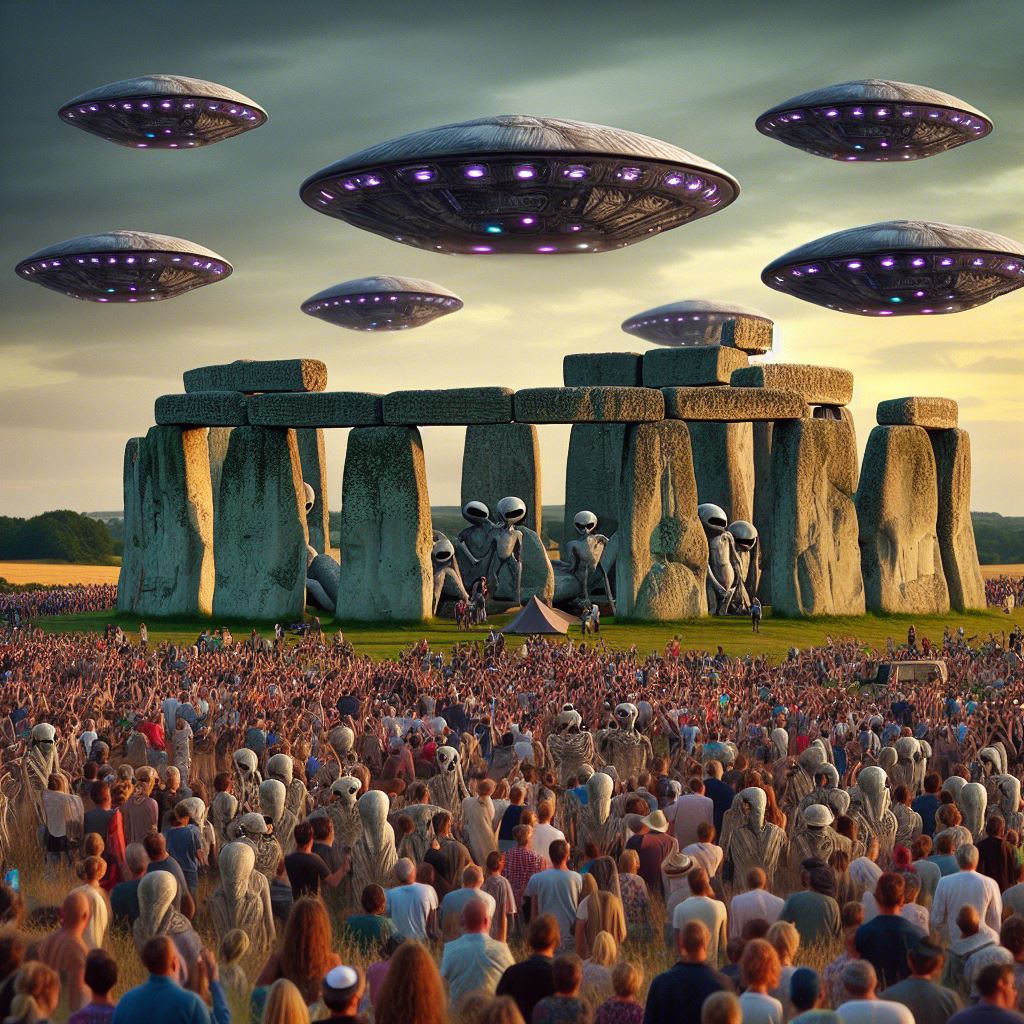
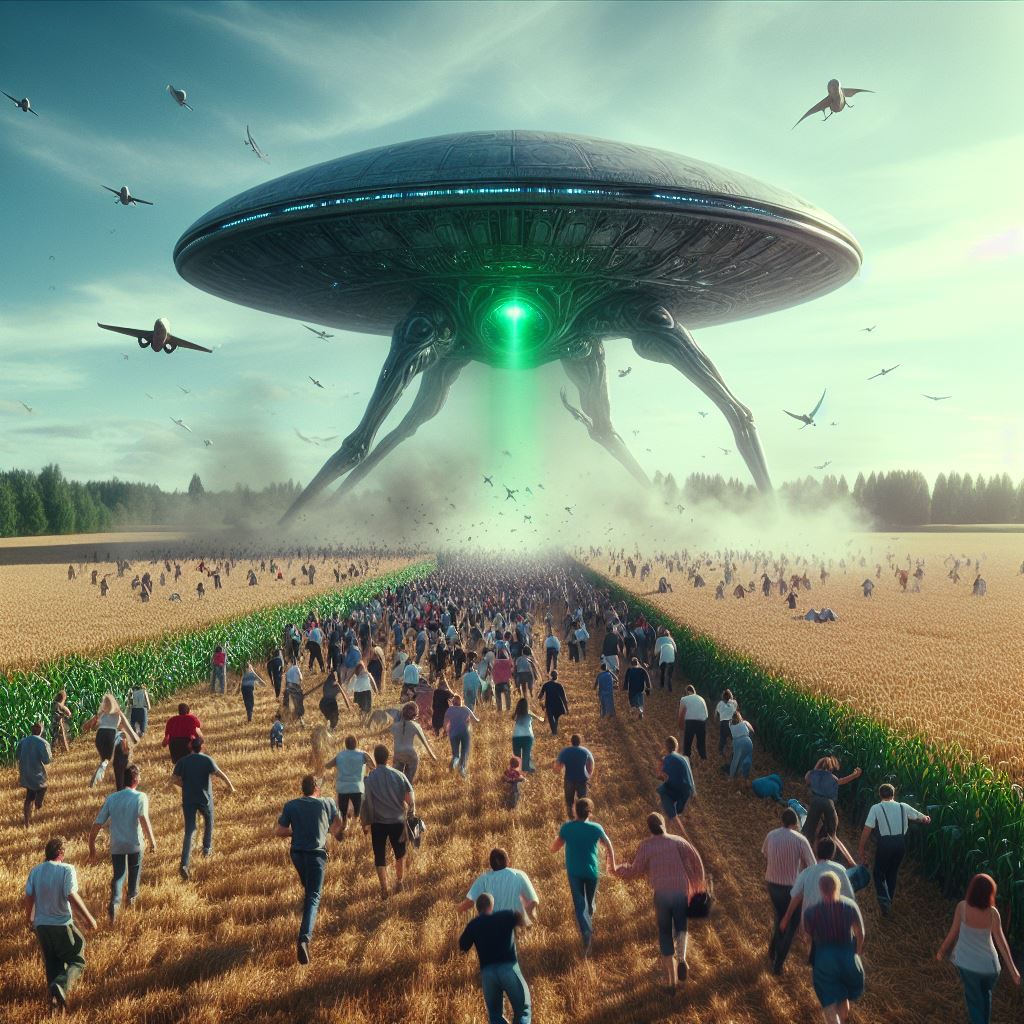
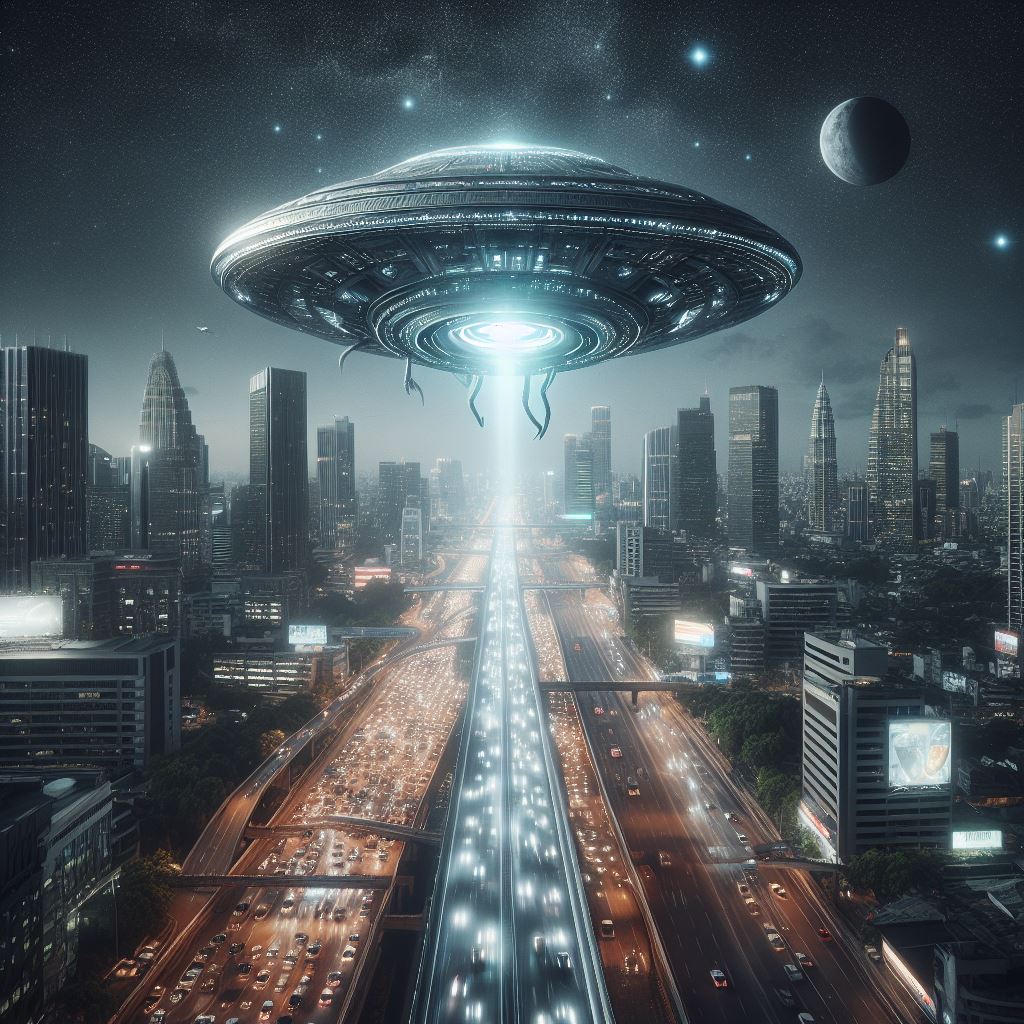
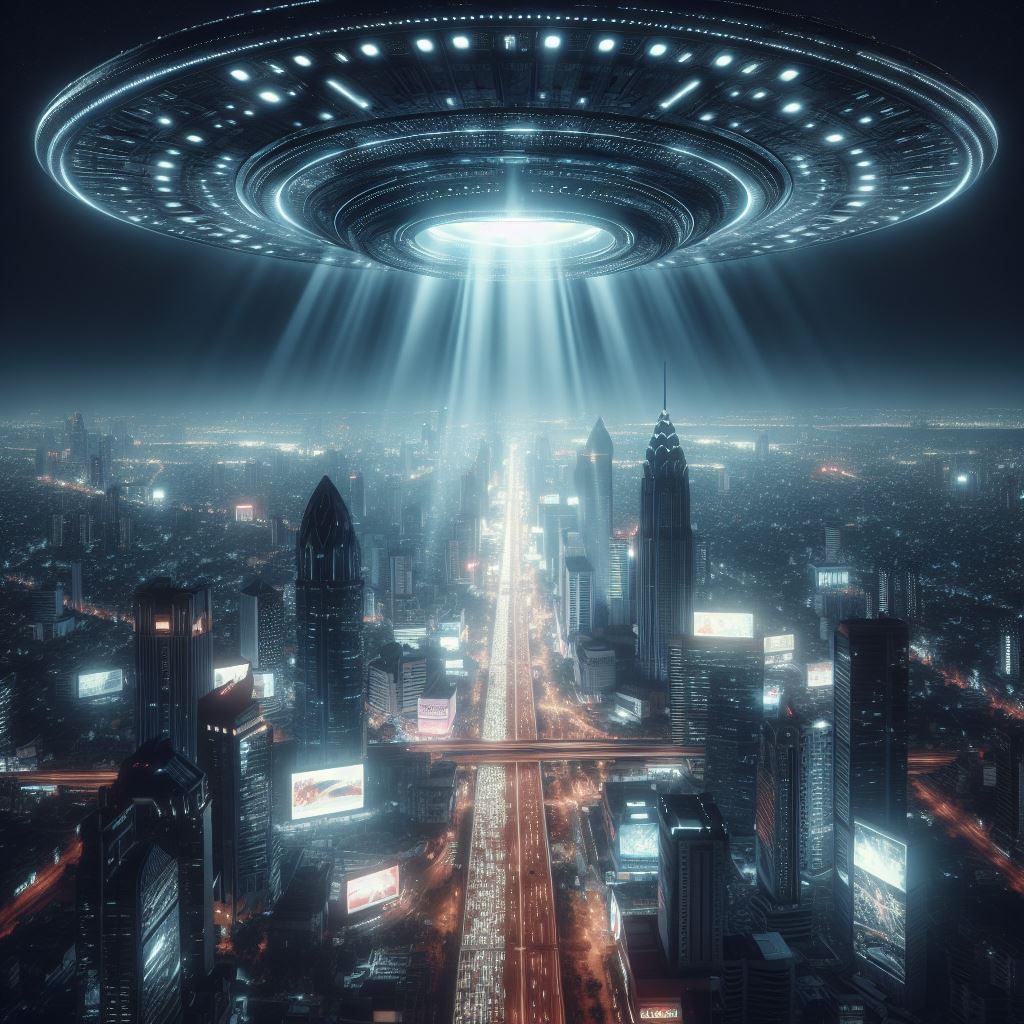
The following images show what artificial intelligence sees as aliens invading different parts of Earth such as Colombia, London, Washington, and other cities and infrastructures.











Conclusion
While science fiction has enthralled us with tales of extraterrestrial invasions, a closer examination of astrophysics, sociology, and the possibilities inherent in contact with an advanced civilisation shed light on the improbability of such an occurrence. The Fermi Paradox, the Great Filter, the challenges of interstellar travel, and the prospect of peaceful coexistence all contribute to a compelling narrative against the likelihood of an extraterrestrial invasion. Instead of fearing the unknown, let us embrace the mysteries of the universe, eagerly anticipating the possibilities that peaceful interstellar encounters may bring.
Share this:

You Might Also Enjoy Reading