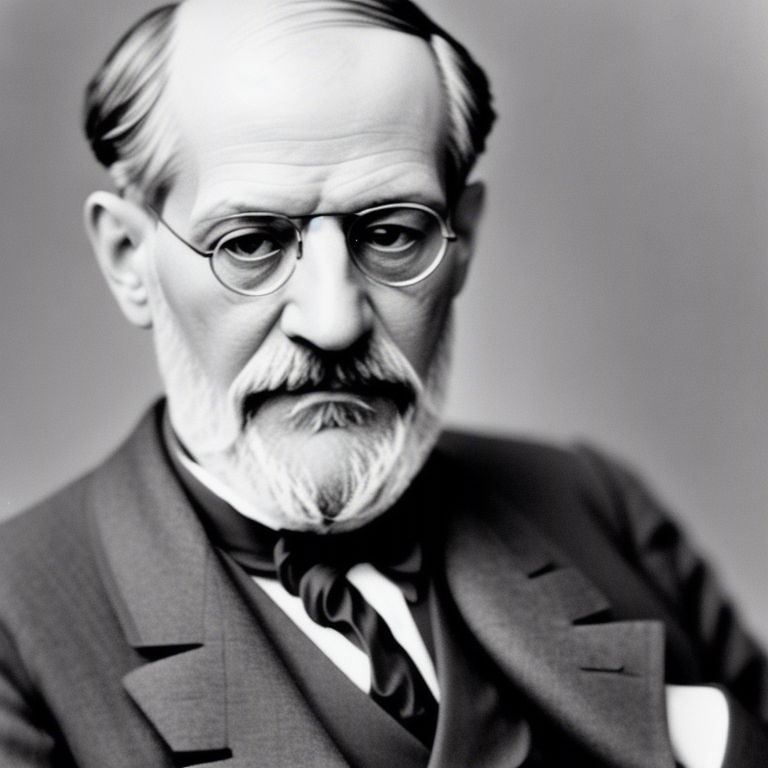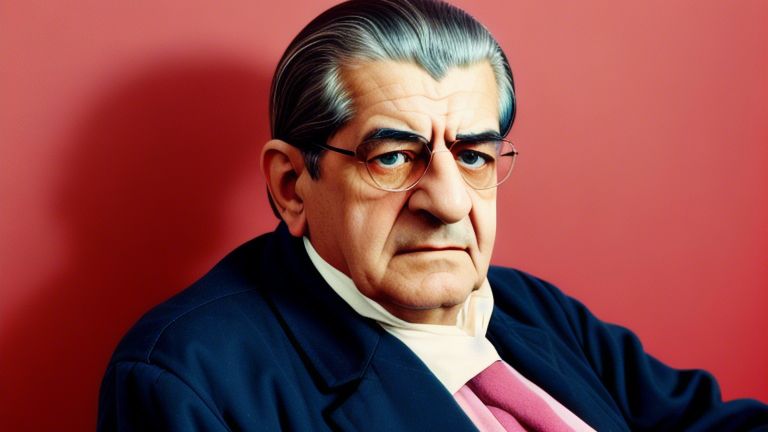

In the realm of psychology and psychoanalysis, Jacques Lacan stands as a towering figure who revolutionised the field with his compelling ideas and intricate theoretical frameworks. Despite being enigmatic and controversial, Lacan’s contribution to understanding the human psyche and exploring the depths of our unconscious mind is undeniable. This blog post aims to demystify the enigma that is Jacques Lacan, shedding light on his life, theory, and enduring legacy.
The Life and Influences of Jacques Lacan
Born in Paris in 1901, Jacques Lacan was deeply influenced by the works of Sigmund Freud, the pioneer of psychoanalysis. Lacan was intrigued by Freud’s theories, particularly those surrounding the unconscious mind and the role of language in shaping our thoughts and experiences. Lacan’s own studies led him to merge Freudian psychoanalysis with structural linguistics, philosophy, and cultural studies, creating an entirely new perspective on understanding the human psyche.
The Theory of the Four Discourses
One of Lacan’s most notable contributions is his theory of the four discourses. This theoretical framework explores the ways individuals communicate and exert power within societal structures. Lacan outlined four discourses: the master, the university, the hysteric, and the analyst. According to Lacan, each discourse represents a different mode of interaction and communication, encompassing both individual and collective dynamics. This theory provides a fresh lens through which to analyse power structures in various fields, such as politics, culture, and education.
The Mirror Stage and the Formation of Identity
Another significant concept developed by Lacan is the mirror stage. According to Lacan, during early infancy, between six and eighteen months, infants form their sense of self by perceiving themselves as a unified whole through a mirror reflection. This process of identification with an ideal image helps shape one’s ego and lays the foundation for the development of personal identity. Lacan’s mirror stage concept challenges traditional views of ego formation and has implications in the fields of child development and self-psychology.
The Unconscious and the Symbolic Order
Lacan’s work centers around the concept of the unconscious, which he believed was structured like a language. He argued that language significantly affects our perceptions, desires, and experiences, primarily through its symbolic nature. According to Lacan, the unconscious operates by presenting itself through various symbols and signifiers, often hidden in dreams or slips of the tongue. His exploration of the symbolic order highlights the crucial role language plays in shaping our subjective realities.
The Enduring Legacy of Jacques Lacan
Despite his controversial and often difficult prose, Lacan’s ideas have continued to resonate and influence scholars and practitioners in various disciplines. His theories have had profound implications across fields such as psychology, cultural studies, literature, and even cinema studies. Lacanian psychoanalysis, with its emphasis on the unconscious, language, and the construction of desire, remains a powerful tool for understanding human experience and informing therapeutic approaches.
Conclusion
Jacques Lacan, an enigmatic and complex figure, challenged the traditional principles of psychoanalysis and introduced groundbreaking concepts that continue to shape our understanding of the human psyche. His exploration of the unconscious, symbolic order, and the interplay of language in our psychological makeup has revolutionised multiple disciplines. While encountering Lacan’s work can be arduous, delving into his theories rewards us with a fresh perspective on the intricacies of human experience and the mysteries of the unconscious mind.
Share this:

You Might Also Enjoy Reading