Tag: Warfare

  • World War 3? Regional Tensions Explode in Middle East

    World War 3? Regional Tensions Explode in Middle East

    Advertisements

    In response to the attack, Israel deployed its sophisticated defence system known as the Iron Dome, which is designed to intercept the majority of the incoming missiles. This advanced technology has proven critical in safeguarding civilian lives and infrastructure; however, it was notably damaged by the relentless attacks during this recent onslaught, highlighting the ongoing challenges faced by defensive operations in a sustained conflict. The quick and effective response by the Israeli military demonstrated the importance of having advanced technology and strategic planning in times of conflict, illustrating how preparedness can mitigate potential threats. Furthermore, the extent of the damage caused by Iran not only underscored the capabilities of its offensive capabilities but also revealed the insidious nature of antisemitic warfare, which seeks to undermine the security and stability of Israel through targeted aggression. The incident serves as a stark reminder of the complex geopolitical landscape and the need for continued vigilance and resilience in the face of such threats, reinforcing the significance of international cooperation in counteracting these aggressive moves.

    The attack on Israel sent shockwaves throughout the Middle East, with neighbouring countries closely monitoring the situation and assessing their own security concerns. The United States, a key ally of Israel, condemned the attack and pledged support to the Israeli government in their efforts to defend their homeland. Reports suggest that whilst President Biden does not condone an attack against Iran’s nuclear facilities, he does support an attack against Iran’s oil reserves as a retaliation. Moreover, British Prime Minister- Keir Starmer- also condemned the Iranian attack, and expressed support towards Israel.

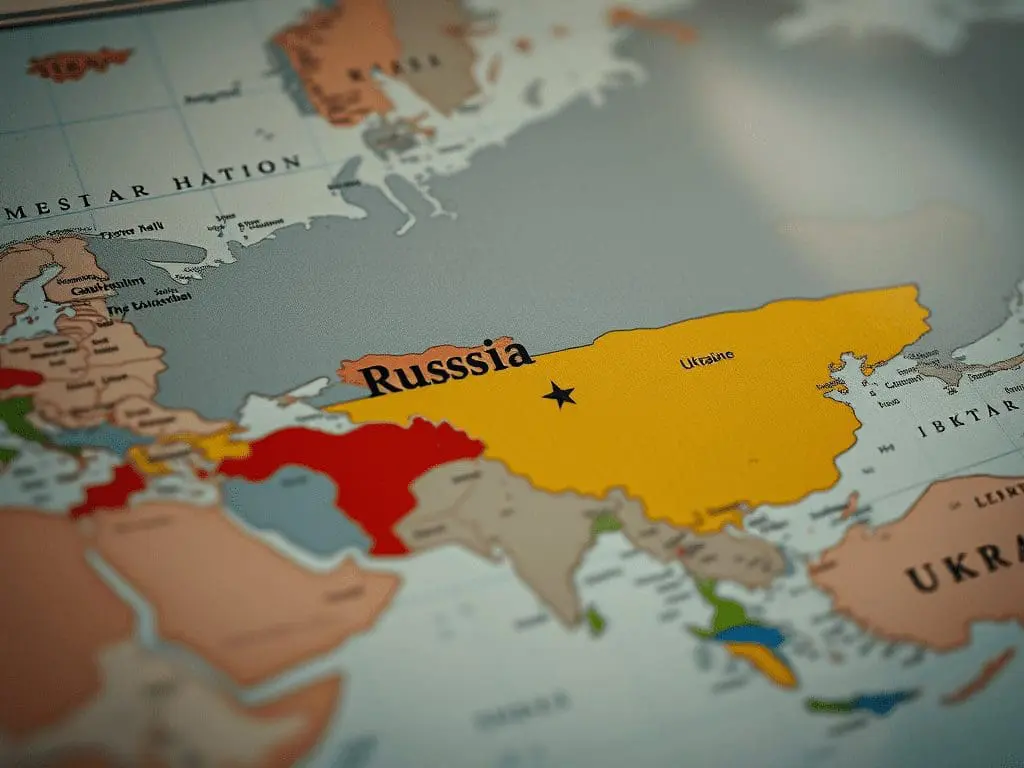
    The involvement of Russia in the conflict further complicated the situation, as the country has historic ties to Iran and has been a key player in the region. Vladimir Putin defended Iran saying that the country has a right to defend itself. The international community is closely watching the developments in the Middle East, with concerns growing about the potential for further escalation and the impact on global security. Antonio Guterres- Secretary General of the United Nations- was classed as “persona non grata” by Israel due to how he did not condemn Iran’s hypersonic missile attack. This means that he is not allowed to enter the country, and if he does he might get arrested. Consequently, Guterres went ahead and condemned the attack after being banned.

    As tensions continue to rise in the region, it is crucial for world leaders to exercise restraint and seek diplomatic solutions to prevent the outbreak of a full-scale global conflict. The importance of maintaining open lines of communication between nations cannot be overstated, as misunderstandings can quickly escalate into hostilities that are difficult to control. Moreover, the events of October 2024 serve as a stark reminder of the fragility of peace and the unpredictable nature of geopolitics in our world today; these occurrences highlight the need for robust international frameworks that prioritize negotiation and compromise over aggression. In an era where information spreads rapidly, the influence of media and public opinion can further complicate diplomatic efforts, making it all the more critical for leaders to act thoughtfully and with foresight.

    As we continue to monitor the situation in the Middle East, let us hope for a peaceful resolution to the conflict and a swift end to the violence that has engulfed the region. It is times like these that remind us of the importance of unity, cooperation, and dialogue in order to build a more secure and peaceful world for all.

  • Understanding the Iran-Israel Conflict: Key Factors

    Understanding the Iran-Israel Conflict: Key Factors

    Advertisements

    Iran, an Islamic republic, has been a vocal supporter of the Palestinian cause and has often called for the destruction of Israel. On the other hand, Israel sees itself as a Jewish state surrounded by hostile Arab and Muslim countries, including Iran , which it perceives as a threat to its existence.

    The conflict between Iran and Israel has manifested itself in various ways over the years, including through proxy wars, cyberattacks, and hostile rhetoric. Iran has backed militant groups such as Hezbollah in Lebanon and Hamas in Gaza, both of which have carried out attacks against Israel. Israel, on the other hand, has conducted airstrikes in Syria, where Iran has a significant military presence, in an effort to prevent the transfer of weapons to Hezbollah.

    The nuclear issue has also been a major point of contention between Iran and Israel. Iran’s nuclear program has been a source of concern for Israel, which fears that Iran could develop nuclear weapons and pose a threat to its security. In response, Israel has advocated for tough sanctions on Iran and has not ruled out the possibility of military action to prevent Iran from acquiring nuclear weapons.

    Despite the tensions between the two countries, there have been some attempts at diplomacy and dialogue. The Iran nuclear deal, also known as the Joint Comprehensive Plan of Action (JCPOA), was signed in 2015 with the aim of limiting Iran’s nuclear program in exchange for the lifting of sanctions. However, the US withdrawal from the deal in 2018 and the subsequent re-imposition of sanctions have further strained relations between Iran and Israel.

    The conflict between Iran and Israel is complex and multifaceted, with deep-rooted historical, religious, and political factors at play. As long as these issues remain unresolved, the conflict is likely to continue, with potentially dangerous consequences for the region and beyond. It is crucial for both countries to find a way to de-escalate tensions and engage in meaningful dialogue to address their differences and work towards peace and stability in the Middle East.

  • Iran-Britain Conflict: Oil, Nuclear Program, and Escalating Tensions

    Iran-Britain Conflict: Oil, Nuclear Program, and Escalating Tensions

    Advertisements

    One of the major sources of conflict between Iran and Britain has been the issue of British intervention in the Iranian economy and politics. In the early 20th century, Britain controlled much of Iran’s oil industry through the Anglo-Persian Oil Company, now known as BP. This control over Iran’s oil resources gave Britain significant leverage over the Iranian government , leading to resentment and hostility from the Iranian people.

    Another point of contention between Iran and Britain has been the issue of Iranian nuclear capabilities. Britain, along with other Western nations, has been critical of Iran’s nuclear program, fearing that it could be used to develop nuclear weapons. As a result, Britain has imposed economic sanctions on Iran in an effort to curb its nuclear ambitions. This has further strained relations between the two countries, with Iran viewing Britain’s actions as meddling in its internal affairs.

    In recent years, the conflict between Iran and Britain has escalated, with incidents such as the seizure of a British oil tanker by Iran in 2019. This incident led to increased tensions between the two nations and prompted the UK to deploy warships to the region to protect British interests.

    Despite these tensions, there have been efforts to improve relations between Iran and Britain. In 2016, Iran reached a landmark nuclear deal with world powers, including Britain, in which Iran agreed to limit its nuclear program in exchange for the lifting of economic sanctions. This deal was seen as a step towards easing tensions between the two countries, although it has since been threatened by the withdrawal of the United States in 2018.

    Overall, the conflict between Iran and Britain remains a complex and ongoing issue that is influenced by a range of factors, including historical grievances, political differences, and regional tensions. It is crucial for both nations to engage in dialogue and diplomacy to address their differences and work towards a peaceful resolution of the conflict.

  • British-Syrian Conflict: Roots, Consequences, and Calls for Resolution

    British-Syrian Conflict: Roots, Consequences, and Calls for Resolution

    Advertisements

    One of the key reasons behind Britain’s involvement in the conflict is its close alliance with the United States . Following the devastating chemical attacks in Damascus in 2013, the US and its allies, including Britain, launched a series of airstrikes against Syrian government targets in retaliation. While the airstrikes were intended to send a strong message to Assad and deter future chemical attacks, they did little to bring an end to the conflict and instead further destabilised the region.

    Furthermore, Britain’s support for various rebel groups fighting against the Syrian government has been met with criticism, as some of these groups have been accused of human rights abuses and extremist ideologies. The British government’s arming and funding of these rebel forces have only added fuel to the fire, prolonging the conflict and causing further suffering to the Syrian people.

    The humanitarian crisis resulting from the conflict has been catastrophic, with millions of Syrians displaced from their homes and thousands killed or injured. The British government’s response to the crisis has been mixed, with some arguing that the UK has not done enough to provide support and assistance to those affected by the conflict. While Britain has provided aid to Syrian refugees and supported humanitarian efforts in the region, critics argue that more needs to be done to address the root causes of the conflict and bring about a lasting solution.

    As the British-Syrian conflict continues to rage on, it is clear that a political solution must be found to bring an end to the violence and suffering. Dialogue and diplomacy must be prioritised over military intervention, and a concerted effort must be made to address the grievances of all parties involved. Only through mutual understanding and cooperation can the British-Syrian conflict be resolved and peace restored to the region.

  • Future of Russia-Ukraine Conflict: Experts’ Predictions and Regional Impact

    Future of Russia-Ukraine Conflict: Experts’ Predictions and Regional Impact

    Advertisements

    One of the key factors to consider when making predictions about the Russia-Ukraine conflict is the role of international actors. The United States and other Western countries have been vocal in their support for Ukraine, imposing sanctions on Russia and providing military aid to the Ukrainian government. On the other hand, Russia has strong backing from countries like China and Iran, which could potentially complicate the situation further.

    Some experts believe that the conflict will continue to escalate, with Russia potentially increasing its military presence in Ukraine and that Ukraine might attack Russian nuclear plants. Others predict that a diplomatic solution may be possible, with negotiations between the two countries leading to a peaceful resolution. However, given the history of the conflict and the deep-rooted animosity between Russia and Ukraine, this may prove to be a challenging task.

    Another important factor to consider is the impact of the conflict on the wider region. A full-scale war between Russia and Ukraine could have far-reaching consequences, potentially destabilising neighbouring countries and causing a humanitarian crisis. This is why it is crucial for international actors to work towards de-escalating the situation and finding a peaceful resolution to the conflict.

    In conclusion, making predictions about the Russia-Ukraine conflict is a complex and challenging task. While some experts believe that the conflict will continue to escalate, others remain hopeful that a peaceful resolution may be possible. One thing is clear – the future of the region hangs in the balance, and it is crucial for all parties involved to work towards finding a peaceful solution to the conflict.

  • Syria Conflict: Military Operations and International Involvement

    Syria Conflict: Military Operations and International Involvement

    Advertisements

    One of the most prominent military operations in Syria is being conducted by the Syrian government forces, backed by allies such as Russia and Iran. This operation is primarily aimed at regaining control of territories held by rebel groups and terrorist organisations such as ISIS. The Syrian government forces have been making significant gains in recent months, reclaiming key areas in the country and pushing back against opposition forces.

    On the other side of the conflict, the United States and its coalition partners are also conducting military operations in Syria, primarily focused on combating ISIS. The US-led coalition has been carrying out airstrikes and supporting ground operations by local forces to weaken and ultimately defeat the terrorist group. While ISIS has been significantly weakened in recent years, pockets of resistance still remain in certain areas of Syria.

    Another major player in the Syrian conflict is Turkey, which launched a military operation in northern Syria in 2019 with the aim of creating a buffer zone along its border and pushing back against Kurdish forces. The Turkish military operation has led to clashes with Kurdish fighters and has raised concerns about the potential for further destabilisation in the region.

    Overall, the military operations in Syria are complex and multifaceted, with multiple actors pursuing their own agendas and objectives. The conflict shows no signs of abating anytime soon, and the situation on the ground remains volatile and unpredictable. As the various military forces continue to jockey for control and influence in Syria, the civilian population continues to bear the brunt of the ongoing violence and suffering.

    It is imperative that all parties involved in the Syrian conflict prioritise the protection of civilians and work towards a peaceful resolution to the conflict. The cycle of violence and destruction in Syria has already caused immense human suffering, and it is high time for all sides to come together and work towards a lasting and sustainable peace in the country. Only through cooperation and diplomacy can the cycle of violence be broken and the people of Syria be given a chance to rebuild their lives and their country.

  • World War III: Understanding the Potential for a Global Conflict

    World War III: Understanding the Potential for a Global Conflict

    Advertisements

    Evolving Power Dynamics

    The shifting geopolitical landscape, both at a global and regional level, plays an essential role in assessing the potential for a world war. With the rise of emerging powers and the relative decline of others, existing superpowers may feel threatened and attempt to safeguard their interests by any means necessary. It is vital for diplomats and leaders to address such power shifts through a fair and transparent dialogue, avoiding the escalation of conflicts into disastrous wars.

    Economic Interdependence and Competition

    In an era of globalisation, economic interdependence has become a significant factor in the prevention of potential world conflicts. However, with competition for resources intensifying, economic rivalries might lead to diplomatic standoffs and ultimately escalate into military confrontations. The careful management of international trade relationships and the resolution of disputes through peaceful means must be prioritised to prevent such an escalation.

    Technological Arms Race

    The rapid advancement of technology poses both opportunities and risks for humanity, including the potential for a future global conflict. As countries strive to maintain military superiority, the development of weapons systems and cyber warfare capabilities becomes a race where miscalculations can have dire consequences. Robust arms control agreements, emphasising international collaboration, are crucial to ensuring that technological advancements do not inadvertently lead us down a path of destruction.

    Regional Tensions and Proxy Wars

    Regional conflicts often serve as the theatres where tensions between global powers play out. This risk becomes even more significant when these conflicts spiral into proxy wars wherein powerful nations support opposing factions. The potential for misunderstandings and miscalculations heightens the chance of these regional disputes evolving into a global confrontation. Strengthening diplomacy and mediation efforts within these regions is necessary to defuse tensions and prevent them from escalating further.

    The Role of Diplomacy and International Cooperation

    While the potential for a World War III exists, it is essential to recognise that humanity has grown significantly in its understanding of the devastating consequences of war. Today, diplomacy, dialogue, and international cooperation offer a promising way forward to avoiding global conflicts. Engaging in constructive dialogue, resolving disputes through diplomatic means, and fostering mutual understanding are paramount in building a sustainable and peaceful world order.

    Conclusion

    World War III remains a potential possibility, as history has shown that conflicts can arise from a multitude of sources. Nevertheless, through our collective efforts, we can work towards a future grounded in diplomacy, collaboration, and peaceful resolutions. Now more than ever, global leaders, policymakers, and civil society must work hand in hand to ensure our world is on a path toward peace, stability, and progress, for the sake of both current and future generations.

    Advertisements