

Tag: Spiritualism

  • Understanding Transmigration: Insights on Reincarnation

    Understanding Transmigration: Insights on Reincarnation

    Advertisements

    In Hinduism, the belief in transmigration is closely tied to the concept of karma, which suggests that our actions in this lifetime will determine our fate in future lives. According to Hindu teachings, the ultimate goal of transmigration is to achieve moksha, or liberation from the cycle of birth and death , and to reunite with the divine source.

    Similarly, in Buddhism, the belief in transmigration is a fundamental aspect of the cycle of samsara, which is the endless cycle of birth, death, and rebirth. According to Buddhist teachings, the goal is to break free from this cycle by attaining enlightenment and reaching nirvana, a state of ultimate peace and liberation.

    In Western traditions, the concept of transmigration has also been explored in various esoteric and mystical teachings. Some philosophers and thinkers believe that the soul is eternal and that it may incarnate in different bodies over time in order to learn and grow.

    Regardless of one’s religious or philosophical beliefs, the idea of transmigration invites us to consider the bigger picture of our existence and our interconnectedness with all living beings. It challenges us to think beyond our current lifetime and to consider the lessons we are meant to learn from each experience.

    While the concept of transmigration may be challenging to fully comprehend or prove, it offers a sense of hope and reassurance that our lives have purpose and meaning beyond what we can see or understand in the physical world. It encourages us to think about the bigger questions of life and to consider our actions and choices in a broader context.

    In conclusion, transmigration is a thought-provoking concept that invites us to reflect on the nature of existence, the interconnectedness of all beings, and the potential for growth and evolution beyond this lifetime. Whether or not one believes in the literal truth of transmigration, the teachings and principles behind this belief can offer valuable insights and lessons for our spiritual and personal development.

  • Quantum Spiritism: Exploring Consciousness and the Afterlife

    Quantum Spiritism: Exploring Consciousness and the Afterlife

    Advertisements

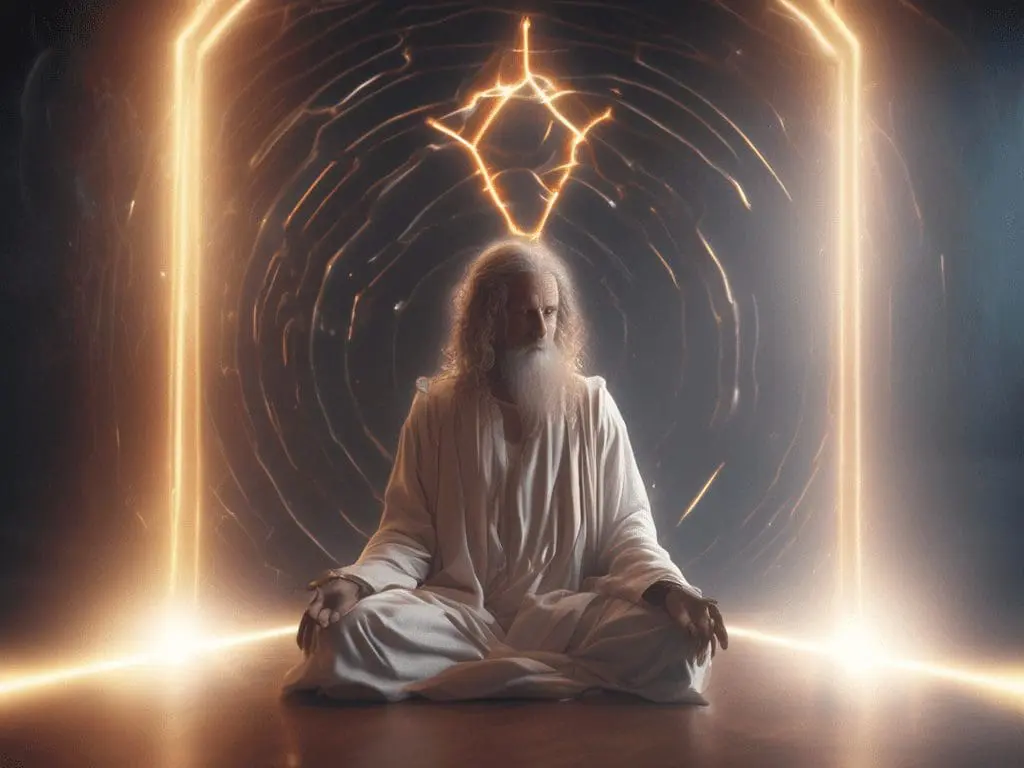
    At the core of quantum spiritism is the idea that consciousness is not solely a product of the brain, but rather a fundamental aspect of the universe itself. This concept is supported by findings in quantum physics, which suggest that the universe is interconnected and that everything in it is fundamentally connected at a quantum level. According to this view, consciousness is not confined solely to the physical body, but is instead a universal phenomenon that transcends the physical realm.

    In the context of spiritualism, quantum spiritism posits that spirits exist as non-physical entities that are connected to us through a shared universal consciousness. When we communicate with spirits through mediums or other spiritual practices, we are tapping into this universal consciousness and connecting with the spirits of the deceased.

    One of the key principles of quantum spiritism is the idea that time is not linear, but rather a series of interconnected moments that exist simultaneously. This concept suggests that spirits are not bound by the constraints of time and can communicate with us across different points in time. This explains why mediums are often able to receive messages from spirits who have passed on many years ago.

    Another aspect of quantum spiritism is the idea of quantum entanglement, which suggests that particles can become interconnected and influence each other at a distance. In the context of spiritualism, this concept could explain how spirits are able to communicate with us and influence our lives from beyond the physical realm.

    Overall, quantum spiritism offers a fascinating and thought-provoking perspective on the nature of consciousness and the afterlife. By combining the principles of quantum physics with traditional spiritual beliefs, this new approach to spiritualism sheds light on the interconnected nature of the universe and offers new insights into the mysteries of life and death. As our understanding of quantum physics continues to evolve, quantum spiritism may offer new avenues for exploring the nature of consciousness and the afterlife.

    For the materialist, the known is matter. Start, then, from matter, and try first of all to convince him, by observing matter, that there is something in him which escapes the laws of matter. In a word, before making him SPIRITIST, try to make him SPIRITUALIST (Kardec, El Libro De Los Mediums, 2009 ).

  • The Differences Between Spirit, Perispirit, and Soul

    The Differences Between Spirit, Perispirit, and Soul

    Advertisements

    First, let’s discuss the concept of spirit. Spirit is often referred to as the essence of a person, their true self . It is the part of us that is eternal and transcends physical existence. According to many spiritual teachings, spirit is what continues on after the physical body dies. It is the source of our consciousness and connects us to the divine.

    On the other hand, the perispirit is often described as the subtle body that surrounds and interpenetrates the physical body. It is sometimes referred to as the astral body or energy body. The perispirit is believed to be the bridge between the physical world and the spiritual world. It is said to contain our emotions, thoughts, and energy, and can be influenced by our experiences and actions.

    Finally, the soul is often considered the eternal aspect of a person that carries their true essence and experiences from lifetime to lifetime. The soul is said to be the individualised expression of spirit, unique to each person. It is through the soul that we learn and grow spiritually, and it is believed to be the part of us that is constantly evolving and seeking enlightenment.

    While these concepts can sometimes overlap in their definitions, understanding the distinctions between spirit, perispirit, and soul can help us navigate our spiritual journey and connect more deeply with our true selves. By exploring these concepts and how they interact within us, we can gain a greater understanding of our spiritual nature and our connection to the divine. Ultimately, recognising and nurturing these aspects of ourselves can lead to a deeper sense of purpose, fulfilment, and spiritual growth.