Tag: Russia

  • Will Google Have to Pay the 20 Decillions Fine due to Youtube Bans?

    Will Google Have to Pay the 20 Decillions Fine due to Youtube Bans?

    Advertisements

    The case stems from the banning of 17 Russian broadcasters from YouTube for allegedly spreading misinformation and violating the platform’s community guidelines. The broadcasters, who have since been banned for over a year, filed a lawsuit against Google for lost revenue and damages as a result of their removal from the platform.

    The banned Russian broadcasters, including RT and RIA Novosti, have long been at odds with Google over the content they produce and share on YouTube. The arbitration court has now ruled in favour of the broadcasters, ordering Google to pay the astronomical fine for their continued infringement of Russian laws.

    The Moscow Court of Commercial Arbitration ruling that Google must pay 20 decillions to these broadcasters is a staggering amount and raises questions about the power and influence of tech companies in regulating online content. While Google has the right to enforce its community guidelines and remove content that violates its terms of service, the court’s decision highlights the potential consequences of these actions.

    But the question remains, does Google have to pay the fine to the banned Russian broadcasters on YouTube? While the court has ruled in favour of the broadcasters, Google has indicated that they do not plan to comply with the ruling. In fact, Google has gone as far as to say that they do not recognise the jurisdiction of the Russian court in this matter.

    Russia Today (2024) reports that such a fine is symbolic. This indicates that Google won’t actually have to pay the fine. Still, some argue that Google should not be responsible for paying such a hefty fine to the banned broadcasters, as the company is within its rights to moderate its platform and remove content that violates its policies. Others believe that tech companies like Google have a responsibility to ensure that their moderation actions are fair and transparent, and that they should be held accountable for any damages caused by wrongful removal of content.

    This raises important questions about the power dynamics at play when it comes to international companies operating in different countries. While Google may feel that they are not bound by Russian laws in this instance, the reality is that they are operating within Russian territory and are subject to Russian laws and regulations.

    Ultimately, the ruling by the Moscow court raises important questions about the balance between free speech and content moderation on online platforms. It also highlights the growing concern over the power and influence of tech giants in shaping the information landscape and controlling access to information.

    As Google considers its next steps in response to the court’s ruling, it will be important for the company to carefully navigate the complex issues of content moderation and regulation in order to ensure a fair and open online environment for all users. It will be interesting to see how this situation unfolds and what it means for the future of online content regulation and enforcement.

  • Pro-Russia Sentiment is Almost Perceived as Terrorism in Britain

    Pro-Russia Sentiment is Almost Perceived as Terrorism in Britain

    Advertisements

    For those who openly express support for Russia or its actions, they may find themselves facing accusations of being pro-Russia, or even being labelled as terrorists. This situation has created a chilling effect on free speech and public discourse, where individuals feel they cannot openly discuss their views without fear of being vilified or marginalised. The atmosphere of suspicion fosters a climate where dissenting opinions are not only unwelcome but also dangerously scrutinised, leading many to self-censor in an effort to avoid backlash from peers or authorities. As a result, important conversations around geopolitical issues become stifled, depriving society of diverse perspectives and critical analyses that could contribute to a more nuanced understanding of complex global dynamics.

    One of the main reasons why being pro-Russia in the UK is dangerous is due to the ongoing conflict between Russia and Ukraine, which has deeply polarised public opinion and created a tense atmosphere. The annexation of Crimea by Russia in 2014 marked a significant turning point in international relations, with many countries viewing it as a blatant violation of international law. In addition, the recent war ignited by Putin’s special military operation has led to widespread condemnation from the international community, including the UK government and various advocacy groups, who argue that such aggression cannot be tolerated. Those who openly support Russia’s actions in Ukraine are not only seen as unpatriotic but also face potential social and professional repercussions, being labelled as traitorous by many in the UK populace. This sentiment is exacerbated by the extensive media coverage highlighting the suffering faced by the Ukrainian people, making it increasingly difficult for supporters of Russia to voice their opinions without encountering backlash and isolation from their peers.

    Furthermore, the UK government has accused the Russian government of meddling in its internal affairs, including the 2016 Brexit referendum and the 2019 general election. The UK GOV (n.d.) classes the Federal Security Service (FSB, formerly known as KGB) of the Russian Federation as “malicious”. These allegations suggest that Russia may have employed various tactics, such as disinformation campaigns and cyber attacks, to influence the outcomes of these significant events. This continued interference from abroad has not only raised concerns about the integrity of democratic processes in the UK but has also further fueled anti-Russian sentiment among the British populace. With many viewing those who support Russia as a threat to national security, there is an increasing call for stronger measures to be taken against any perceived foreign aggressions. This heightened atmosphere of suspicion has also led to widespread debates about the impact of foreign influence on national sovereignty and the need for robust defences to protect democratic institutions.

    This perception of pro-Russia sentiment as terrorism is not only unfair but also dangerous, as it oversimplifies a multifaceted issue that deserves careful consideration and nuanced discussions. It stifles productive dialogue and prevents a deeper understanding of complex geopolitical issues that arise from historical, cultural, and economic contexts. By labelling dissenting opinions in such a way, we risk alienating individuals who might otherwise contribute to meaningful conversations about peace and cooperation. It also plays into the hands of those who seek to divide us and create further distrust and animosity between nations. Instead of fostering an atmosphere of collaboration, this approach fuels polarisation, making it even more difficult to find common ground and work toward solutions that benefit all parties involved.

    Being pro-Russian in the UK can also have serious consequences for one’s personal and professional life. Many employers are wary of hiring individuals with pro-Russian leanings, fearing that they may be a security risk or could potentially compromise sensitive information. Additionally, those who openly support Russia may face social ostracism and even harassment from their peers.

    It is important to remember that having different opinions or perspectives on international relations does not make someone a terrorist. It is essential to engage in respectful and open discussions, even when we disagree with each other. By demonising those who hold differing views, we only deepen the divide and make it more difficult to find common ground and solutions to global challenges.In light of these challenges, it is essential for those who hold pro-Russian views in the UK to be mindful of the potential consequences of their beliefs. While it is important to have freedom of speech and the right to express one’s opinions, it is also important to consider the potential impact of those opinions on one’s personal and professional life.

    In conclusion, being pro-Russia in the UK is a risky proposition that can have serious consequences. It should not be automatically equated with terrorism. It is essential to approach discussions with an open mind and a willingness to listen and learn from different perspectives. Only through respectful dialogue and understanding can we hope to build a more peaceful and cooperative world.

  • Russia and Poison: Debunking Myths and Unveiling Realities

    Russia and Poison: Debunking Myths and Unveiling Realities

    Advertisements

    One theory that has gained traction is the idea that the Russian government employs the use of poison as a method of silencing dissent and neutralising political opponents. This theory is supported by the suspicious deaths of several individuals who have been critical of the Russian government, such as journalist Anna Politkovskaya and former FSB officer Alexander Litvinenko.

    Another theory suggests that the Russian government uses poison as a means of sending a message to its enemies, both foreign and domestic. The use of a highly toxic nerve agent in the Skripal case, for example, is seen as a bold and brazen statement by the Russian government to its adversaries.

    Some believe that Russia’s alleged use of poison is a form of psychological warfare, instilling fear and intimidation in those who dare to speak out against the regime. By employing such extreme measures, the Russian government may be hoping to dissuade dissent and maintain its grip on power.

    However, it is important to note that these theories are just that – theories fuelled by anti-Russian sentiment. While there may be circumstantial evidence to support the idea that Russia is involved in poisonings, concrete proof is not available. The Russian government has consistently denied any involvement in such incidents and has dismissed accusations as baseless propaganda.

    Regardless of the truth behind these theories, the issue of Russia and poison remains a pressing concern for the international community. The use of chemical weapons in any form is a violation of international law and a threat to global security. It is crucial that governments and organisations work together to hold those responsible for these heinous acts accountable and prevent them from happening in the future.

    In conclusion, the theories surrounding Russia and poison are a complex and contentious issue that requires further investigation and scrutiny. As the world grapples with the implications of these incidents, it is important to remain vigilant and steadfast in upholding the principles of justice and human rights.

  • Political and Extrajudicial Assassinations in Russia: A Disturbing Trend

    Political and Extrajudicial Assassinations in Russia: A Disturbing Trend

    Advertisements

    One of the most notorious political assassinations in Russia was the murder of opposition leader Boris Nemtsov in 2015. Nemtsov, a vocal critic of President Vladimir Putin , was shot dead just steps away from the Kremlin in Moscow. The brazen killing sent shockwaves throughout the country and led to widespread condemnation from the international community.

    Another high-profile assassination was the poisoning of former Russian agent Alexander Litvinenko in London in 2006. Litvinenko, who had been critical of the Russian government, was poisoned with radioactive polonium-210, a rare and highly toxic substance. The assassination was widely believed to have been carried out by the Russian state, although the government has denied any involvement.

    These high-profile cases are just the tip of the iceberg when it comes to political and extrajudicial assassinations in Russia. Human rights activists, journalists, and opposition figures have also been targeted for their outspoken views and activism.

    One of the most concerning aspects of these assassinations is the lack of accountability and justice for the perpetrators. Many of these cases remain unsolved, with little progress made in identifying and prosecuting those responsible. This culture of impunity has only served to embolden those who seek to silence dissent through violent means.

    The use of political and extrajudicial assassinations is a clear violation of human rights and undermines the rule of law in Russia. It sends a chilling message to those who dare to speak out against the government and stifles free speech and democracy.

    The international community must continue to condemn these targeted killings and press the Russian government to hold those responsible accountable. The protection of human rights and the rule of law must be upheld, even in the face of political opposition.

    In conclusion, political and extrajudicial assassinations in Russia are a disturbing trend that must be addressed and condemned by the international community. These targeted killings are a clear violation of human rights and must not be tolerated in a modern and democratic society. Justice must be served for the victims and their families, and those responsible for these heinous acts must be held accountable for their actions.

  • Future of Russia-Ukraine Conflict: Experts’ Predictions and Regional Impact

    Future of Russia-Ukraine Conflict: Experts’ Predictions and Regional Impact

    Advertisements

    One of the key factors to consider when making predictions about the Russia-Ukraine conflict is the role of international actors. The United States and other Western countries have been vocal in their support for Ukraine, imposing sanctions on Russia and providing military aid to the Ukrainian government. On the other hand, Russia has strong backing from countries like China and Iran, which could potentially complicate the situation further.

    Some experts believe that the conflict will continue to escalate, with Russia potentially increasing its military presence in Ukraine and that Ukraine might attack Russian nuclear plants. Others predict that a diplomatic solution may be possible, with negotiations between the two countries leading to a peaceful resolution. However, given the history of the conflict and the deep-rooted animosity between Russia and Ukraine, this may prove to be a challenging task.

    Another important factor to consider is the impact of the conflict on the wider region. A full-scale war between Russia and Ukraine could have far-reaching consequences, potentially destabilising neighbouring countries and causing a humanitarian crisis. This is why it is crucial for international actors to work towards de-escalating the situation and finding a peaceful resolution to the conflict.

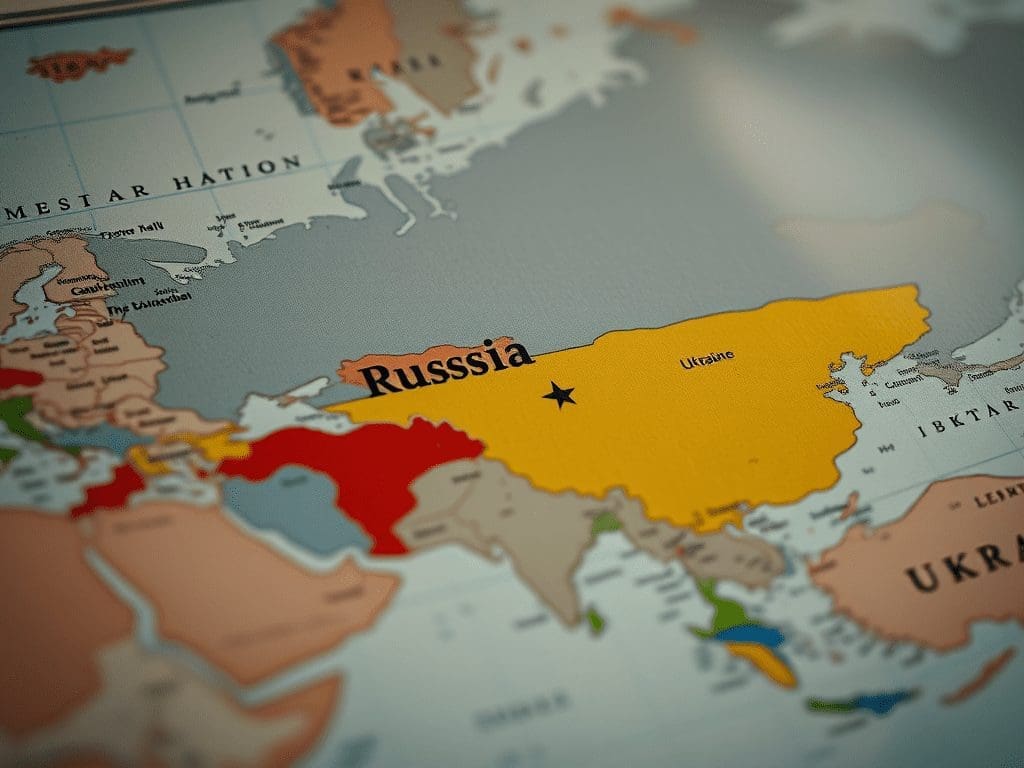
    In conclusion, making predictions about the Russia-Ukraine conflict is a complex and challenging task. While some experts believe that the conflict will continue to escalate, others remain hopeful that a peaceful resolution may be possible. One thing is clear – the future of the region hangs in the balance, and it is crucial for all parties involved to work towards finding a peaceful solution to the conflict.

  • The Anti-Putin Resistance: Inside Russia’s Underground Anti-Regime Movement

    The Anti-Putin Resistance: Inside Russia’s Underground Anti-Regime Movement

    Advertisements

    These individuals operate in the shadows, sharing information, organising protests, and speaking out against Putin’s authoritarian rule. One such group is the “Open Russia ” movement, which was founded by exiled Russian oligarch Mikhail Khodorkovsky. The group aims to promote democracy and human rights in Russia, and its members face constant harassment and intimidation from the authorities.

    The underground resistance movement is not limited to political activists; artists, musicians, and journalists are also using their platforms to speak out against Putin’s regime. Pussy Riot, a feminist punk rock protest group, gained international attention in 2012 when they staged a performance in Moscow’s Cathedral of Christ the Savior, denouncing the close ties between the Russian Orthodox Church and Putin’s government.

    In addition to activism, the underground resistance in Russia also extends to the realm of journalism. Independent media outlets such as Meduza and The Bell provide a platform for critical and investigative journalism, despite facing constant threats of censorship and harassment.

    The anti-Putin underground in Russia is a beacon of hope in the face of oppression and suppression. These brave individuals continue to fight for freedom, democracy, and human rights, despite the risks and dangers they face. The world must stand in solidarity with these courageous activists and support their efforts to bring about positive change in Russia. Putin’s grip on power may be strong, but the voices of the underground resistance are even stronger.

  • Cold War Redux: The British-Russian Conflict

    Cold War Redux: The British-Russian Conflict

    Advertisements

    One of the most well-known British-Russian conflicts was during the Crimean War (1853-1856), in which Russia’s expansionist policies in the Ottoman Empire led to a war with Britain, France, and the Ottoman Empire. The war was fought on multiple fronts, including the Crimean Peninsula, and ultimately resulted in a victory for the allies. The conflict highlighted the rivalry between Britain and Russia for control over key strategic territories in Eastern Europe.

    The rivalry between Britain and Russia continued throughout the 19th and 20th centuries, with tensions escalating during the Cold War era. The British were leaders in the Western response to Soviet expansionism and aggression, with both nations engaging in espionage and military posturing throughout the period.

    More recently, tensions between Britain and Russia have flared up over various issues, including the poisoning of former Russian spy Sergei Skripal in the UK in 2018, which led to diplomatic expulsions and sanctions from both sides. The conflict has also played out in the arena of cybersecurity, with both nations accusing each other of cyberattacks and interference in domestic affairs.

    Furthermore, The ongoing conflict between Russia and Ukraine has deeply affected British-Russian relations. The British government has been highly critical of Russia’s actions in Ukraine, particularly since its annexation of Crimea in 2014 and its support for separatist rebels in eastern Ukraine. The UK has imposed economic sanctions on Russia and has been a vocal supporter of Ukraine’s sovereignty and territorial integrity.

    Despite the long history of conflict between Britain and Russia, there have also been moments of cooperation and détente between the two nations. Both countries have been instrumental in global efforts to combat terrorism and piracy, and have worked together on various international initiatives, such as the Iran nuclear deal.

    In conclusion, the British-Russian conflict has been a recurring theme in global politics, with both nations vying for influence and power on the world stage. While the relationship between the two countries has been marked by periods of tension and hostility, there have also been moments of cooperation and collaboration. As we navigate the complex geopolitical landscape of the 21st century, it is important to recognise the nuances of the British-Russian conflict and work towards constructive dialogue and peace.