This film directed by Antony Petrou is rich in forensic psychological detail. It really shows the dark side of the criminal justice system (CJS). Based on a true story, We are Monster tells the story of the murder of Zahid Mubarek by Robert Stewart.
Psychoanalytic film theory: It is clear that many of the attitudes Stewart displayed were inherited from his father’s personality. In other words, the film captures the phenomenon of introjection, a defence mechanism which consists of internalising and adopting personality traits and/or behaviour of other people, especially authority figures. The film shows Stewart recalling a memory of his father arguing with his mother about her having been sexually involved with a person of a darker skin. From this scene it is clear that his father had an extremist and antisocial attitude towards people of different skin colours, and he is heard using racial slur. Consequently, Stewart came to associate a darker skin with ‘filth’ and ‘evil’, having internalised his father’s attitudes. The film constantly shows him having a conversation with a hallucination of himself similar to the way his father used to speak in general. In psychoanalytical terms, it could be said that the film shows Stewart’s ID talking to him all the time. The ego or self is shown to negotiate with this hallucination, and to be led and manipulated towards specific behaviours. It is difficult to say whether the introjection was accompanied by reaction formation, because it is difficult to differentiate Stewart’s criminogenic attitudes and/or actions from those of his father. The film portrays his childhood as self-less, cold, and full of trauma. Therefore, it is unclear whether these behaviours constitute an exploration of his father’s ego through a primary regression to a narcissistic state in which the superego is formed based on values learned from the world; or whether it is his self that has become established as a personality (i.e. whether this would be his behaviour if he was not experiencing a psychotic break). The film captures his schizophrenic crisis quite well. It allows the viewer to enter the criminal mind from thought to action. Petrou manages to illustrate the criminal insanity perspective by placing emphasis on the hallucination as the drive towards criminogenic activity.
Political anchors: This case was a huge scandal in the year 2000 and many inquiries were launched at Feltham Young Offender Institution in order to investigate the steps the government of the UK could have taken in order to prevent this tragedy, and what steps could be taken to prevent it from ever happening again. It was concluded that legally, there was much more the system could have done to prevent this re-offending, and the death of Zahid Mubarek. This case was a scandal when it occurred, and it is perceived as a double-edged cumulative failure.
This is a book I had been reading for a while, and which I have been sharing quotes about. Hare and Babiak’s (2006) Snakes in Suits: When Psychopaths Go To Work attempts to draw the similarities between clinical psychopathy, corporate psychopathy, and the general dark side of business. It also delves on topics such as personal relationships, and every day business contexts. It speaks to both, those who see themselves as psychopathic, and those who do not. It also speaks to victims of narcissistic relationships who have been played by callous and unemotional people, and brings the context back to the faculty of social sciences:
‘Indeed, this diffusion of responsibility is big business; witness the large number of psychologists, psychiatrists, social workers, and counsellors ready and eager to explain or exculpate criminal behaviour. This is good for criminals in general and for psychopaths in particular’.
Robert D. Hare & Paul Babiak (2006, p. 277)
Indeed, forensic psychology is a science that begins its investigative journey with the question: ‘what is a psychopath?’, and this is why books such as The Mask of Sanity, Without Conscience, and Snakes in Suits are relevant to wrapping up a general view about the label; and it is precisely because the label ‘psychopath’ is so controversial and so sensationalised that real experts on the topic, or students of the discipline feel like forensic psychology can be quite the depressing career. I mean, what to do with all this understanding about how psychopathy works when mainstream society finds researching the topic an insult itself? In regards to this, Hare and Babiak (2006, p. 278) state:
‘Perhaps this is why so many of those in the helping professions find themselves in big trouble by trying to help a psychopath’.
Robert D. Hare & Paul Babiak (2006, p. 278)
There are many troubles that can arise from trying to understand psychopathy. First of all, generally speaking, people perceive research which is focused on attempting to comprehend callous or unemotional behaviour as a dark behaviour itself. Second, many people think that when forensic psychologists speak of psychopathy as a scale, the majority of people are exempt from it. Third, most people associate the label ‘psychopathy‘ with criminal behaviour. However, this is not always the case. Hare and Babiak (2006) truly manage to capture this idea that psychopathy can happen in everyday contexts. Moreover, the book provides- so to say- a behavioural anatomy of traits associated with the label, and these traits (according to the authors) are very commonly found in business and organisational settings; as well as corporations. The title of the book (in my opinion) challenges the criminal stereotype often associated with the label, and although the authors do include such a behaviour too; it becomes clear that what is deemed as psychopathic can also appear dressed in a suit with a tie; an allusion to how seemingly ‘normal’ people can be psychopathic or have psychopathic traits.
Critical Note
I think Hare and Babiak (2006) risk sensationalising and stigmatising what is considered helping, validating, or empathic behaviour. Some parts of the book also paint a picture of a therapist’s approach as threatening:
‘The psychopath will try to convince you that he or she accepts you as you are’.
Robert D. Hare & Paul Babiak (2006, p. 275)
Yet, the book also states:
‘Some avoid talking to psychologists because they fear they will learn something uncomfortable about themselves. Psychopaths are well aware of these concerns and capitalize on them.
Robert D. Hare & Paul Babiak (2006, p. 271)
Considering that validating behaviour is constructed as potentially psychopathic, it is no wonder that some avoid therapy! The demonisation of helping behaviour is precisely what leads people to become paranoid when someone takes a collectivist approach to social interaction. In reverse, it can also lead to people not helping in order to avoid risking impression management. This can be problematic.
When I began this journey in Forensic Psychology, I did not expect to learn as much as I have. The main tenet of this career consists in understanding psychopathy, and psychopathology.
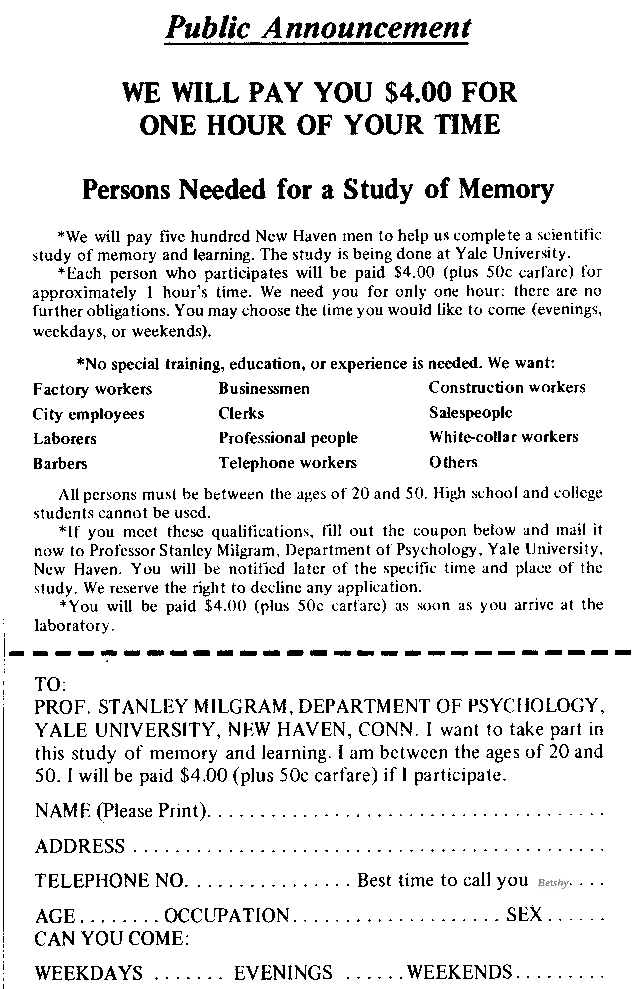
It does make me question authoritarianism and the ways in which it can manifest. For instance, Milgram and Adorno et al. studied the psychology of obedience under pressure, and how following orders led to the holocaust. An aspect that has been questioned little is how scarcity or the fear of scarcity has led to similar phenomena due to how people have been conditioned to see money as an enabler of everyday behaviour. For instance, when Milgram conducted his obedience experiments during the 60s, he monetarily rewarded his participants for taking part in the studies. Modern psychologists have attempted to re-examine the dynamics at Yale’s laboratory and what might have led the participants to show that they were capable of being sadistic under such conditions. An example is Gibson’s (2013) work which meticulously examines the prods given by the experimenter. In a way, Gibson seeked to understand how the orders and requests given by the authority figure contributed to the decision-making processes of the participants. However, I have not come across much research highlighting the role of the monetary incentive in everyday behaviour; or how being given a monetary incentive places a subconscious obligation on individuals to comply with requests, even if such requests at times make them feel uncomfortable.
The c/s/x movement, also known as ‘the psychiatric survivors movement‘ (Wikipedia, n.d.) explores how a large number of individuals report feeling or having felt dehumanised by the mental health system. For the unstigmatised person, it is often more common to assume that all these people expressing dissatisfaction with the system are crazy, than to understand the nature of what it means to respect a person’s dignity and human rights. It is quite a complex situation, because it is unclear what reinforces and keeps some mental health settings from actively listening to their patients’ concerns.
According to Turner (2015), signal detection theory (SDT) “describes processes whereby information that is important to the perceiver (known as the ‘signal’) is distinguished from other information that is unimportant and potentially distracting (known as the ‘noise’). It is my hypothesis that some of the inherently dehumanising behaviours occurring in the mental health system happen as a result of the hyper-normalisation of object-relations with patients. As I mentioned on my post ‘Investigating the neuropsychopathologyof prejudice‘, people can at times perceive those with stereotyped and stigmatised characteristics as non-human objects. This would of course increase the chance of mental health settings staff processing signals coming from clients as background noise, rather than as worth-listening-to human signals. Such established conscious and unconscious behaviours leading to the dehumanisation of many clients are reinforced through monetary incentives, and through an intragroup, mob-like co-validation of such unconscious biases. Like Eichmann, many live their lives constantly affirming to themselves that they were just following procedures and orders, or just doing their job; and therefore they believe it is not their responsibility to reflect on how clients are impacted by this. But the signals coming from mental health patients often stand in stark contrast to the common belief that these dehumanising, and at times non-empathic methods are appropriate, or even de facto acceptable.
I do think everyone deserves to be paid for their labour, and that having access to a basic form of income is an important foundation in any society; and I also think that mental health settings need to be encouraged or trained appropriately to detect clients’ signals as more than just background noise (i.e. as more than non-human objects signals) in order to reduce risk outcomes. The situation is problematic, persistent, and pervasive with these manifestations of authoritarianism in mental health settings. It would indeed be arrogant to assume that all the patients/clients expressing dissatisfaction with the service are wrong, or to culturally pathologise reasonable dissent. It would also be irresponsible and de jure unacceptable to fail to take steps towards alleviating feelings of ‘being dehumanised’ in civil society, especially if such feelings of dehumanisation have the potential to lead to never events, such as suicide.
Turner, J. (2015) ‘Making sense of the world’, in Turner, J. and Barker, M. J. (eds) Living Psychology: From the Everyday to the Extraordinary, Milton Keynes, The Open University, pp. 7-45.
Blogs are a great way to express your voice. Even if your experiences have made you feel silent, oppressed, and unfairly treated at an intergroup relational context; you can still assert your thoughts, feelings and opinions in the online community. This way, blogging can be a method for cognitive-emotional democratic healing at both individual and collective levels.
Why is expressing your voice important?
Actions and reactions happen at inter and intra group levels for many reasons. Sometimes communicating our perspective helps elucidate a particular situation. So for instance, if you feel that some members of your social milieu have displayed hostility towards you as a result of the hostility that they themselves have been subjected to, you might be correct in assuming that such a hostility might have become hypernormalised at the group’s cultural level, and that such members are experiencing reactive-formative symptoms of trauma. For the minority individual, the experience of being let down, or rejected by a group, culture, system, or apparatus can be debilitating (i.e. it can feel like mob behaviour), and when this happens for a prolonged period of time; it can create feelings of marginalised frustration. Blogging is a good way to use your freedom of speech in a way that directly addresses the public audience, whilst simultaneously being an interpersonal method for expression.
The risk is to stay silent.
Setting up a blog
There are different ways in which you can begin your blog. The most common problem I hear when I speak with people about blogging is ‘I do not not what to say. I would not know where to start’. My answer is that such is precisely the way to start a blog. You do not need to know what to write about in order to express that you do not know what to write about. Sometimes it could be sharing your professional work. Other times it could just be about sharing an experience you went through. I tend to shift between these modes. Most of the time, I share some of my thoughts, feelings, and add something interesting that I have been researching about. Regardless of what your needs for expression are, blogging is an effective method for online communication and an interdisciplinary style for socialisation. But, what blog to use?
Choosing a blogging platform
Different people will prefer different types of blogs for their journalism depending on how much time or effort they wish to invest in the endeavour. Here are a few options:
Blogger: A very simple and generic user experience design for expressing thoughts. It has an archive of dates which store your thoughts across time. The interface is easy to learn, and it is free of charge. It is ideal for those only getting started in cybercultural activities.
Google Sites: This platform truly is flexible in terms of allowing the user to experience freedom in how to structure their pages. It is useful for creative projects and for getting started with digital design. It lacks an automatic blogging archive, so if what you are looking for is a place to log your thoughts, Blogger is a better option. All you need is a Google account.
WordPress: This blog (as you can see at the bottom of the page) is powered by WordPress. The reason why I personally prefer this platform is because it gives me a wide margin of flexibility when it comes to design, as well as simultaneously having an archive for blog posts which permits organization.
Medium: For those who do not wish to either hassle neither with the design nor with the other technicalities, Medium allows people to register and write. It is a community project, meaning that people from all walks of life contribute to the discussion.
What a day. Today my blog was saved (thank you, Juan!) after it was hacked and taken down following two articles I wrote which now I am nervous to publish after that. I’m currently reading several books at once and sometimes feel so devastated to realise some barbarities about the world around me. But having my blog back is so comforting, and so I have another reason to continue surviving all these difficult situations, yay!
In the meantime, I started a channel on Medium where I might journal now and then. You can read my post Thriving Against Oppression Now there where I speak about what it has felt like lately for me to go through a lot of problems. I will be reviewing and republishing the commentary articles I had published prior to the hack attack within the next few days. I am currently so busy with my studies that I have to spend more time inputting than outputting information. But I will try to retake a more informal and more frequent blogging style, because I feel it is certainly therapeutic to blog.
Also, in response to some commentary as to whether I have conditioned myself into these situational factors, the answer is that there are some unconditional, natural elements when it comes to the good side (writing, blogging, studying); and some conditioned elements that have been institutionalised (e.g. verbiage and time-keeping). It is difficult with psychology, you know. Specially when there are incentives, rewards, and negative reinforcement schemes in many of the contexts of practice. But there are factors of situations which are outside my locus of control, yet I get through, thriving on the roller-coaster life.
Lately I have been focusing my time towards doing some research and I will be publishing the findings on my Youtube channel. In these series of episodes I will be describing the key terminology related to matter, and then I will touch on psychological theory, and neuropsychological research about racism and narcissism. So if you are interested in understanding the psychology of these phenomena, please tune in!
Most available self-help for post-traumatic stress (PTS), or post-traumatic stress disorder (PTSD) is based on a general assumption that the problem is cognitive or perceptual, instead of situational or circumstantial (known as a fundamental attribution error). Sadly, prolonged exposure therapy (PE) is sometimes used to treat such symptoms. This document will start by defining some key terms, and then it will proceed to critically evaluate some of Sword and Zimbardo’s (2018) statements about self help and therapy for PTS as cited in The Open University (2019). Finally, it will touch on the topic of suicide in the UK, and how the rates suggest that sometimes a change in the system, rather than in the patient is needed.
According to Ghafoori (2018, p. 124), PE involves ‘sufficient processing of the traumatic event by revisiting, repeating, recounting, and actively engaging with the trauma memory’. In other words, clients are deliberately exposed to the threatening stimuli that trigger their worst fears. This is similar to the definition posited by the Equality and Human Rights Commission (2018), which describes torture as happening ‘when someone deliberately causes very serious and cruel suffering (physical or mental) to another person. This might be to punish someone, or to intimidate or obtain information from them’. Such form of therapy can be described as the most barbaric way to treat someone with PTSD. Some might be tempted to counter-argue that PE is not done to intimidate or punish, but rather to help. Nevertheless, the evidence in neuropsychology shows that the mere perception of pain or internal discomfort can damage the nociceptor neurons (those which process pain signals); and can therefore induce, for example, hyperalgesia (an abnormal hypersensitivity to pain, or the perception of pain; Medical News Today, n.d.; Miguez et al., 2014), which is the opposite of analgesia (a reduced sensitivity to pain). It is triggered by associative cues which produce assimilative signals that trigger psychosomatic hypervigilance, and an aversion to such cues therefore. This is why those who suffer from PTS can at times feel as though ‘they were being tortured’, and actively seek to escape or avoid such stressful stimuli. This will be explored further in the following paragraphs, especially when talking about Borderline Personality Disorder (BPD), a severe mental health illness manifesting in those who have experienced prolonged and extreme forms of trauma since childhood (NHS.UK, 2019).
Sword and Zimbardo’s (2018) excerpt describes PTS correctly when they say that it is trauma which is carried on after an event happens, and which manifests as flashbacks, intrusive thoughts, and sleep disturbance. Moreover, they also ratify the set of symptoms as categorised by the American Psychiatric Association (2013): ‘depression, anxiety, flashbacks, avoidance, isolation, difficulty falling and/or staying asleep, difficulty concentrating, irritability, an exaggerated startle response and hypervigilance’. However, as a caveat it must be stated that ‘avoidant’ behaviour should at times be categorised as a survival skill, rather than a symptom. For instance, hyperalgesia can be induced by overwhelming the nociceptors in the brain with painful contextual cues which a person already perceives to be unpleasant, as explained by Miguez et al. (2014). This means that avoidance of painful stimuli can at times save someone from an increased sensitivity to painful situations. Moreover, Rotter’s (1966) theory of the locus of control as cited in Cherry and Barker (2015:235) would indicate that avoidance of a destructive stimulus would be in the individual’s locus of control, and this would also be supported by Rogers’ (1975) protection motivation theory as cited in Boer and Seydel (1996) which posits that fear-inducing stimuli are emotionally unpleasant, and it can therefore be expected that people will seek to avoid such stimuli. In addition, another problematic statement made by Sword and Zimbardo (2018) is that people with trauma see the world through a ‘darker lens’. Cherry and Barker’s (2015) work posited how self-help psychology at times fails to understand that it is not always the individual’s cognition that is faulty, but rather the reality around such individual (i.e. scientists can sometimes make fundamental attribution errors). A good example mentioned by Cherry and Barker (2015:244) is that of poverty, which effects on the human psyche include a lack of self-worth, a disruption of normal functioning, and feelings of marginalisation. As this is a circumstantial situation, trying to change a person’s perceptions of such real hardships might only contribute further to their symptoms. This is why it can be said that those who are seeking to profit from their work are avoiding poverty, which again is a protection-motivated behaviour, and not a symptom; therefore, challenging assumptions that avoidance is a mental health problem is crucial to improving mental health systems. Furthermore, Sword and Zimbardo (2018) also describe resentment as being a phenomenon experienced by those with PTS; however, the cluster symptomatology they list- ‘going to work, preparing meals, being interested in what they did that day—become chores’- is more consistent with the construct of anhedonia (losing pleasure in doing things that once brought a sense of comfort and satisfaction; Ritsner, 2014) than that of resentment, and this distinction is very important when trying to understand PTS; because depression-induced, affect-reactive behaviour is often mistaken with and stigmatised as narcissistic rage, or a toxic personality.
Furthermore, not only can PE induce hyperalgesia, but it can also create more repressed forms of trauma, and people can end up getting worse. Since pain-avoidant behaviour is not irrational when thinking about the way in which human neurons’ function and how these react to overwhelming amounts of discomfort, why is such inhumane treatment so often justified? Indeed, exposure to stressor cues which produce psychological discomfort can physically damage nociceptors, and this might explain why BPD with comorbid PTS patients, for example, are seen as ‘difficult to work with’ (Harvard, 2006) due to their exhibited hypersensitivity and hypervigilance (Palmer and Unruh, 2018). This type of systemic prejudice is based on a presumption of cognitive and behavioural guilt; especially if such expectations and attitudes are perceived as torturous by the client. No wonder many BPD clients develop an aversion to health-care, and no wonder Cherry and Barker’s (2015) chapter on self-help highlighted some of the paradoxical reactions that can happen when people are given the wrong type of help, or the wrong set of coping techniques. For example, some expectations when it comes to treating traumatised individuals are unrealistic and can make some individuals feel worse. Some of these errors include expecting someone to only think optimistically, or to ignore the circumstantial stressors they experience. Furthermore, Eysenck (1998) posited that when the nervous system is overwhelmed by external stressors, this causes an increase of the release of corticosteroids (stress hormones) and when too many corticosteroids are released, the immune, endocrine, and circulatory systems can malfunction. So the awareness of the potential repercussions of prolonged psychological torture, or PE is not new, and many of those who engage in such activities know that what they are doing is perceived as harmful by others (actus reus) and if they continue doing it nevertheless, then there might also be a guilty intent behind such decisions (mens rea; Palmer, 2018).
It is dangerously equivocal on one hand to call avoidance of suffering a problem, and on the other hand wonder why people are self-harming. For example, Wager (2015) explained that only 1 in 800 cases of child sexual abuse make it to child protection services, which means that most of the victims of such henious acts grow with the trauma they experienced, and recreating their sexual abuse not only would be illegal, but it would only make things worse for them. This is why PE can have disastrous consequences for those who are severely traumatised. Moreover, expecting someone who has endured sexual abuse to stop avoiding their worst fears would be irrational; and such confusion could potentially lead the individual into further traumatic circumstances and relationships, or to suicide, which is not that uncommon in the UK nowadays. For instance, according to Samaritans (2019) there were 6,859 suicides in the UK in 2018. This was a ‘significant’, and tragic increase in rates from previous years. The cruel nature of everyday mental health misconceptions might have contributed towards such results (Kinderman, 2015). The ambiguous messages sent by certain frameworks can leave people feeling hopeless, confused and neglected, a prerequisite for suicidal ideation. Compassion, however, could save lives (Kinderman, 2015:291). So in the case of BPD with comorbid PTS, a treatment going wrong is often blamed on the patient rather than on the health system. It is a paradox because the mere action of the patient complaining is categorised as a symptom, rather than as a rational response to a painful, unfair, and/or stressful trigger. This is why taking into account socio-environmental stressors should not be an exclusively academic matter, but rather a general rule for the prevention of inhumane and degrading treatment. Nevertheless, it is good that Sword and Zimbardo (2018) display a well-intentioned contribution to the development of more effective mental health apps, a topic that is beyond the scope and capacity of this document.
To summarise, Sword and Zimbardo’s (2018) work as cited in the Open University (2019) mentions PE as one of the traditional forms of therapy used to treat PTS; nevertheless, they seem to attribute most problems to human cognition, rather than to situational factors. Furthermore, they seem to be deleteriously equivocal when they use the criteria for anhedonia to describe resentment, without providing satisfactory evidence to support their claims. Finally, they describe avoidant responses as a symptom, rather than as an everyday behaviour. However, research has shown that avoiding certain situations is rational, and mental health frameworks should take this into consideration when treating severely traumatised individuals, instead of speculating and risking someone’s physical integrity to death.
American Psychiatric Association (2013a) ‘Posttraumatic stress disorder, in Diagnostic Statistical Manual of Mental Disorders, 5th ed, Arlington, pp. 271-280.
Boer, H. and Seydel, E. R. (1996) ‘Protection motivation theory’, Conner, M. and Norman, P. (eds), Predicting Health Behaviour, Buckingham, Open University Press, pp. 95-120.
Cherry, S. and Barker, M. J. (2015) ‘Self-help: changing people’s understandings to change their experience’, in Turner, J. and Barker, M. J. (eds), Living Psychology: From the Everyday to the Extraordinary, Milton Keynes, The Open University, pp. 227-259.
Eysenck, M. (1998) ‘Biological bases of behaviour’, in Eysenck, M. (ed), Psychology: an integrated approach, Essex, Addison Wesley Longman Limited, pp. 23-67.
Kinderman, P. (2015) ‘Beyond disorder: a psychological model of mental health’, in Crighton D. A. and Towl, G. J. (eds), Forensic Psychology, 2nd edn, West Sussex, John Wiley and Sons, The British Psychological Society, pp. 291-300.
Miguez, G., Laborda, M. A. and Miller, R. R. (2014) ‘Classical conditioning and pain: conditioned analgesia and hyperalgesia’, Acta Psychologica, Elsevier, pp. 10-20.
Palmer, E. J. (2018) ‘Psychological approaches to understanding crime’, in Davies, G. M. and Beech, A. R. (eds), Forensic Psychology: Crime, Justice, Law, Interventions, 3rd ed, West Sussex, The British Psychological Society/John Wiley & Sons, pp. 27-47.
Wager, N. M. (2015) ‘The psychology of extreme circumstances’, in Turner, J. and Barker, M. J. (eds), Living Psychology: From the Everyday to the Extraordinary, Milton Keynes, The Open University, pp. 139-178.