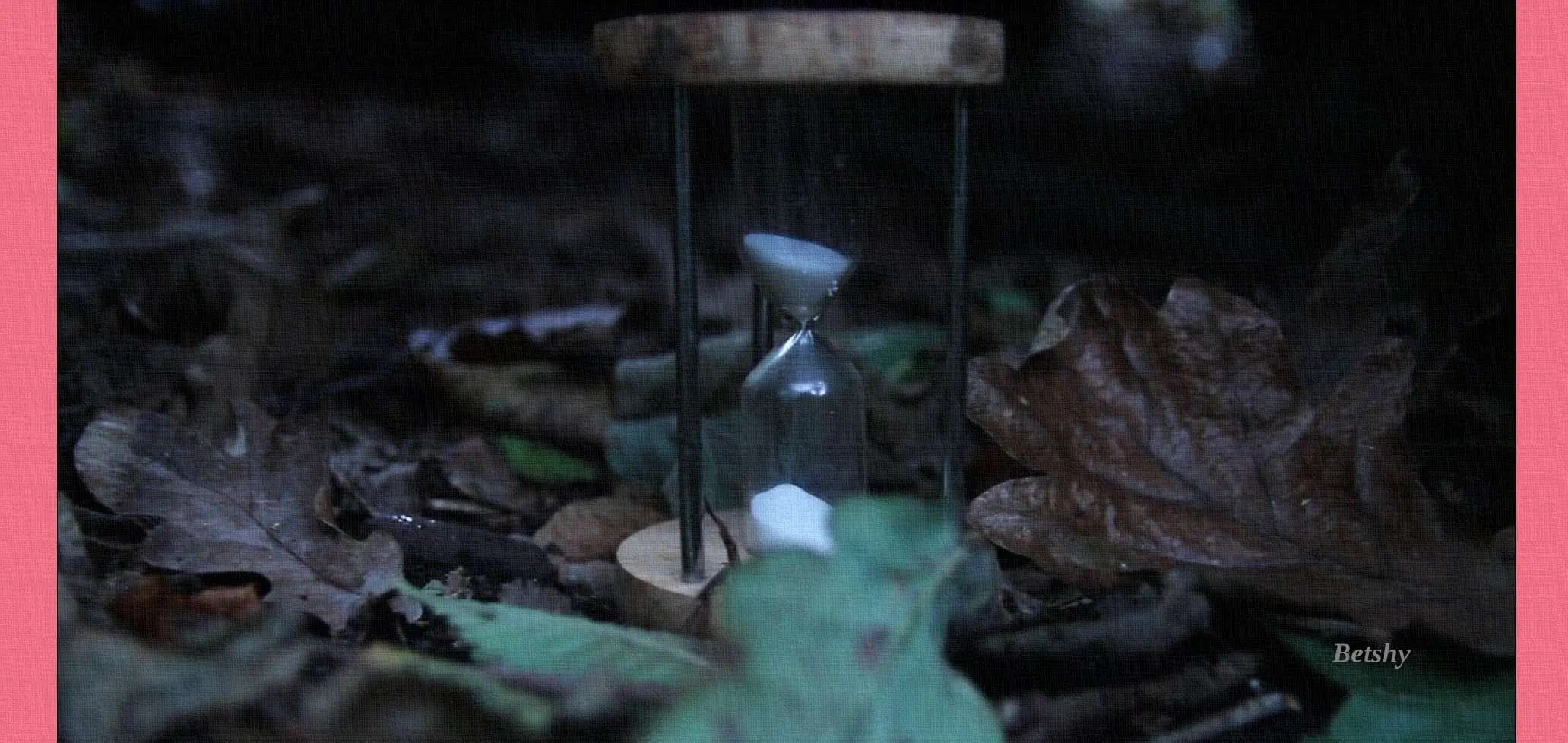
As humans, we often consider ourselves to be at the top of the food chain and the most advanced species on Earth. However, despite our intelligence and technological advancements, we are not immune to the possibility of extinction. The potential for human extinction is a sobering and often overlooked reality that we must confront.
Advertisements
There are many factors that could lead to the extinction of humanity. Climate change is one of the most immediate and pressing threats. Rising temperatures, extreme weather events, and sea level rise all pose significant challenges to our survival. If we do not take immediate and drastic action to reduce our carbon emissions and mitigate the effects of climate change, we could be facing a future where large regions of the planet become uninhabitable.
Another major threat to human survival is the possibility of a global pandemic. The recent COVID-19 pandemic has demonstrated how quickly a novel virus can spread across the world and disrupt economies and societies. If a more deadly and contagious virus were to emerge, it could have catastrophic consequences for human populations.
Nuclear war is another potential threat to human survival. The proliferation of nuclear weapons and the tensions between nuclear-armed states create a precarious situation where a miscalculation or misunderstanding could lead to a nuclear conflict with devastating consequences.
Other threats to human extinction include asteroid impacts, supervolcanic eruptions, and technological risks such as artificial intelligence and biotechnology developments. It is important for us to take these risks seriously and work towards mitigating them through international cooperation, scientific research, and responsible decision-making.
Despite these grim possibilities, there is still hope for the future of humanity. By working together to address the challenges we face, we can build a more resilient and sustainable world. Investing in renewable energy, improving healthcare systems, and promoting peace and cooperation are all ways that we can reduce the risk of human extinction.
Ultimately, the potential for human extinction serves as a stark reminder of our own mortality and the fragility of life on Earth. It is up to us to take action and ensure that future generations have a chance to thrive on this planet. Let us not take our existence for granted, but instead work tirelessly to secure a better future for all.
The Aurora Borealis, also known as the Northern Lights, is a fascinating natural phenomenon that has captivated humans for centuries. These stunning displays of light in the sky are most commonly seen in high-latitude regions near the North Pole, such as Alaska, Canada, Scandinavia, and Russia.
Advertisements
But what exactly causes the Aurora Borealis to occur?
The answer lies in the Earth’s atmosphere and its interaction with particles from the sun. The sun constantly emits a stream of charged particles known as the solar wind. When this solar wind reaches the Earth, it interacts with our planet’s magnetic field.
The Earth’s magnetic field acts as a protective shield, deflecting most of the solar wind away from the planet. However, some of these charged particles are able to penetrate the magnetic field and enter the Earth’s upper atmosphere near the poles.
When these particles collide with atoms and molecules in the Earth’s atmosphere, they transfer their energy to these particles, causing them to become excited. As these excited particles return to their normal state, they release photons of light, creating the vibrant patterns and colours of the Aurora Borealis.
The colours of the Northern Lights are determined by the type of gas molecules that are being excited by the charged particles. Oxygen molecules typically produce green and red light, while nitrogen molecules produce blue and purple light.
The intensity and frequency of the Aurora Borealis can vary depending on the activity of the sun. During periods of high solar activity, such as solar flares or coronal mass ejections, the solar wind is stronger and more charged particles reach the Earth, resulting in more frequent and intense displays of the Northern Lights.
Overall, the Aurora Borealis is a stunning reminder of the interconnectedness of the Earth and the sun. It serves as a beautiful reminder of the complex and dynamic processes that occur in our atmosphere and beyond. So the next time you witness the Northern Lights dancing in the sky, take a moment to appreciate the scientific marvel that is unfolding before your eyes.
Climate change is happening, and the natural world is struggling. The scientific world and the media industry are signifying “doomsday”, and the evidence is accumulating. Human beings have been aware of this for a while, and in 1988 the IPCC (Intergovernmental Panel on Climate Change) was created in order to tackle such problems (UN, 2017). Nevertheless, global warming is still happening, threatening to destroy our natural world and the survival of our species. Adams (2015) explained that even though there are people who know and care about climate change, they still struggle in their efforts to take individual action, and make the necessary changes. This document will address all these issues, as well as the relationship humans have with the natural world, and what happens when nature is not accessible. For purposes of clarification, the term “nature” will be used along with Stevens’ (2015, p. 327) definition of the natural world: “those environments which have not been heavily modified by human activity”.
According to Zalasiewicz et al. (2016), the term “anthropocene” is understood as the epoch we currently live in, which is considered the most environmentally destructive time in history due to anthropogenic (man-made) activity. In other words, the way in which people go about their daily lives (including their habits) is having a record-breaking negative impact on the environment. This suggests that human beings are in some way or another responsible for global climate change (GCC). The evidence is compelling (NASA, n.d.), and has been disseminated for such a long time that there even exists an international legal framework for it. The United Nations Framework Convention for Climate Change (UNFCC) took effect in 1994 and since then, it has been guiding global initiatives to reduce the greenhouse effect. Before this was the case, in 1988 the United Nations Environment Programme (UNEP) and the World Meteorological Organization (WMO) created the IPCC (n.d.) to conduct assessments, and report information about the topic. Furthermore, Adams’ (2015) work posits the fact that there are many problems directly related to climate change; such as the potential extinction of wildlife, overpopulation, deforestation, and air pollution. Such serious threats and their increasing likelihood cause a lot of collective distress, and this has led psychologists to wonder why despite the fact that survival is at stake, and despite there being so much circulation of such information; people are still living as if nothing was happening. Adams (2015) further explained using Freud’s psychoanalytic framework that people develop defence mechanisms to protect their mind from the unpleasant knowledge of reality. This is problematic, as the urgency for taking action increases every year, and an individual behavioural focus is necessary.
The UK Department for Business, Energy and Industrial Strategy (BEIS, 2019) cited in Sonnichsen (2020) conducted a national survey in 2019 where 4,224 participants from randomly selected households in the UK were interviewed face-to-face and were asked the question: “How concerned, if at all, are you about current climate change, sometimes referred to as ‘global warming’?” 45% of respondents stated that they were “fairly concerned”, 35% stated that they were “very concerned”, 13% said they were “not very concerned”, 5% stated that they were not at all concerned, and only 1% stated that they did not know. Therefore, it can be inferred that the great majority of people in the UK are conscious about climate change. Furthermore, the same sample was asked about their beliefs in the causes of climate change: 40% believed that both natural and anthropogenic processes were to blame. 33% believed that it was caused mainly by the anthropocene. 15% believed that human activity was the sole cause, 2% were skeptical about it, and the rest either did not know or had no opinion about it. More questions were asked which showed that in the UK, changes are expected both from government and society.
Further evidence (Evans, 2019) has compounded that the behavioural impact of society on the climate is rising along with the temperatures. This means that factors such as negative affect, conflict, and psychological distress are more common as exposure to extreme weather events and threats increases. What all of the mentioned above suggests is that GCC is a result of urban, every day industrial and domestic activities (Adams, 2015; Evans, 2019). Not surprisingly, scientists are worried about a potential doomsday (Meckling, 2020), and they are not the only ones. Research (Stevens, 2015) has shown that people have higher levels of arousal when they are exposed to urban environments than when they are exposed to natural environments. This indicates that anthropogenic city life is associated with more stressful experiences than rural life. The term biophilia means “love for life” (Stevens, 2019b), and it is used to describe the way in which human beings have an inherent attraction towards and a need for nature. Evidence about embedment- the idea that the environment in which the body is located has an effect on mood and behaviour- suggests that individual identities are made and remade in the light of the world around the body (the ego; Sanchez Marrugo, 2019); and such world influences mental health (Bishop, 2015). Ulrich et al. (1991) as cited in Stevens (2015) produced evidence about how the natural world triggers relaxing psychosomatic responses, which means that it serves as a mood stabiliser. Whether it is a picture, a visualisation, or an actual trip to nature.
Moreover, Stevens (2015) highlights the importance of a restorative environment when it comes to healing. Ulrich (1984) cited in Stevens (2015) conducted research to determine whether the outside view of a window influenced the speed of recovery for patients, and found that indeed those who were able to see natural landscapes from their windows had a faster recovery and were subsequently discharged earlier than those who could only see a brick wall. This evidence suggests that exposure to the natural world is beneficial for people. Since humans have a natural need to embed themselves in the natural world due to the unique and impossible to replicate sensory stimulation provided by such an environment, it can be said that having a close relationship with nature is therapeutic. According to Louv (2005) cited in Stevens (2019a), a good descriptive term when it comes to this phenomenon is “Nature Deficit Disorder (NDD)”. He posited that not embedding oneself in nature often enough can have detrimental effects on overall wellbeing, and this could be interpreted as a form of self-neglect because if a person does not meet their natural, psychoevolutionary needs; they can indeed forget what it feels like to love life, and might even become suicidal. The Office for National Statistics (ONS) reported an increase in suicide rates in recent years (Kaur and Manders, 2019), which suggests that less people are in love with life. Evidence indicates that people can heal from nature deficits through what is known as attention restoration therapy (ART; Stevens, 2015). It consists of embedding oneself in an environment that is away from urban life, and which elicits grounding and relaxation. For instance, it has been found that sunlight has a positive effect on human health when it touches the skin, as it triggers a chemical reaction and creates vitamin D, which boosts the immune system and improves mood (Stevens, 2015). Therefore, embedding oneself in natural places has many benefits. This compounds the understanding of natural environments as a necessity.
To summarise, the threat of climate change is very real and every human being is impacted by it. The natural world has an important role to play in mental health wellbeing, and lack of access to it can have detrimental effects on public health. Suicide, the anti-thesis of biophilia has been increasing in the UK. It is unclear at this point how biophilia can be elicited through the status quo in order to reduce anti-life outcomes such as suicide and global warming.
References
Adams, M. (2015) ‘The wider environment’, in Taylor and Turner (eds) Living Psychology: From the Everyday to the Extraordinary, Milton Keynes, The Open University, pp. 373-409.
Bishop, S. (2015) ‘Boundaries of the self’, in Taylor and Turner (eds) Living Psychology: From the Everyday to the Extraordinary, Milton Keynes, The Open University, pp. 287-318.
Stevens, P. (2015) ‘Relationships with the natural world’, in Taylor and Turner (eds), Living Psychology: From the Everyday to the Extraordinary, Milton Keynes, The Open University, pp. 327-363.
“While the nature photographer may boast of elaborate equipment or long treks or superhuman patience, every photojournalist can tell of wary strangers befriended or guards duped or disasters narrowly escaped. Less often do we hear the stories behind more ordinary photographs, where no precipice yawned and no bullets flew, but that does not mean that these stories might not be interesting, and instructive, if we knew them.”