
Tag: Iran

  • World War 3? Regional Tensions Explode in Middle East

    World War 3? Regional Tensions Explode in Middle East

    Advertisements

    In response to the attack, Israel deployed its sophisticated defence system known as the Iron Dome, which is designed to intercept the majority of the incoming missiles. This advanced technology has proven critical in safeguarding civilian lives and infrastructure; however, it was notably damaged by the relentless attacks during this recent onslaught, highlighting the ongoing challenges faced by defensive operations in a sustained conflict. The quick and effective response by the Israeli military demonstrated the importance of having advanced technology and strategic planning in times of conflict, illustrating how preparedness can mitigate potential threats. Furthermore, the extent of the damage caused by Iran not only underscored the capabilities of its offensive capabilities but also revealed the insidious nature of antisemitic warfare, which seeks to undermine the security and stability of Israel through targeted aggression. The incident serves as a stark reminder of the complex geopolitical landscape and the need for continued vigilance and resilience in the face of such threats, reinforcing the significance of international cooperation in counteracting these aggressive moves.

    The attack on Israel sent shockwaves throughout the Middle East, with neighbouring countries closely monitoring the situation and assessing their own security concerns. The United States, a key ally of Israel, condemned the attack and pledged support to the Israeli government in their efforts to defend their homeland. Reports suggest that whilst President Biden does not condone an attack against Iran’s nuclear facilities, he does support an attack against Iran’s oil reserves as a retaliation. Moreover, British Prime Minister- Keir Starmer- also condemned the Iranian attack, and expressed support towards Israel.

    The involvement of Russia in the conflict further complicated the situation, as the country has historic ties to Iran and has been a key player in the region. Vladimir Putin defended Iran saying that the country has a right to defend itself. The international community is closely watching the developments in the Middle East, with concerns growing about the potential for further escalation and the impact on global security. Antonio Guterres- Secretary General of the United Nations- was classed as “persona non grata” by Israel due to how he did not condemn Iran’s hypersonic missile attack. This means that he is not allowed to enter the country, and if he does he might get arrested. Consequently, Guterres went ahead and condemned the attack after being banned.

    As tensions continue to rise in the region, it is crucial for world leaders to exercise restraint and seek diplomatic solutions to prevent the outbreak of a full-scale global conflict. The importance of maintaining open lines of communication between nations cannot be overstated, as misunderstandings can quickly escalate into hostilities that are difficult to control. Moreover, the events of October 2024 serve as a stark reminder of the fragility of peace and the unpredictable nature of geopolitics in our world today; these occurrences highlight the need for robust international frameworks that prioritize negotiation and compromise over aggression. In an era where information spreads rapidly, the influence of media and public opinion can further complicate diplomatic efforts, making it all the more critical for leaders to act thoughtfully and with foresight.

    As we continue to monitor the situation in the Middle East, let us hope for a peaceful resolution to the conflict and a swift end to the violence that has engulfed the region. It is times like these that remind us of the importance of unity, cooperation, and dialogue in order to build a more secure and peaceful world for all.

  • Syria Conflict: Military Operations and International Involvement

    Syria Conflict: Military Operations and International Involvement

    Advertisements

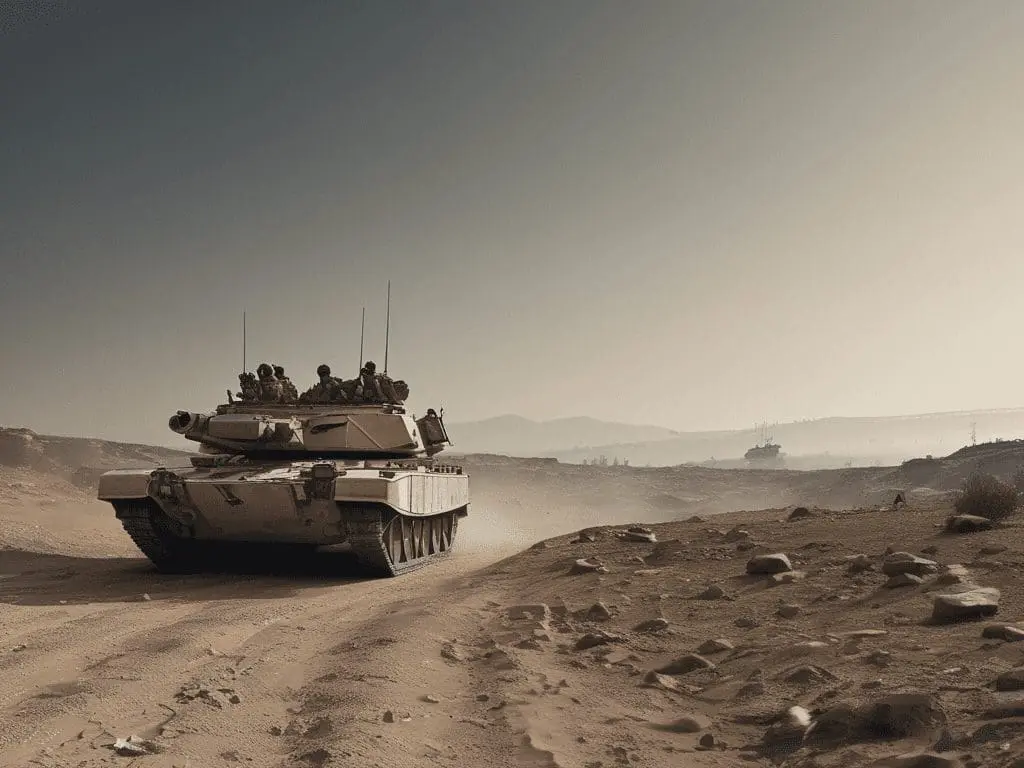
    One of the most prominent military operations in Syria is being conducted by the Syrian government forces, backed by allies such as Russia and Iran. This operation is primarily aimed at regaining control of territories held by rebel groups and terrorist organisations such as ISIS. The Syrian government forces have been making significant gains in recent months, reclaiming key areas in the country and pushing back against opposition forces.

    On the other side of the conflict, the United States and its coalition partners are also conducting military operations in Syria, primarily focused on combating ISIS. The US-led coalition has been carrying out airstrikes and supporting ground operations by local forces to weaken and ultimately defeat the terrorist group. While ISIS has been significantly weakened in recent years, pockets of resistance still remain in certain areas of Syria.

    Another major player in the Syrian conflict is Turkey, which launched a military operation in northern Syria in 2019 with the aim of creating a buffer zone along its border and pushing back against Kurdish forces. The Turkish military operation has led to clashes with Kurdish fighters and has raised concerns about the potential for further destabilisation in the region.

    Overall, the military operations in Syria are complex and multifaceted, with multiple actors pursuing their own agendas and objectives. The conflict shows no signs of abating anytime soon, and the situation on the ground remains volatile and unpredictable. As the various military forces continue to jockey for control and influence in Syria, the civilian population continues to bear the brunt of the ongoing violence and suffering.

    It is imperative that all parties involved in the Syrian conflict prioritise the protection of civilians and work towards a peaceful resolution to the conflict. The cycle of violence and destruction in Syria has already caused immense human suffering, and it is high time for all sides to come together and work towards a lasting and sustainable peace in the country. Only through cooperation and diplomacy can the cycle of violence be broken and the people of Syria be given a chance to rebuild their lives and their country.

  • The Qatar Plot Revealed: Addressing the Qatar-Iran Efforts to Islamise Europe

    The Qatar Plot Revealed: Addressing the Qatar-Iran Efforts to Islamise Europe

    Advertisements

    This phenomenon, known as the “Qatar Plot”- a recent online campaign- has raised alarm bells among European policymakers and security officials who fear that Qatar’s support for extremist ideologies could lead to the Islamisation of Europe. Qatar’s funding of mosques and Islamic centres in Europe has been seen as a way to spread its conservative interpretation of Islam and undermine the secular values that are foundational to European societies.

    The Islamisation of Europe is a complex and multifaceted phenomenon that is influenced by a variety of factors, including immigration , social integration, and political ideology. The Qatari-Iranian plot is a dangerous and concerning development that must be exposed and stopped before it can take root. These two Middle Eastern countries have been allegedly working together to spread their radical Islamist ideologies throughout Europe, using various tactics to infiltrate the continent and impose their beliefs on the unsuspecting population.

    One of the key ways in which Qatar and Iran have been pushing their agenda in Europe is through funding various Islamic organisations and institutions. These countries have been pouring money into mosques, Islamic schools, and cultural centres, all with the aim of promoting a more extreme version of Islam that is at odds with European values. By bankrolling these institutions, Qatar and Iran are able to exert influence over the teachings and practices of European Muslims, steering them towards a more radical interpretation of the faith.

    In addition to funding Islamic organisations, Qatar and Iran have also been working to spread their influence through the media. The Al Jazeera network, which is owned by the Qatari government, has been used as a platform to promote Islamist ideologies and sow division within European societies. Meanwhile, Iranian-funded media outlets have been churning out propaganda that glorifies radicalism and incites violence against Western values.

    Furthermore, Qatar and Iran have been grooming local European politicians and community leaders to advance their agenda from within. By forming relationships with influential figures, these countries are able to subtly push their extremist beliefs into the mainstream and gain a foothold in European politics.

    In response to these concerns, several European countries have taken measures to counter Qatar’s influence and prevent the spread of radical Islam. In Austria, for example, the government has announced plans to ban the foreign funding of mosques and require imams to be fluent in German in order to preach in the country. In France, the government has also cracked down on foreign funding of mosques and launched a campaign to promote a more moderate form of Islam.

    Despite these efforts, the Qatar Plot continues to pose a significant challenge to European security and social cohesion. The spread of radical ideologies and the increasing influence of foreign actors like Qatar are contributing to the Islamisation of Europe, posing a threat to the values and principles that define European societies.

    In order to address this growing threat, European countries must work together to counter Qatar’s influence and promote a more moderate form of Islam that is compatible with European values. This will require a comprehensive approach that addresses the root causes of radicalisation, promotes social integration, and strengthens cooperation between European countries to prevent the spread of extremist ideologies.

    On the other hand, some people disagree that such a conspiracy is real. Academic critics of this campaign have emerged, and have written reports such as Owen Jones and Dsouza’s (2024) “The Qatar Plot: Unveiling a Covert Multi-Platform Influence Operation Using Anti-Muslim Propaganda to Attack Qatar in the EU, US, and the UK“. These individuals believe that the conspiracy theory was disseminated by Islamophobes.

    Nevertheless, it is crucial that European leaders and citizens remain vigilant and proactive in countering this insidious plot. Measures must be taken to regulate the funding of Islamic institutions and to monitor the activities of Qatari and Iranian-backed organisations. The media must also be held accountable for spreading hate speech and inciting violence.

    Ultimately, the Islamisation of Europe by Qatar and Iran poses a serious threat to the fabric of European society. It is imperative that we stand united against this dangerous agenda and work together to preserve our values of democracy, tolerance, and freedom. The future of Europe depends on our ability to resist and combat the spread of radical Islamist ideologies. Let us not allow the Qatari-Iranian plot to succeed in its mission to Islamise Europe.

    The Qatar Plot presents a complex and challenging problem for Europe, but with a coordinated and proactive response, European countries can work together to prevent the Islamisation of the continent and protect the values that define European societies.