Tag: Digital

  • 10 Ways to Make Money Online

    10 Ways to Make Money Online

    Advertisements

    1) Start a Blog or Website

    One of the most popular ways to make money online is through blogging or running a website. By creating engaging content, attracting readers, and monetising your site through ads, sponsored content, or affiliate marketing, you can turn your passion into a lucrative online business.

    2) Become a Freelancer

    If you possess a skill like writing, graphic design, programming, or digital marketing, freelancing platforms are ideal for showcasing your talent and finding clients worldwide. Websites such as Upwork , Fiverr, and Freelancer offer opportunities to earn money remotely by completing projects for individuals or businesses.

    3) Teach Online

    If you have expertise in a particular subject, consider becoming an online tutor or instructor. Platforms like Udemy or Teachable allow you to create and sell online courses on various topics, while websites such as VIPKid connect you with students worldwide for online tutoring in subjects like English or Mathematics.

    4) Use Affiliate Marketing

    Affiliate marketing is the process of earning a commission by promoting other people’s or company’s products. By joining an affiliate program, you can generate income by promoting products or services through your blog, social media, or YouTube channel, and receiving a commission for every sale made through your unique link.

    5) Create and Sell Digital Products

    If you are skilled in graphic design, website development, or writing, consider creating and selling digital products such as eBooks, templates, or stock photos. Platforms like Etsy or Gumroad can help you connect with customers who are interested in purchasing unique digital products.

    6) Become a Virtual Assistant

    Many entrepreneurs or busy professionals require assistance with administrative tasks. By becoming a virtual assistant, you can offer remote support to individuals or companies in managing their emails, scheduling appointments, organising data, or social media management.

    7) Participate in Online Surveys

    While not a substantial income source, participating in online surveys can provide a small income stream or gift cards. Websites like Swagbucks offer paid surveys, giving you the chance to earn money by sharing your opinion on various topics.

    8) Offer Social Media Management

    As social media continues to dominate the digital landscape, businesses are always on the lookout for professionals who can manage their social media presence. By offering your services as a social media manager, you can create engaging content, collaborate with influencers, and help businesses establish a strong online presence.

    9) Create and Sell Handcrafted Products

    If you possess artistic talents or enjoy creating unique handmade items, websites such as Etsy provide an excellent platform to sell your products to a global audience. From jewelry to home decor, the possibilities are endless.

    10) Become a YouTuber or Influencer

    If you are comfortable in front of the camera and have expertise or an interesting niche to share, starting a YouTube channel or becoming an influencer on platforms like Instagram can generate considerable income. Through sponsorships, product endorsements, or brand partnerships, you can monetise your online presence and turn it into a profitable venture.

    Final Thought

    Remember, making money online requires dedication, persistence, and continuous effort. It may take time to establish a steady income stream, but with determination and the right approach, you can turn your online endeavours into a successful and fulfilling career. So, take the plunge, explore different options, and embark on your journey to making money online.

    Advertisements
  • Generating a Social Media Marketing Plan

    Generating a Social Media Marketing Plan

    Analytics
    Analytics
    If you’re struggling to develop a comprehensive social media marketing plan for your business, you’re not alone. It can be overwhelming trying to figure out how to create a plan that will get the most return on investment. That’s why we developed a Social Media Marketing Plan Generator – to help you create an effective, complete plan that will help your business reach its social media goals.

    Our Social Media Marketing Plan Generator is designed to be easy and helpful. We provide questions and guidance to walk you through all the aspects of a successful social media
    Social media
    Social media
    1. Set clear objectives: Determine your desired outcomes and the target audience you want to reach.
    2. Research: Gather data and insights on the target audience, their behaviors, and preferences.
    3. Create a strategy: Develop a plan for how to reach the target audience and achieve the desired outcomes.
    4. Establish a budget: Determine what and how much.
    SEO
    SEO
  • Online Risks for People Within the Psychosis Spectrum: Envisioning a Digitally Safer World

    Online Risks for People Within the Psychosis Spectrum: Envisioning a Digitally Safer World

    According to the Diagnostic and Statistical Manual of Mental Disorders (DSM-5, pp. 87-88), psychotic disorders are clusters of key symptoms such as delusions and hallucinations, among other things. Moreover, the DSM-5 defines delusions as “fixed beliefs that are not amenable to change in light of conflicting evidence”, and hallucinations as “perception-like experiences that occur without an external stimulus”. Furthermore, Davey (2018) explains that the symptoms of psychosis can often leave individuals “feeling frightened and confused” (p. 237), and that “sufferers frequently believe that their thoughts are being interfered with or controlled in some way” (p. 239).

    There are different types of delusions: persecutory (paranoia), grandiose (narcissistic), control (feeling controlled or manipulated by external forces), referential (thinking that the media, advertisements, news and events are all in some way giving cues about oneself, as if everyone else “knew”), nihilistic (beliefs that go beyond the scope of existence as we know it. This could include thinking that one does not exist any more), and erotomanic (the delusional belief that someone is in love with oneself, regardless of whether they actually have met the person or not). Even though all these types of manifestations often overlap, it is delusions of persecution and delusions of reference that I will be highlighting in this post. 

    Preliminary facts:

    • Suicide rates have dramatically increased within the last few years in the UK (Kaur and Manders, 2019). 
    • People with symptoms of psychosis have a difficulty in making sense of what is real and what isn’t (Davey, 2018). 
    • People on the psychotic spectrum struggle with suicidal thoughts, suicidal attempts, and some do succeed in such attempts (American Psychiatric Association, 2013). 
    • 11% of homicides happen as a result of mental health problems (Pilgrim, 2015). 
    • Hassan et al. (2011) as cited in Fisher et al. (2018) studied 3000 newly convicted offenders, and found that 10% were suffering from psychosis. 
    • According to the United Nations News (2019), a person dies by suicide every 40 seconds.

    A Case Scenario

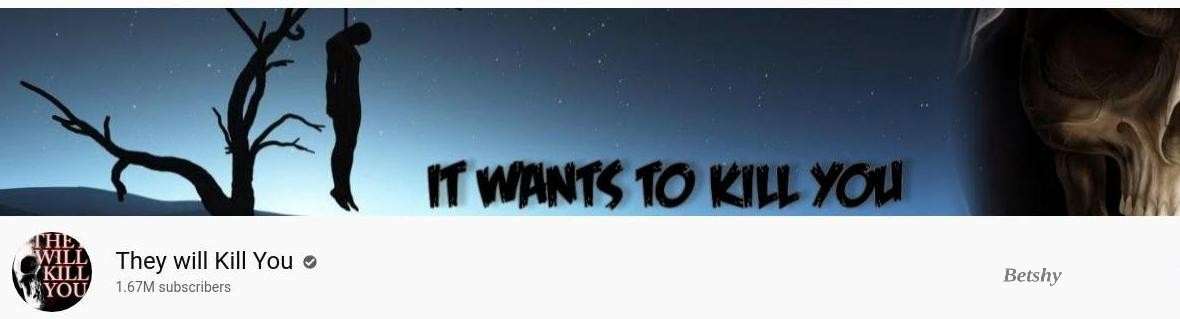
    Please note this is not a critique of the Youtuber, his personality, integrity, or his work. I have not watched the videos. This analysis is specifically in relation to the name and the cover art of the channel, as well as about Youtube’s liability for managing and preventing these deadly risks. 

    As I was scrolling and scrolling on Youtube trying to find something to watch, I came across a recommendation from a channel titled They Will Kill You. I instantly thought: Wow, if I still was suffering from psychosis, just being exposed to such recommendation would have caused me great internal distress, confusion, and maybe even a crisis. So I decided to explore the channel, and noticed that the cover art states It wants to kill you, whilst showcasing a picture of a person hung off a tree by their neck. In other words, a picture of suicide by hanging. Such a combination of design is the perfect recipe for having to create stricter regulatory protocols in the digital world. The content elicits feelings of paranoia, persecution, and suicidal ideation. Moreover, I predict that in the future, such technical neglects might be classed as manslaughter, or as assisted suicide should anyone die; both of which are classed as criminal acts in the UK. So let’s get serious about this.

    Critical Evaluation:

    If a person has delusions of persecution, they might think that the reason why nobody is trying to help them is because people want him or her to kill themselves, and if such delusions of persecution are mixed with delusions of reference, the person might feel that this Youtube channel is part of the “conspiracy”. For example, they might already be thinking that their upstairs neighbours are trying to kill them (Eysenck, 2000) through enforced psychological torture designed to trigger their suicidal desires. And being exposed to the name of this channel and to the cover art might lead them to assume that their paranoid delusions are undeniable, and might actually reinforce their schema to go forward with suicide whilst thinking that they have no other choice, and that such are everyone’s wishes. In another possible fatal case scenario, a person might be experiencing complex and bizarre events (Eysenck, 2000) and this type of digital content might serve as an anchor for what can be homicidal acts. Furthermore, Fisher et al. (2018) explained that relapse and recidivism can be triggered by psychosocial stressors. I would like to reinforce this whilst also including digital stressors.

    Pilgrim (2015, p. 222) states: “Those with a diagnosis of mental illness are predominantly described in the mass media as a risk to others. However, collectively psychiatric patients are at far greater risk from others and to themselves, as victims of crime and exploitation and from self-harm […] the risk of violence increases with the presence of positive not negative symptoms”. With this statement I rest my case about the necessity for safer algorithms .

    Call to Action: 

    This channel’s name  and cover picture are an example of the high risk potential to trigger distress in people within the psychosis spectrum due to the unpredictability of YouTube’s algorithms. Moreover, considering the mental health crises we are facing here in the UK, I strongly recommend that there is more regulation of potentially deadly risks. I also recommend for this user to be encouraged to change the name of the channel to one that is less threatening. Youtube should hire the necessary professionals to manage these complexities.

    To summarise, as human beings living in an age of mental health and environmental crises, preventing suicide or homicide should be a common goal in society. Any death that can be prevented should be prevented.

    If you or anyone you know know is having suicidal thoughts, please call 999. Alternatively, call Samaritans on 116 123, or email them to jo@samaritans.org

    References

    American Psychiatric Association (2013), Diagnostic and Statistical Manual of Mental Disorders, 5th ed, pp. 87-118.

    Davey, G. (2018) Psychopathology, West Sussex, British Psychological Society and John Wiley & Sons, pp. 238-284.

    Eysenck, M.W. (2000) Psychology: A Student Handbook, East Sussex, Psychology Press Ltd, pp. 671-703.

    Kaur, J. and Manders, B. (2019) ‘Suicides in the UK: 2018 Registrations’, Office for National Statistics [Online]. Available at https://www.ons.gov.uk/peoplepopulationandcommunity/birthsdeathsandmarriages/deaths/bulletin/suicidesintheunitedkingdom/2018registrations (Accessed 26 February 2020).

    Pilgrim, D. (2015) ‘Aspects of Diagnosed Mental Illness and Offending’, in Crighton , D. A. and Towl, G. J. (eds), Forensic Psychology, 2nd ed, pp. 215-224. 

    Fisher, D., Ginty, M., Sandhu, J. and Galappathe, N. (2018) ‘Interventions with Mentally Disordered Offenders’, in Davies, G.M. and Beech, A.R. (eds), Forensic Psychology: Crime, Justice, Law, Interventions, John Wiley & Sons Ltd, pp. 639-657.

    United Nations News (2019), ‘One person dies by suicide every 40 seconds: new UN health agency report, 9 September [Online]. Available at https://news.un.org/en/story/2019/09/1045892 (Accessed 23 February 2020).

  • Technoculture

    Technoculture


    Context

    THE TECHNOCULTURE
    OF THE FUTURE
    HAS INTERCEPTED THE NOW.

     
    Details

    This work of art is called "technoculture".
    It was created with GIMP in Linux.
    It illustrates the emerging digital archives
    of knowledge and history. The word
    technoculture is part of the overall process. 
    Technological culture is global culture.